Product Info Summary
| SKU: | A03599-1 |
|---|---|
| Size: | 0.1 mg |
| Reactive Species: | Human, Mouse, Rat |
| Host: | Rabbit |
| Application: | ELISA, IF, IHC-P, WB |
Customers Who Bought This Also Bought
Product info
Product Name
Anti-CALHM1 Antibody
SKU/Catalog Number
A03599-1
Size
0.1 mg
Form
Liquid
Description
Boster Bio Anti-CALHM1 Antibody (Catalog # A03599-1). Tested in ELISA, WB, IHC-P, IF applications. This antibody reacts with Human, Mouse, Rat.
Storage & Handling
CALHM1 antibody can be stored at 4°C for three months and -20°C, stable for up to one year. Avoid repeated freeze-thaw cycles. Antibodies should not be exposed to prolonged high temperatures.
Cite This Product
Anti-CALHM1 Antibody (Boster Biological Technology, Pleasanton CA, USA, Catalog # A03599-1)
Host
Rabbit
Contents
CALHM1 Antibody is supplied in PBS containing 0.02% sodium azide.
Clonality
Polyclonal
Isotype
IgG
Immunogen
CALHM1 antibody was raised against a 17 amino acid synthetic peptide near the amino terminus of human CALHM1. The immunogen is located within amino acids 60 - 110 of CALHM1.
Reactive Species
A03599-1 is reactive to CALHM1 in Human, Mouse, Rat
Observed Molecular Weight
68 kDa
Calculated molecular weight
38.3 kDa
Background of CALHM1
Alzheimer's disease (AD) is a progressive neurodegenerative disorder characterized by a massive loss of neurons in several brain regions and by the presence of senile plaques comprised of aggregated amyloid-beta (Abeta) peptides produced by the endoproteolysis of the amyloid precursor protein (APP). The calcium homeostasis modulator 1 (CALHM1) is a recently identified multipass transmembrane glycoprotein that controls cytosolic Ca2+ concentration and Abeta levels. While some studies suggest CALHM1 is significantly associated with risk of AD, other reports suggest there is no link. CALHM1 has been suggested to modulate the Ca2+-dependent proteolytic process of APP through controlling the level of cytosolic Ca2+.
Antibody Validation
Boster validates all antibodies on WB, IHC, ICC, Immunofluorescence, and ELISA with known positive control and negative samples to ensure specificity and high affinity, including thorough antibody incubations.
Application & Images
Applications
A03599-1 is guaranteed for ELISA, IF, IHC-P, WB Boster Guarantee
Assay Dilutions Recommendation
The recommendations below provide a starting point for assay optimization. The actual working concentration varies and should be decided by the user.
CALHM1 antibody can be used for detection of CALHM1 by Western blot at 1 - 2 μg/mL. Antibody can also be used for immunohistochemistry starting at 5 μg/mL. For immunofluorescence start at 20 μg/mL.
Antibody validated: Western Blot in rat samples; Immunohistochemistry in rat samples and Immunofluorescence in rat samples. All other applications and species not yet tested. Optimal dilutions for each application should be determined by the researcher.
Validation Images & Assay Conditions
Click image to see more details
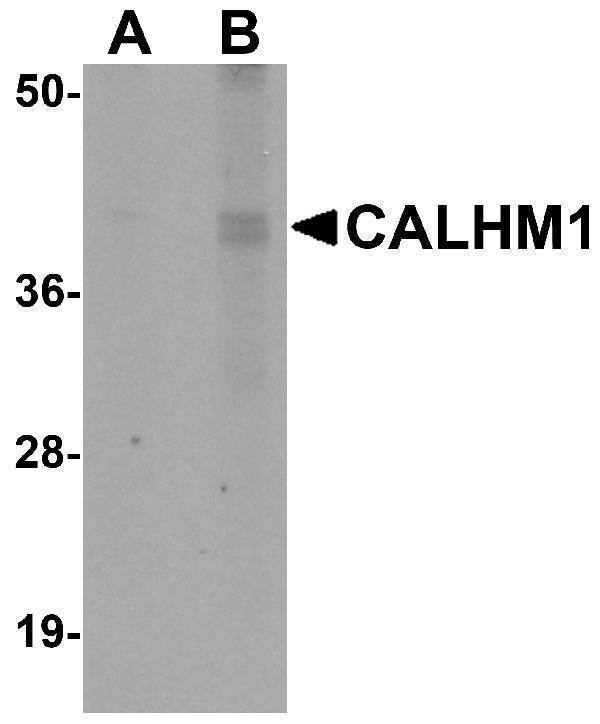
Western blot analysis of CALHM1 in rat liver tissue lysate with CALHM1 antibody at (A) 1 and (B) 2 μg/mL.
Click image to see more details
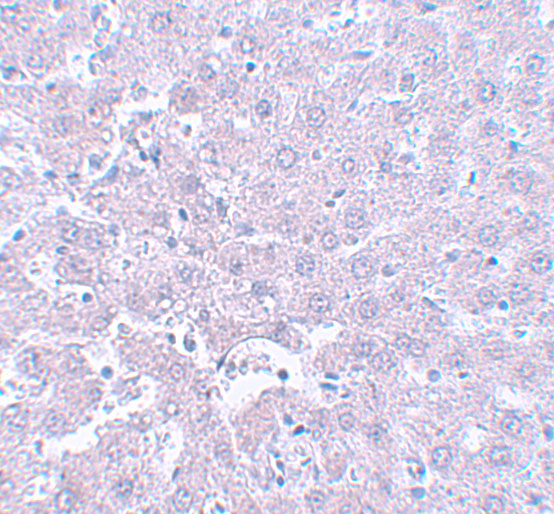
Immunohistochemistry of CALHM1 in rat liver tissue with CALHM1 antibody at 5 μg/mL.
Click image to see more details
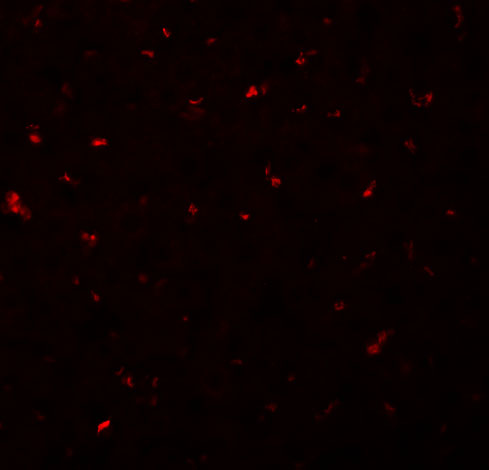
Immunofluorescence of CALHM1 in Rat Liver cells with CALHM1 antibody at 20 μg/mL.
Specific Publications For Anti-CALHM1 Antibody (A03599-1)
Loading publications
Recommended Resources
Here are featured tools and databases that you might find useful.
- Boster's Pathways Library
- Protein Databases
- Bioscience Research Protocol Resources
- Data Processing & Analysis Software
- Photo Editing Software
- Scientific Literature Resources
- Research Paper Management Tools
- Molecular Biology Software
- Primer Design Tools
- Bioinformatics Tools
- Phylogenetic Tree Analysis
Customer Reviews
Have you used Anti-CALHM1 Antibody?
Share your experimental results or join a short interview to earn up to $1,000 in product credits or other rewards.
0 Reviews For Anti-CALHM1 Antibody
Customer Q&As
Have a question?
Find answers in Q&As, reviews.
Can't find your answer?
Submit your question