Anti-GPR133 Antibody

ADGRD1 antibody

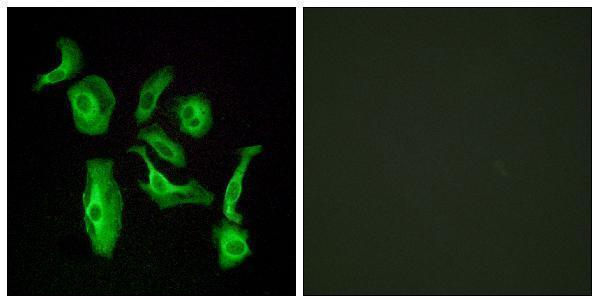
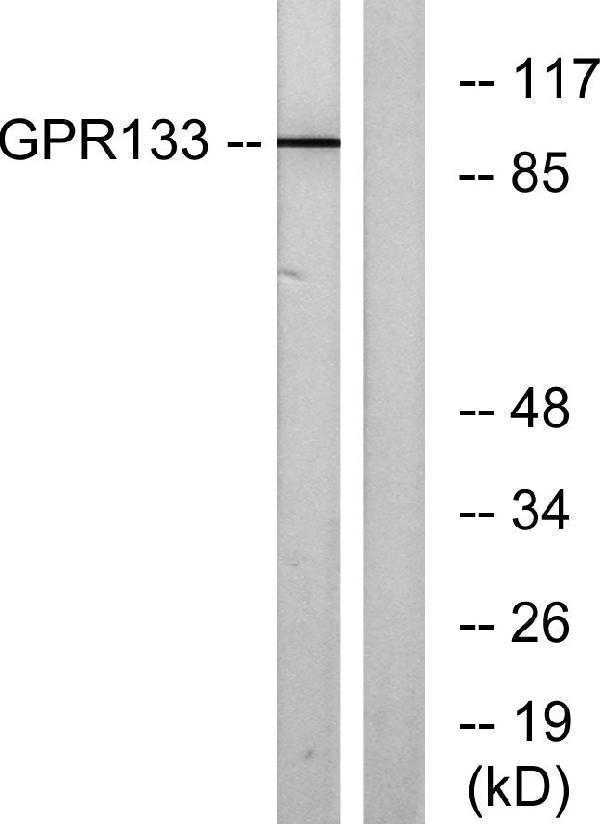
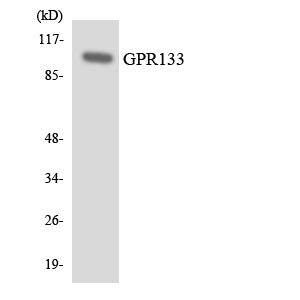
Boster Bio Anti-GPR133 Antibody (Catalog# A30805). Tested in WB, ICC, IF, ELISA applications. This antibody reacts with Human, Monkey.

Product Info Summary

SKU: A30805
Size: 100ul
Reactive Species: Human, Monkey
Host: Rabbit
Application: ELISA, IF, ICC, WB

Customers Who Bought This Also Bought

Product Name

Anti-GPR133 Antibody

View all ADGRD1 Antibodies

SKU/Catalog Number

A30805

Size

100ul

Form

Liquid

Description

Boster Bio Anti-GPR133 Antibody (Catalog# A30805). Tested in WB, ICC, IF, ELISA applications. This antibody reacts with Human, Monkey.

Storage & Handling

Store at -20°C for one year. For short-term storage and frequent use, store at 4°C for up to one month. Avoid repeated freeze-thaw cycles.

Cite This Product

Anti-GPR133 Antibody (Boster Biological Technology, Pleasanton CA, USA, Catalog # A30805)

Host

Rabbit

Contents

PBS containing 50% glycerol, 0.5% stabilizing protein and 0.02% sodium azide.
This antibody is supplied in a stabilized formulation.
Compatibility with conjugation reactions depends on the chemistry of the conjugation method used.
For conjugation methods that are not compatible with the stabilizing components present in this formulation, a carrier-free antibody format is required.

Clonality

Polyclonal

Isotype

Rabbit IgG

Immunogen

A peptide derived from human GPR133. Immunogen sequence location: 461 - 510

Reactive Species

A30805 is reactive to ADGRD1 in Human, Monkey

Observed Molecular Weight

72 kDa

Calculated molecular weight

96.5 kDa

Antibody Validation

Boster validates all antibodies on WB, IHC, ICC, Immunofluorescence, and ELISA with known positive control and negative samples to ensure specificity and high affinity, including thorough antibody incubations.

View more details

Applications

A30805 is guaranteed for ELISA, IF, ICC, WB Boster Guarantee

Assay Dilutions Recommendation

The recommendations below provide a starting point for assay optimization. The actual working concentration varies and should be decided by the user.

WB 1:500 - 1:2000.
ICC/IF 1:200 - 1:1000.
ELISA: 1:5000.
Not yet tested in other applications.

Validation Images & Assay Conditions

Loading publications

No publications found

Do you have publications using this product? Share with us and receive a reward. Contact us for more information.

Publications not available. Please try again later.

Product has been cited in publications

No results found matching your query

  • Published: --- Journal: --- Application: --- Impact Factor: --- Species: --- PMID: --- View Article

Have you used Anti-GPR133 Antibody?

Share your experimental results or join a short interview to earn up to $1,000 in product credits or other rewards.

0 Reviews For Anti-GPR133 Antibody

Have a question?

Find answers in Q&As, reviews.

Can't find your answer?

Submit your question

4 Customer Q&As for Anti-GPR133 Antibody

Question

I was wanting to use your anti-GPR133 antibody for IF for human right atrium auricular region on frozen tissues, but I want to know if it has been validated for this particular application. Has this antibody been validated and is this antibody a good choice for human right atrium auricular region identification?

Verified Customer

Verified customer

Asked: 2019-12-25

Answer

As indicated on the product datasheet, A30805 anti-GPR133 antibody has been tested for IF, WB on human tissues. We have an innovator award program that if you test this antibody and show it works in human right atrium auricular region in IHC-frozen, you can get your next antibody for free.

Boster Scientific Support

Answered: 2019-12-25

Question

We are currently using anti-GPR133 antibody A30805 for human tissue, and we are content with the IF results. The species of reactivity given in the datasheet says human. Is it possible that the antibody can work on pig tissues as well?

Verified Customer

Verified customer

Asked: 2019-09-02

Answer

The anti-GPR133 antibody (A30805) has not been validated for cross reactivity specifically with pig tissues, though there is a good chance of cross reactivity. We have an innovator award program that if you test this antibody and show it works in pig you can get your next antibody for free. Please contact me if I can help you with anything.

Boster Scientific Support

Answered: 2019-09-02

Question

Does A30805 anti-GPR133 antibody work on parafin embedded sections? If so, which fixation method do you recommend we use (PFA, paraformaldehyde, other)?

Verified Customer

Verified customer

Asked: 2019-06-19

Answer

You can see on the product datasheet, A30805 anti-GPR133 antibody as been validated on IF. It is best to use PFA for fixation because it has better tissue penetration ability. PFA needs to be prepared fresh before use. Long term stored PFA turns into formalin, as the PFA molecules congregate and become formalin.

Boster Scientific Support

Answered: 2019-06-19

Question

Is a blocking peptide available for product anti-GPR133 antibody (A30805)?

Verified Customer

Verified customer

Asked: 2019-06-10

Answer

We do provide the blocking peptide for product anti-GPR133 antibody (A30805). If you would like to place an order for it please contact support@bosterbio.com and make a special request.

Boster Scientific Support

Answered: 2019-06-10

Order DetailsPrice
A30805-A30805

100 μL

$335

Free Secondary Antibody

FREE  $95.00
FREE  $95.00
$40.00  $80.00
$75.00  $150.00
$30.00  $60.00
$75.00  $150.00
$65.00  $130.00
$55.00  $110.00
$67.50  $135.00
Choose an option to show lead time.
Get A Quote
In stock
Order Product
A30805
Buy one primary antibody get one 0.5ml HRP or Biotin secondary antibody for free.
*Sample sizes are prepared on demand and will take extra lead time. (cannot be conjugated)
$335.00

Troubleshooting

troubleshooting-box-image

Download troubleshooting handbooks for IHC, Western blot and ELISA for FREE.

Download Free PDFs Now

Boster Guarantee

Guaranteed product quality

Guaranteed product quality

We promise all of our products perform as described in datasheets.

This product is for Research Use Only. Not for use in diagnostic procedures.

Update date: Apr 7, 2026