Product Info Summary
| SKU: | PA2290 |
|---|---|
| Size: | 100 μg/vial |
| Reactive Species: | Human, Mouse, Rat |
| Host: | Rabbit |
| Application: | WB |
Customers Who Bought This Also Bought
Product info
Product Name
Anti-TMEM16A/ANO1 Antibody Picoband®
SKU/Catalog Number
PA2290
Size
100 μg/vial
Form
Lyophilized
Description
Boster Bio Anti-TMEM16A/ANO1 Antibody catalog # PA2290. Tested in WB applications. This antibody reacts with Human, Mouse, Rat. The brand Picoband indicates this is a premium antibody that guarantees superior quality, high affinity, and strong signals with minimal background in Western blot applications. Only our best-performing antibodies are designated as Picoband, ensuring unmatched performance.
Storage & Handling
Store at -20˚C for one year from date of receipt. After reconstitution, at 4˚C for one month. It can also be aliquotted and stored frozen at -20˚C for six months. Avoid repeated freeze-thaw cycles.
Cite This Product
Anti-TMEM16A/ANO1 Antibody Picoband® (Boster Biological Technology, Pleasanton CA, USA, Catalog # PA2290)
Host
Rabbit
Contents
Each vial contains 4mg Trehalose, 0.9mg NaCl, 0.2mg Na2HPO4, 0.05mg NaN3.
Clonality
Polyclonal
Isotype
Rabbit IgG
Immunogen
A synthetic peptide corresponding to a sequence at the C-terminus of human TMEM16A, different from the related mouse and rat sequences by one amino acid.
Cross-reactivity
No cross-reactivity with other proteins
Reactive Species
PA2290 is reactive to ANO1 in Human, Mouse, Rat
Observed Molecular Weight
114 kDa
Calculated molecular weight
114.1 kDa
Background of ANO1
Anoctamin-1 (ANO1), also known as oral cancer overexpressed 2 (ORAOV2) or tumor-amplified and overexpressed sequence 2 (TMEM16A), is a protein that in humans is encoded by the ANO1 gene. This gene belongs to a family of membrane proteins containing 8 transmembrane segments, and it is mapped to 11q13.3. ANO1 is a candidate calcium-activated chloride channel that mediates receptor-activated chloride currents in diverse physiologic processes, and it is though to be responsible for a voltage-sensitive calcium-activated chloride current. Its overexpression was reported in esophageal squamous cell carcinoma and breast cancer progression Crofelemer, an antidiarrhoeal, inhibits this channel. ANO1 has eight transmembrane domains, its pore is large and non-selective, allowing other negatively charged species to permeate.
Antibody Validation
Boster validates all antibodies on WB, IHC, ICC, Immunofluorescence, and ELISA with known positive control and negative samples to ensure specificity and high affinity, including thorough antibody incubations.
Application & Images
Applications
PA2290 is guaranteed for WB Boster Guarantee
Assay Dilutions Recommendation
The recommendations below provide a starting point for assay optimization. The actual working concentration varies and should be decided by the user.
Western blot, 0.1-0.5μg/ml, Rat, Human, Mouse
Positive Control
WB: Rat Liver Tissue, Rat Skeletal Muscle Tissue
Validation Images & Assay Conditions
Click image to see more details
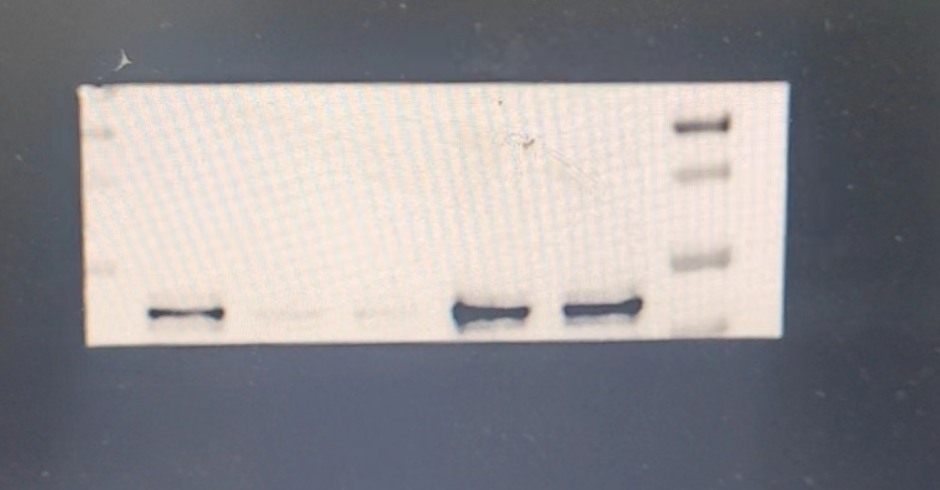
Anti-TMEM16A antibody, PA2290, All Western blotting
All lanes: Anti-ANO1(PA2290) at 0.5ug/ml
Lane 1: Rat Liver Tissue Lysate at 40ug
Lane 2: Rat Skeletal Muscle Tissue Lysate at 40ug
Predicted bind size: 114KD
Observed bind size: 114KD
Specific Publications For Anti-TMEM16A/ANO1 Antibody Picoband® (PA2290)
Loading publications
Recommended Resources
Here are featured tools and databases that you might find useful.
- Boster's Pathways Library
- Protein Databases
- Bioscience Research Protocol Resources
- Data Processing & Analysis Software
- Photo Editing Software
- Scientific Literature Resources
- Research Paper Management Tools
- Molecular Biology Software
- Primer Design Tools
- Bioinformatics Tools
- Phylogenetic Tree Analysis
Customer Reviews
Have you used Anti-TMEM16A/ANO1 Antibody Picoband®?
Share your experimental results or join a short interview to earn up to $1,000 in product credits or other rewards.
1 Reviews For Anti-TMEM16A/ANO1 Antibody Picoband®
The staining is clear, highly specific, with almost no non-specific bands.
Excellent

| SKU | PA2290 |
|---|---|
| Application | Western Blot |
| Sample | Protein extracts from LA795 and 16HBE cells. |
| Sample Processing Description | After collecting the cells, lyse them with RIPA buffer containing protease inhibitors, quantify the protein using the BCA assay, and add loading buffer proportionally. Denature by heating at 98 °C. Load the samples onto SDS-PAGE, with 30 μg of total protein per lane. |
| Primary Antibody | Anti-TMEM16A/ANO1 Antibody Picoband® |
| Primary Incubation | 1:1000, overnight at 4 ℃ |
| Blocking Agent | 5% non-fat milk |
| Secondary Antibody | HRP-conjugated goat anti-rabbit IgG |
| Secondary Incubation | Incubate at room temperature for 1 hour |
| Detection | Substrate: ECL substrate, Imaging system: Tanon |
| Results Summary | The TMEM16A antibody we previously used was never ideal; despite long-term optimization, it was difficult to obtain clear bands. This time, by using BOSTER’s polyclonal antibody, we achieved much better experimental results. The bands were successfully exposed in essentially one attempt, with clear signals and no non-specific bands. We are very satisfied with Boster’s antibody. |
Shi Sai, Hebei University of Technology
Verified customer
Submitted 2025-10-27
Customer Q&As
Have a question?
Find answers in Q&As, reviews.
Can't find your answer?
Submit your question
2 Customer Q&As for Anti-TMEM16A/ANO1 Antibody Picoband®
Question
Is PA1190 good for immunostaining and western blotting to study human bronchial epithelial cell?
Verified customer
Asked: 2020-12-18
Answer
Unfortunatey, our lab failed to observe any positive signal using the Anti-TMEM16A/ANO1 Antibody (PA2290) for immunostaining.
Boster Scientific Support
Answered: 2020-12-21
Question
We are currently using anti-TMEM16A/ANO1 antibody PA2290 for rat tissue, and we are well pleased with the WB results. The species of reactivity given in the datasheet says human, mouse, rat. Is it true that the antibody can work on monkey tissues as well?
Verified Customer
Verified customer
Asked: 2019-12-10
Answer
The anti-TMEM16A/ANO1 antibody (PA2290) has not been tested for cross reactivity specifically with monkey tissues, but there is a good chance of cross reactivity. We have an innovator award program that if you test this antibody and show it works in monkey you can get your next antibody for free. Please contact me if I can help you with anything.
Boster Scientific Support
Answered: 2019-12-10