




Click image to see more details
-
-

-
-
-
+5
Product Info Summary
| SKU: | M00013-3 |
|---|---|
| Size: | 100 μl/vial |
| Reactive Species: | Human |
| Host: | Rabbit |
| Application: | Flow Cytometry, IP, IF, IHC, ICC, WB |
Customers Who Bought This Also Bought

Product info
Product Name
Anti-HIF-1 alpha Rabbit Monoclonal Antibody
SKU/Catalog Number
M00013-3
BM4083 is an alternative SKU for this antibody, used in previous lots.
Size
100 μl/vial
Form
Liquid
Description
Boster Bio Anti-HIF-1 alpha Rabbit Monoclonal Antibody catalog # M00013-3. Tested in WB, IHC, ICC/IF, IP, Flow Cytometry applications. This antibody reacts with Human.
Storage & Handling
Store at -20°C for one year. For short term storage and frequent use, store at 4°C for up to one month. Avoid repeated freeze-thaw cycles.
Cite This Product
Anti-HIF-1 alpha Rabbit Monoclonal Antibody (Boster Biological Technology, Pleasanton CA, USA, Catalog # M00013-3)
Host
Rabbit
Contents
Rabbit IgG in stabilizing components, phosphate buffered saline, pH 7.4, 150mM NaCl, 0.02% sodium azide and 50% glycerol.
*This antibody is supplied in a stabilized formulation.
Compatibility with conjugation reactions depends on the chemistry of the conjugation method used.
For conjugation methods that are not compatible with the stabilizing components present in this formulation, a carrier-free antibody format is required.
Clonality
Monoclonal
Clone Number
17H18
Isotype
IgG
Immunogen
A synthesized peptide derived from human HIF-1 alpha
Reactive Species
M00013-3 is reactive to HIF1A in Human
Observed Molecular Weight
120 kDa
Calculated molecular weight
92.7 kDa
Antibody Validation
Boster validates all antibodies on WB, IHC, ICC, Immunofluorescence, and ELISA with known positive control and negative samples to ensure specificity and high affinity, including thorough antibody incubations.
Application & Images
Applications
M00013-3 is guaranteed for Flow Cytometry, IP, IF, IHC, ICC, WB Boster Guarantee
Recommend Dilution
WB 1:500-2000
IHC 1:50-200
ICC/IF 1:50-200
IP 1:30
FC 1:30
Tested application
Use TE buffer pH 9.0 for antigen retrieval; (*) citrate buffer pH 6.0 is an alternative.
Validation Images & Assay Conditions
Click image to see more details
All lanes use the Antibody at 1:1000 dilution for 1 hour at room temperature.
Click image to see more details
Western blot analysis of HIF-1 alpha expression in Ramos cell lysate.
Click image to see more details
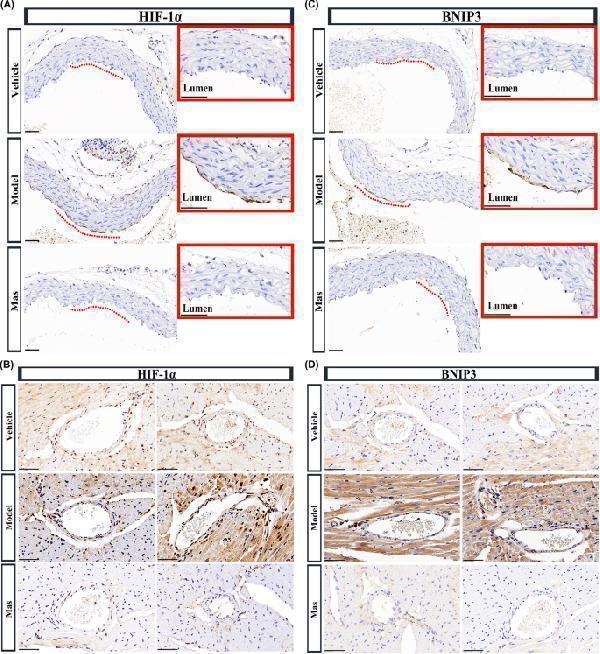
Activation of HIF-1α/BNIP3 signaling pathway in artery of KD murine model. A Representative immumohistochemical images for HIF-1α expression in aorta ( n = 4 per group). Enlarged images of area of interesting (AOI) were indicated with red block diagrams. Scale bar: 50 μm. B Representative immumohistochemical images for HIF-1α expression in coronary bifurcation arteritis ( n = 4 per group). Scale bar: 50 μm. C Representative immumohistochemical images for BNIP3 expression in aorta ( n = 4 per group). Enlarged images of area of interesting (AOI) were indicated with red block diagrams. Scale bar: 50 μm. D Representative immumohistochemical images for BNIP3 expression in coronary bifurcation arteritis ( n = 4 per group). Scale bar: 50 μm.
Index in PubMed under a CC BY license. PMID: 37980402
Click image to see more details
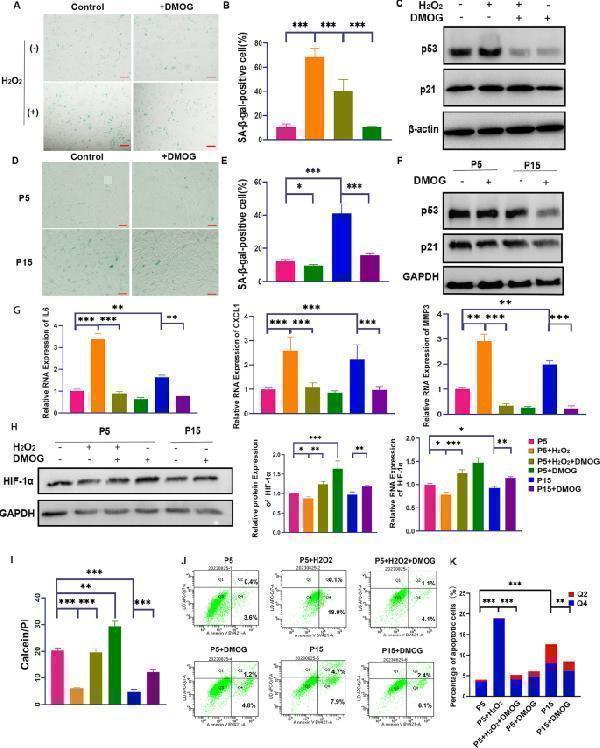
Short-term DMOG treatment reduces MSC senescence by activating HIF-1α and decreasing apoptosis. ( A , B ) Representative images of SA-β-gal staining showing the proportion of senescent cells in H₂O₂-treated MSCs before and after DMOG treatment. Scale bar = 500 μm. ( C ) Western blot analysis of p53 and p21 protein expression during oxidative stress-induced senescence. ( D , E ) SA-β-gal staining in replicative senescence (P15) MSCs, demonstrating the effect of DMOG in reducing senescence markers. Scale bar = 500 μm. ( F ) Western blot analysis of p53 and p21 protein levels in P5 (young) and P15 (senescent) MSCs. ( G ) Expression levels of senescence-associated genes (IL6, CXCL1, and MMP3) in both senescence models as assessed by qRT-PCR. ( H ) Western blotting and qPCR analysis showing increased HIF-1α protein and mRNA levels in both senescence models after DMOG treatment. ( I ) Calcein/PI live-dead staining revealed an increase in the proportion of live cells following DMOG treatment in both senescence models. ( J , K ) Flow cytometric analysis of apoptosis. Error bars represent the mean ± SD of three independent experiments. Statistical significance was set as p < 0.05. Full-length blots are presented in Supplementary Materials - WB Raw Data Full size image
Index in PubMed under a CC BY license. PMID: 40457488

Click image to see more details
All lanes use the Antibody at 1:1000 dilution for 1 hour at room temperature.

Click image to see more details
Immunohistochemical analysis of paraffin-embedded human kindey, using HIF-1 alpha Antibody.

Click image to see more details
All lanes use the Antibody at 1:1000 dilution for 1 hour at room temperature.

Click image to see more details
Immunofluorescent analysis of Hela cells, using HIF-1 alpha Antibody.
Click image to see more details
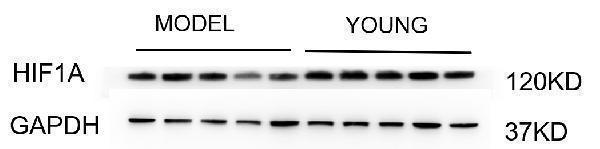
Western blot analysis of HIF-1 alpha using anti-HIF-1 alpha antibody (M00013-3).
Electrophoresis was performed on a 5-20% SDS-PAGE gel at 80V (Stacking gel) / 120V (Resolving gel) for 2 hours. The sample well of each lane was loaded with 30 ug of sample under reducing conditions.
Lane 1-5: model group-human uterine tissue lysates,
Lane 6-10: young group-human uterine tissue- lysates.
After electrophoresis, proteins were transferred to a nitrocellulose membrane at 150 mA for 50-90 minutes. Blocked the membrane with 5% non-fat milk/TBS for 1.5 hour at RT. The membrane was incubated with rabbit anti-HIF-1 alpha antigen affinity purified monoclonal antibody (A04887-1) at 1:1000 overnight at 4°C, then washed with TBS-0.1%Tween 3 times with 5 minutes each and probed with a goat anti-rabbit IgG-HRP secondary antibody at for 1 hour at RT. The signal is developed using an ECL Plus Western Blotting Substrate (Catalog # AR1196-200) with Tanon 5200 system. A specific band was detected for HIF-1 alpha at approximately 120 kDa. The expected band size for HIF-1 alpha is at 120 kDa.
Specific Publications For Anti-HIF-1 alpha Rabbit Monoclonal Antibody (M00013-3)
Loading publications
Recommended Resources
Here are featured tools and databases that you might find useful.
- Boster's Pathways Library
- Protein Databases
- Bioscience Research Protocol Resources
- Data Processing & Analysis Software
- Photo Editing Software
- Scientific Literature Resources
- Research Paper Management Tools
- Molecular Biology Software
- Primer Design Tools
- Bioinformatics Tools
- Phylogenetic Tree Analysis
Customer Reviews
Have you used Anti-HIF-1 alpha Rabbit Monoclonal Antibody?
Share your experimental results or join a short interview to earn up to $1,000 in product credits or other rewards.
1 Reviews For Anti-HIF-1 alpha Rabbit Monoclonal Antibody
The HIF1A antibody was used to detect the expression of the target protein in human uterine tissue. The Western blot results showed clear bands, and the antibody maintained good performance after reuse.
Excellent
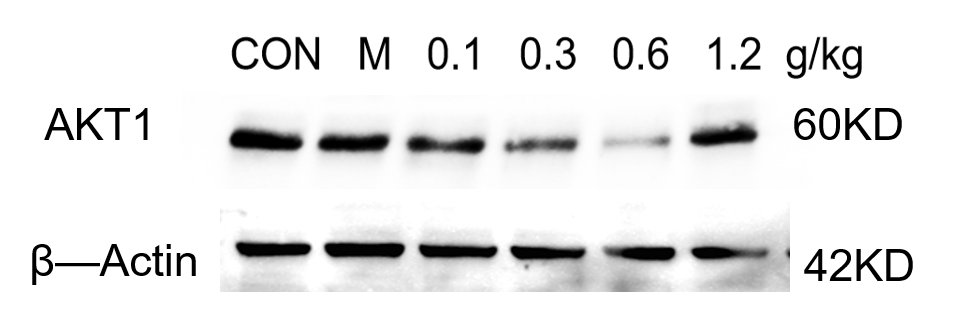
| SKU | M00024-1 |
|---|---|
| Application | Western Blot |
| Sample | Mouse hippocampus tissue |
| Sample Processing Description | The mouse hippocampus was lysed with RIPA buffer containing a protease inhibitor cocktail. After protein quantification, samples were mixed with 5× protein loading buffer and heated for 10 minutes to denature. Load 5 μL of protein per lane and apply to SDS-PAGE. |
| Primary Antibody | Anti-HIF-1 alpha Rabbit Monoclonal Antibody |
| Primary Incubation | 1:1000, overnight at 4 ℃ |
| Secondary Antibody | HRP-conjugated Anti-Rabbit IgG Secondary Antibody |
| Secondary Incubation | 1 hour in room temperature |
| Detection | Substrate: Ultra-sensitive ECL luminescent reagent (Cat# AR1191), Imaging system:Tanon |
| Results Summary | The HIF1A antibody was used to detect the expression of the target protein in human uterine tissue. The Western blot results showed clear bands, and the antibody maintained good performance after reuse. It offers excellent cost-effectiveness, with a clear advantage over other antibodies with similar specifications. Highly recommended for use! |
Anfeng Ning, Peking University Third Hospital
Verified customer
Submitted 2025-11-06
Customer Q&As
Have a question?
Find answers in Q&As, reviews.
Can't find your answer?
Submit your question

