Product Info Summary
| SKU: | PA1212 |
|---|---|
| Size: | 100 μg/vial |
| Reactive Species: | Human, Mouse, Rat |
| Host: | Rabbit |
| Application: | IF, IHC, IHC-F, ICC, WB |
Customers Who Bought This Also Bought
Product info
Product Name
Anti-beta Catenin/CTNNB1 Antibody Picoband®
SKU/Catalog Number
PA1212
Size
100 μg/vial
Form
Lyophilized
Description
Boster Bio Anti-beta Catenin/CTNNB1 Antibody catalog # PA1212. Tested in IF, IHC, IHC-F, ICC, WB applications. This antibody reacts with Human, Mouse, Rat. The brand Picoband indicates this is a premium antibody that guarantees superior quality, high affinity, and strong signals with minimal background in Western blot applications. Only our best-performing antibodies are designated as Picoband, ensuring unmatched performance.
Storage & Handling
Store at -20˚C for one year from date of receipt. After reconstitution, at 4˚C for one month. It can also be aliquotted and stored frozen at -20˚C for six months. Avoid repeated freeze-thaw cycles.
Cite This Product
Anti-beta Catenin/CTNNB1 Antibody Picoband® (Boster Biological Technology, Pleasanton CA, USA, Catalog # PA1212)
Host
Rabbit
Contents
Each vial contains antibody formulated with stabilizing components, 0.9mg NaCl, 0.2mg Na2HPO4, 0.05mg Thimerosal, 0.05mg NaN3.
*This antibody is supplied in a stabilized formulation.
Compatibility with conjugation reactions depends on the chemistry of the conjugation method used.
For conjugation methods that are not compatible with the stabilizing components present in this formulation, a carrier-free antibody format is required.
Clonality
Polyclonal
Isotype
Rabbit IgG
Immunogen
A synthetic peptide corresponding to a sequence at the C-terminus of human beta Catenin, identical to the related rat and mouse sequences.
Cross-reactivity
No cross-reactivity with other proteins
Reactive Species
PA1212 is reactive to CTNNB1 in Human, Mouse, Rat
Observed Molecular Weight
95 kDa
Calculated molecular weight
85.5 kDa
Background of CTNNB1
Catenins are proteins found in complexes with cadherin cell adhesion molecules of animal cells. The first two catenins that were identified became known as alpha-catenin and beta-catenin. Alpha-catenin can bind to beta-catenin and can also bind actin. Beta-catenin binds the cytoplasmic domain of some cadherins. Beta-catenin is an adherens junction protein. It plays an important role in various aspects of liver biology including liver development (both embryonic and postnatal), liver regeneration following partial hepatectomy. HGF-induced hepatpomegaly, liver zonation, and pathogenesis of liver cancer.
Antibody Validation
Boster validates all antibodies on WB, IHC, ICC, Immunofluorescence, and ELISA with known positive control and negative samples to ensure specificity and high affinity, including thorough antibody incubations.
Application & Images
Applications
PA1212 is guaranteed for IF, IHC, IHC-F, ICC, WB Boster Guarantee
Assay Dilutions Recommendation
The recommendations below provide a starting point for assay optimization. The actual working concentration varies and should be decided by the user.
Western blot, 0.1-0.5μg/ml, Human, Mouse, Rat
Immunohistochemistry (Paraffin-embedded Section), 0.5-1μg/ml, Human, Mouse, Rat
Immunohistochemistry (Frozen Section), 0.5-1μg/ml, Mouse, Rat, Human
Immunocytochemistry , 0.5-1μg/ml, Human, Mouse, Rat
Immunocytochemistry/Immunofluorescence, 5μg/ml, Human
Positive Control
WB: MM453 Cell, MCF-7 Cell, HELA Cell
IHC: Human Mammary Cancer Tissue
IHC-F: Rat Intestine Tissue
ICC/IF: A431 cell
Validation Images & Assay Conditions
Click image to see more details
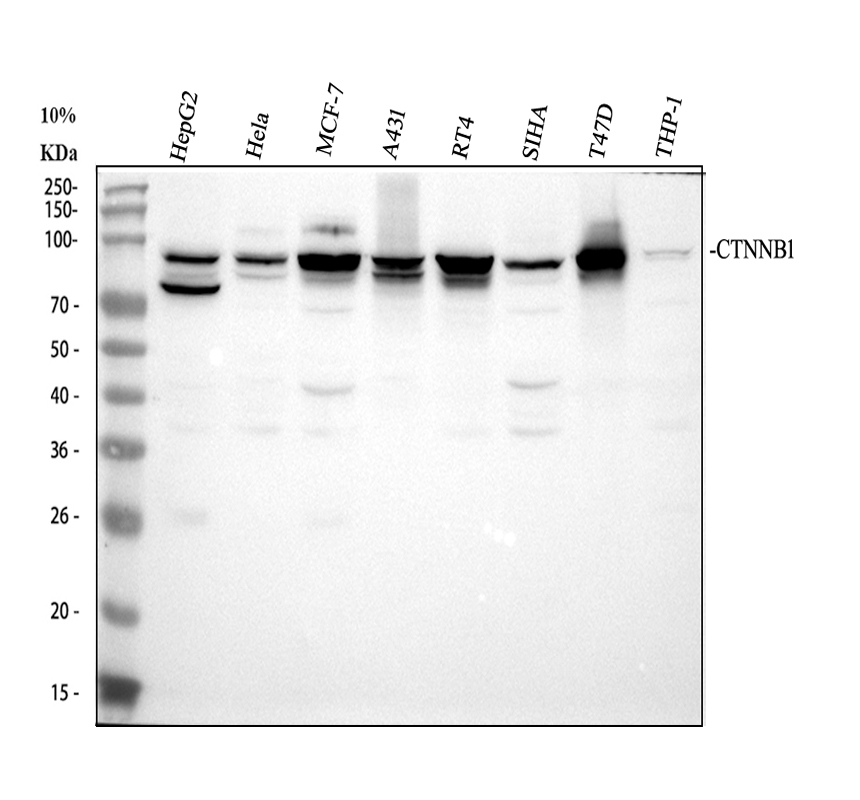
Anti-beta Catenin antibody, PA1212, Western blotting
Lane 1: MM453 Cell Lysate
Lane 2: MCF-7 Cell Lysate
Lane 3: HELA Cell Lysate
Click image to see more details
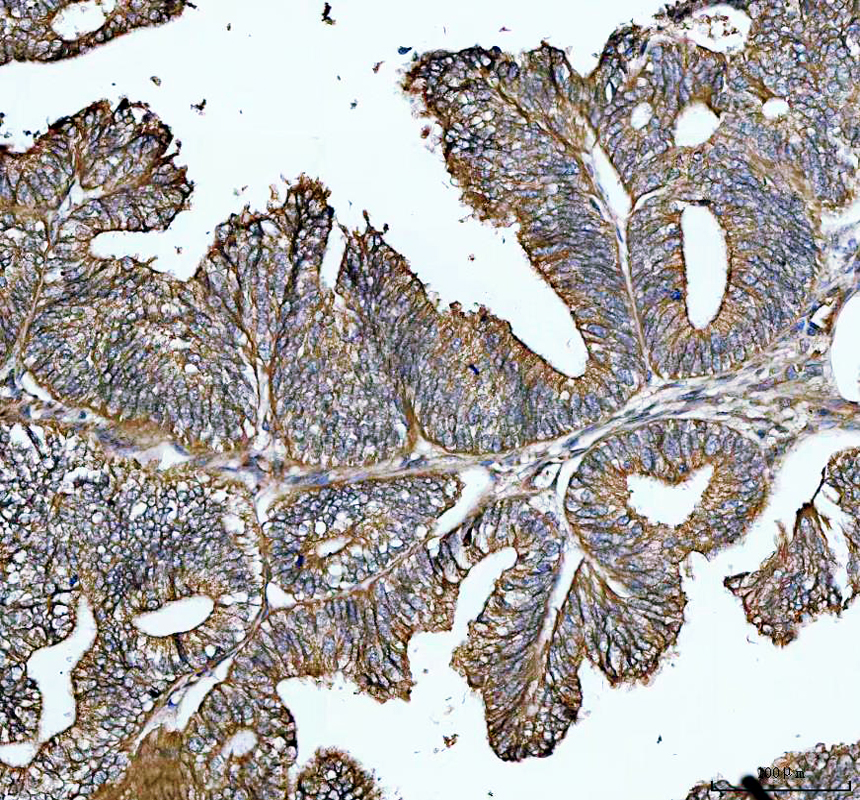
Anti-beta Catenin antibody, PA1212, IHC(P)
IHC(P): Human Mammary Cancer Tissue
Click image to see more details
Anti-beta Catenin antibody, PA1212, IHC(F)
IHC(F): Rat Intestine Tissue
Click image to see more details
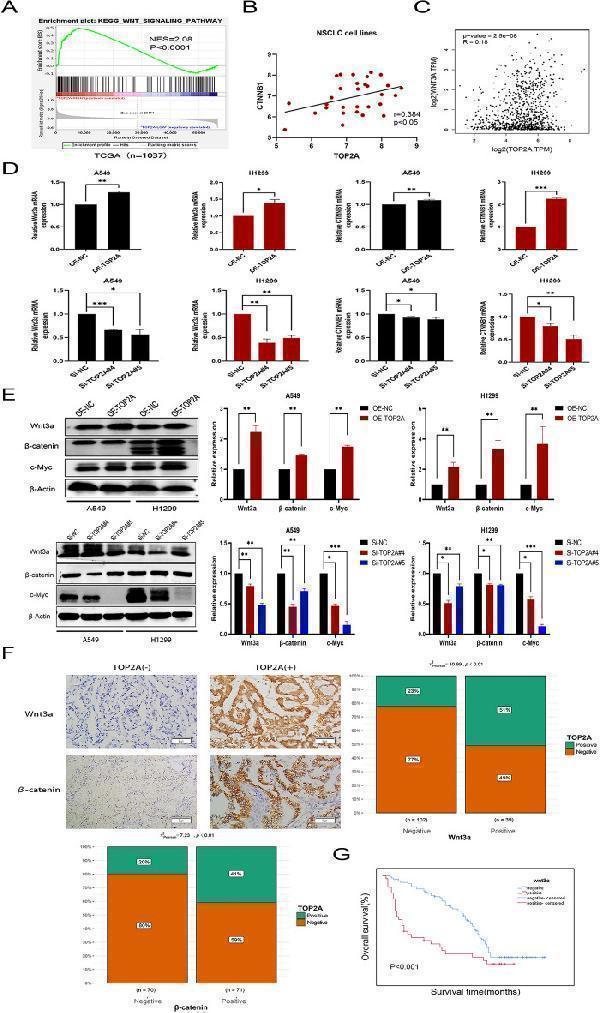
TOP2A is involved in the progression and development of NSCLC via the Wnt/β-catenin signaling cascade. ( A ) TCGA enrichment analysis revealed that TOP2A expression is enriched in the Wnt signaling pathway (n = 1037). ( B ) Several NSCLC cell lines exhibited a clear association between the transcription of TOP2A and β-catenin. ( C ) The online GEPIA exhibited a correlation between TOP2A and WNT3A gene expression levels. ( D,E ) TOP2A overexpression and knockdown groups were examined for gene and protein levels of TOP2A, Wnt3a, and β-catenin. ( F ) Immunohistochemical assessment of Wnt3a and β-catenin expression in the TOP2A-positive and TOP2A-negative groups (200×). ( G ) Patients with high Wnt3a overexpression had an abysmal survival rate. *P < 0.05, **P < 0.01, or ***P < 0.001. All experiments were repeated three times independently.
Index in PubMed under a CC BY license. PMID: 38806610
Click image to see more details
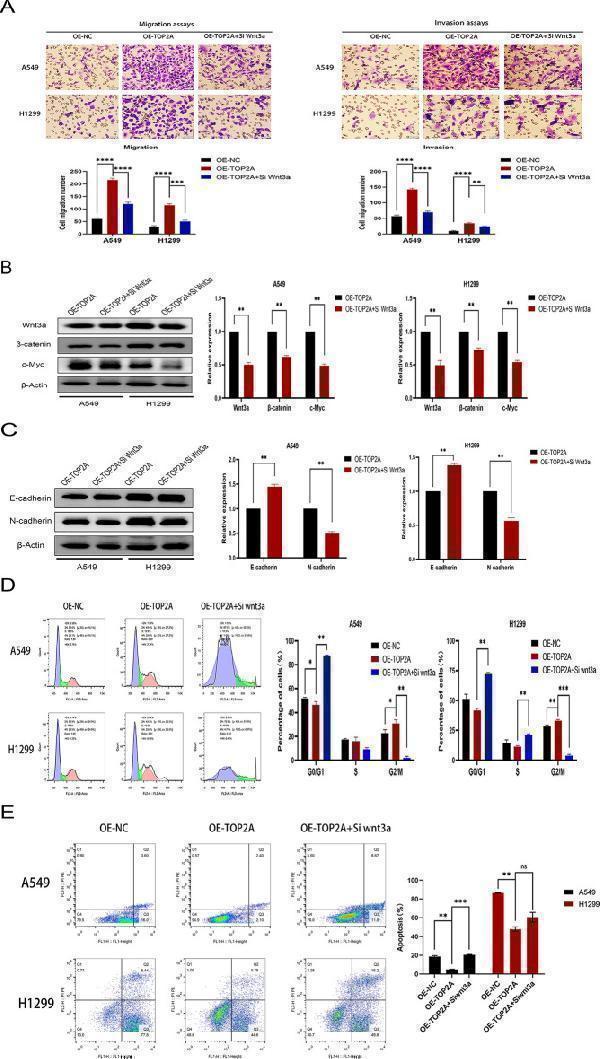
TOP2A promotes non-small cell lung cancer progression via Wnt/β-catenin signaling pathway. ( A ) After Wnt3a gene knockdown, the mobility and invading capabilities of TOP2A-overexpressing cells were evaluated using the transwell assay. ( B,C ) Expression of components of Wnt/β-catenin signaling pathway and EMT-related proteins was examined using western blotting. ( D ) Flow cytometry was utilized to examine the cell cycle. ( E ) Analysis of apoptosis via flow cytometry. *P < 0.05, **P < 0.01, ***P < 0.001 or ****P < 0.0001; ns: not signiffcant.
Index in PubMed under a CC BY license. PMID: 38806610
Click image to see more details
SM impedes traits of CSCs partially through suppressing β-catenin in CRC. A Western blotting, B ALDH + staining and C tumorsphere formation assay were performed after CRC cells transduced with lentiviral β-catenin (encoded by the CTNNB1 gene) cDNA-expressing construct in the presence or absence of SM. Scale bar: 100 μm. D Western blotting, E ALDH + staining and F tumorsphere formation assays were conducted after CRC cells stably transduced with lentiviral shRNA against β-catenin with or without SM treatment. Scale bar: 100 μm. The values are represented as mean ± SD. * p < 0.05, *** p < 0.001
Index in PubMed under a CC BY license. PMID: 40646619
Click image to see more details
SM inhibits hepatic metastasis of CRC cells partially by attenuating β-catenin. A Transwell migration and B matrigel invasion assays were conducted followed by CRC cells transduced with lentiviral β-catenin-encoding construct with or without SM treatment. Scale bar: 100 μm. C Transwell migration and D matrigel invasion assays were conducted followed by CRC cells transduced with lentiviral shRNA against β-catenin in the presence or absence of SM. Scale bar: 100 μm. E The overexpression efficiency of β-catenin in MC38-Luc cells was examined by Western blotting analysis. F Representative images and G quantitative analysis of photon flux on day 21 of C57BL/6 mice followed by intrasplenic injection of MC38-Luc cells stably express β-catenin. n = 5 per group. H Representative images and quantitative analysis of liver metastasis in C57BL/6 mice (n = 5) measured by bioluminescence imaging. I Representative images of metastatic livers and ( J ) the number of surface foci in the livers in C57BL/6 mice (n = 5) are shown. Arrows indicate the presence of metastatic nodules. K Representative photographs of H&E staining of the liver section and L the number of liver metastatic foci in microscopic fields are presented (n = 3). Scale bar: 200 μm. The values are represented as mean ± SD. * p < 0.05, *** p < 0.001
Index in PubMed under a CC BY license. PMID: 40646619
Click image to see more details
IF analysis of Beta Catenin using anti-Beta Catenin antibody (PA1212).
Beta Catenin was detected in immunocytochemical section of A431 cells. Enzyme antigen retrieval was performed using IHC enzyme antigen retrieval reagent (AR0022) for 15 mins. The cells were blocked with 10% goat serum. And then incubated with 5μg/mL rabbit anti-Beta Catenin Antibody (PA1212) overnight at 4°C. DyLight®488 Conjugated Goat Anti-Rabbit IgG (BA1127) was used as secondary antibody at 1:100 dilution and incubated for 30 minutes at 37°C. The section was counterstained with DAPI. Visualize using a fluorescence microscope and filter sets appropriate for the label used.
Specific Publications For Anti-beta Catenin/CTNNB1 Antibody Picoband® (PA1212)
Loading publications
Recommended Resources
Here are featured tools and databases that you might find useful.
- Boster's Pathways Library
- Protein Databases
- Bioscience Research Protocol Resources
- Data Processing & Analysis Software
- Photo Editing Software
- Scientific Literature Resources
- Research Paper Management Tools
- Molecular Biology Software
- Primer Design Tools
- Bioinformatics Tools
- Phylogenetic Tree Analysis
Customer Reviews
Have you used Anti-beta Catenin/CTNNB1 Antibody Picoband®?
Share your experimental results or join a short interview to earn up to $1,000 in product credits or other rewards.
0 Reviews For Anti-beta Catenin/CTNNB1 Antibody Picoband®
Customer Q&As
Have a question?
Find answers in Q&As, reviews.
Can't find your answer?
Submit your question