This website uses cookies to ensure you get the best experience on our website.


- Table of Contents
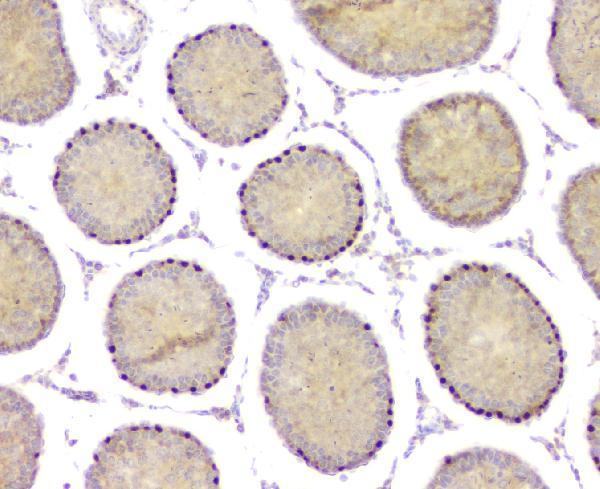
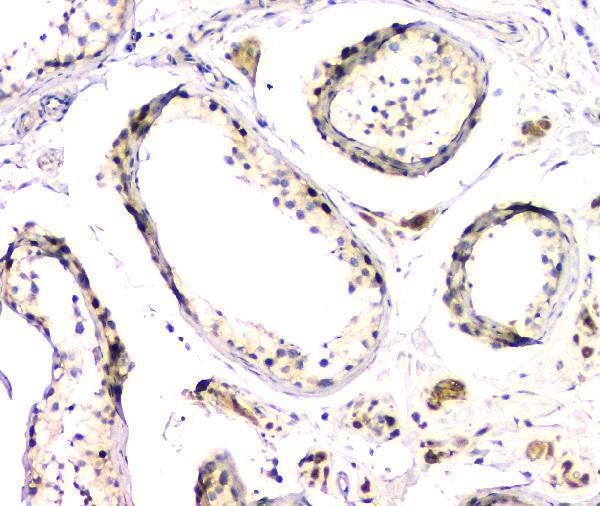
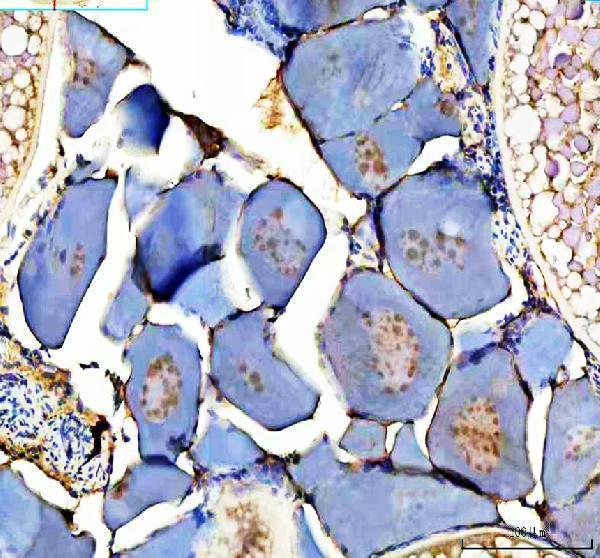
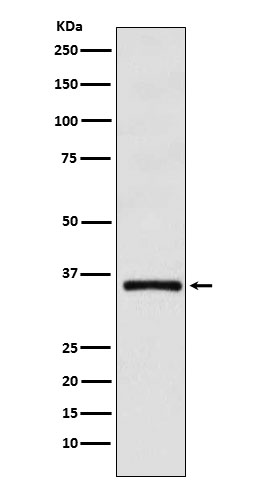
Designing a Western blot for DMRT1? The guide has the expected band size, antibodies backed by real blot images, the controls to run alongside, and protocols taken from published papers.
Open the DMRT1 Western Blot GuideDesigning an IHC experiment for DMRT1? The guide has the expected staining pattern, antigen retrieval and fixation, antibodies backed by real IHC images, the tissue controls to run alongside, and protocols taken from published papers.
Open the DMRT1 IHC Guide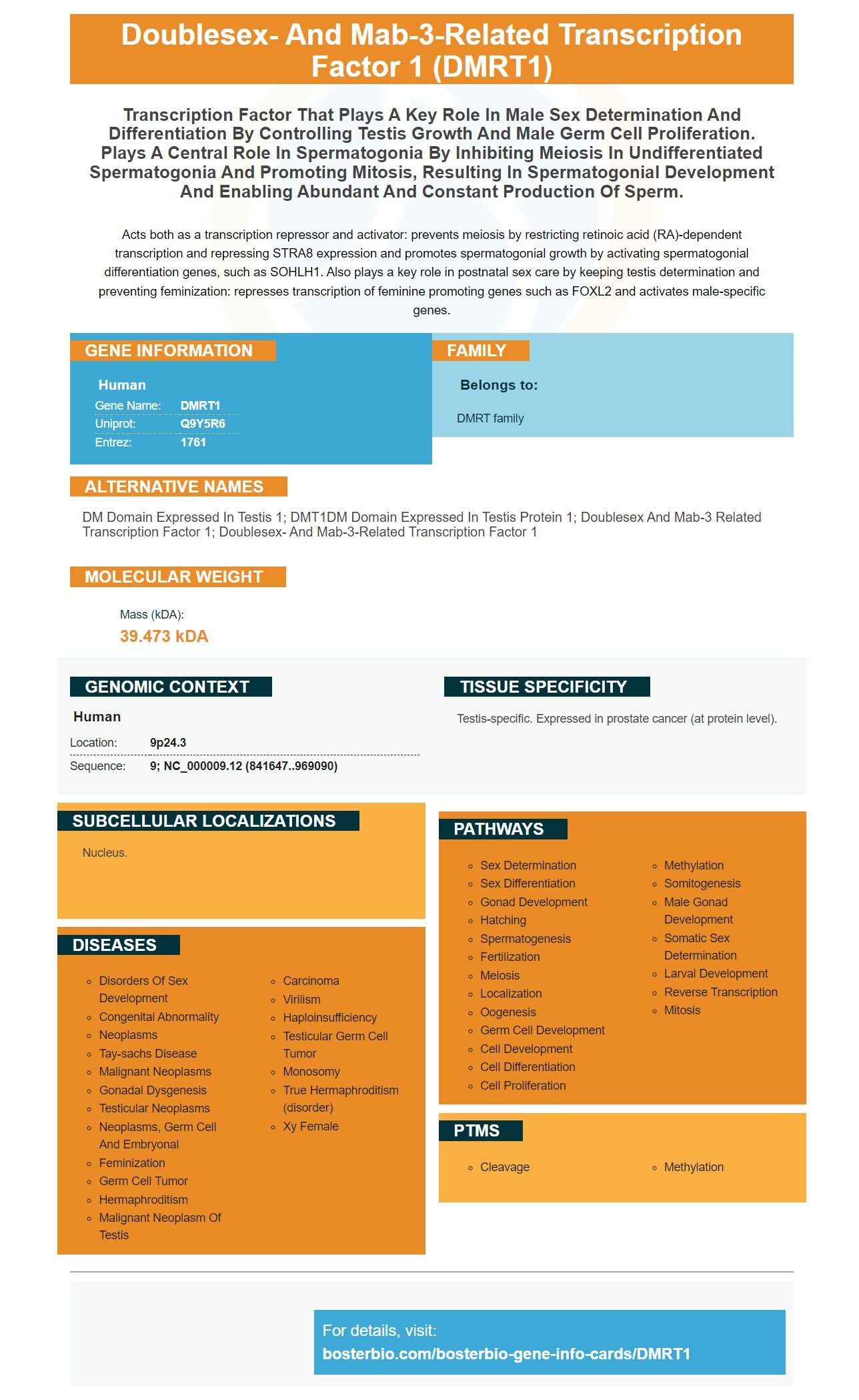
Facts about Doublesex- and mab-3-related transcription factor 1.
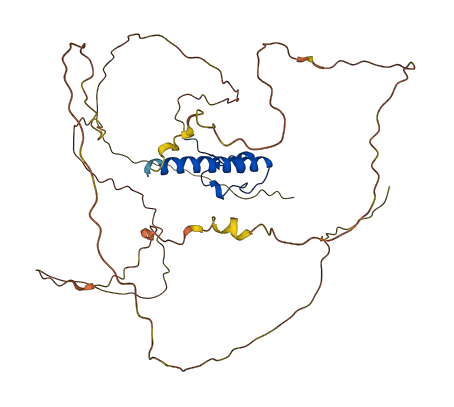
Acts both as a transcription repressor and activator: prevents meiosis by restricting retinoic acid (RA)-dependent transcription and repressing STRA8 expression and promotes spermatogonial growth by activating spermatogonial differentiation genes, such as SOHLH1. Also plays a key role in postnatal sex care by keeping testis determination and preventing feminization: represses transcription of feminine promoting genes such as FOXL2 and activates male-specific genes.
| Human | |
|---|---|
| Gene Name: | DMRT1 |
| Uniprot: | Q9Y5R6 |
| Entrez: | 1761 |

| Belongs to: |
|---|
| DMRT family |

DM domain expressed in testis 1; DMT1DM domain expressed in testis protein 1; doublesex and mab-3 related transcription factor 1; doublesex- and mab-3-related transcription factor 1
Mass (kDA):
39.473 kDA

| Human | |
|---|---|
| Location: | 9p24.3 |
| Sequence: | 9; NC_000009.12 (841647..969090) |
Testis-specific. Expressed in prostate cancer (at protein level).
Nucleus.



PMID: 10332030 by Raymond C.S., et al. A region of human chromosome 9p required for testis development contains two genes related to known sexual regulators.
PMID: 10857744 by Calvari V., et al. A new submicroscopic deletion that refines the 9p region for sex reversal.
*More publications can be found for each product on its corresponding product page