Product Info Summary
| SKU: | M00139 |
|---|---|
| Size: | 100 μl |
| Reactive Species: | Human, Rat |
| Host: | Rabbit |
| Application: | Flow Cytometry, IF, IHC, ICC, WB |
Customers Who Bought This Also Bought
Product info
Product Name
Anti-MMP9 Rabbit Monoclonal Antibody
SKU/Catalog Number
M00139
BM4089 is an alternative SKU for this antibody, used in previous lots.
Size
100 μl
Form
Liquid
Description
Boster Bio Anti-MMP9 Rabbit Monoclonal Antibody catalog # M00139. Tested in WB, IHC, ICC/IF, Flow Cytometry applications. This antibody reacts with Human, Rat.
Storage & Handling
Store at -20°C for one year. For short term storage and frequent use, store at 4°C for up to one month. Avoid repeated freeze-thaw cycles.
Cite This Product
Anti-MMP9 Rabbit Monoclonal Antibody (Boster Biological Technology, Pleasanton CA, USA, Catalog # M00139)
Host
Rabbit
Contents
Rabbit IgG in stabilizing components, phosphate buffered saline, pH 7.4, 150mM NaCl, 0.02% sodium azide and 50% glycerol.
*This antibody is supplied in a stabilized formulation.
Compatibility with conjugation reactions depends on the chemistry of the conjugation method used.
For conjugation methods that are not compatible with the stabilizing components present in this formulation, a carrier-free antibody format is required.
Clonality
Monoclonal
Clone Number
BCD-13
Isotype
Rabbit IgG
Immunogen
A synthesized peptide derived from human MMP9
Reactive Species
M00139 is reactive to MMP9 in Human, Rat
Observed Molecular Weight
80-100 kDa
Calculated molecular weight
78.5 kDa
Antibody Validation
Boster validates all antibodies on WB, IHC, ICC, Immunofluorescence, and ELISA with known positive control and negative samples to ensure specificity and high affinity, including thorough antibody incubations.
Application & Images
Applications
M00139 is guaranteed for Flow Cytometry, IF, IHC, ICC, WB Boster Guarantee
Assay Dilutions Recommendation
The recommendations below provide a starting point for assay optimization. The actual working concentration varies and should be decided by the user.
WB 1:500-2000
IHC 1:50-200
ICC/IF 1:50-200
FC 1:50
Positive Control
WB: Rat kidney tissue,Rat lung tissue
IHC: human spleen tissue, human tonsil tissue
ICC/IF: U87-MG cell
Validation Images & Assay Conditions
Click image to see more details
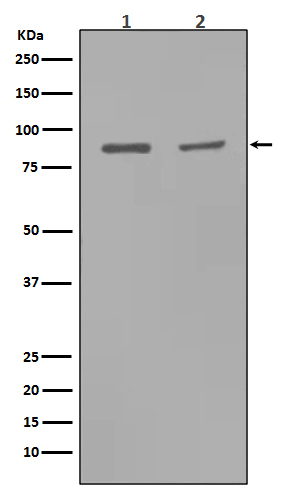
Western blot analysis of MMP9 expression in (1)Rat kidney tissue lysate;(2)Rat lung tissue lysate.
Click image to see more details
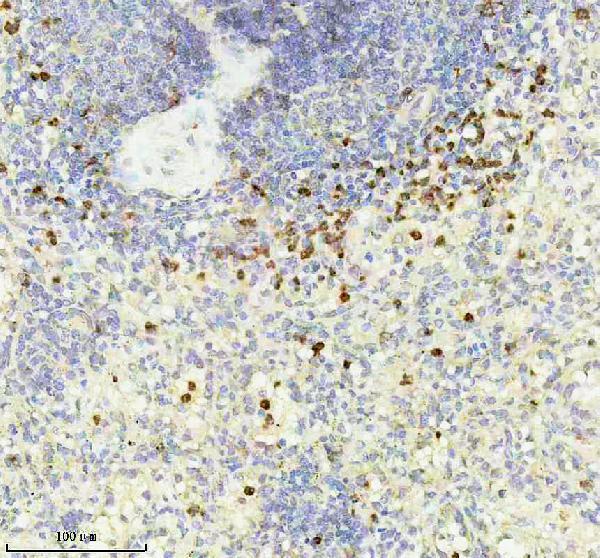
IHC analysis of MMP9 using anti-MMP9 antibody (M00139).
MMP9 was detected in a paraffin-embedded section of human spleen tissue. Heat mediated antigen retrieval was performed in EDTA buffer (pH 8.0, epitope retrieval solution). The tissue section was blocked with 10% goat serum. The tissue section was then incubated with 1:50 rabbit anti-MMP9 Antibody (M00139) overnight at 4°C. Peroxidase Conjugated Goat Anti-rabbit IgG was used as secondary antibody and incubated for 30 minutes at 37°C. The tissue section was developed using HRP Conjugated Rabbit IgG Super Vision Assay Kit (Catalog # SV0002) with DAB as the chromogen.
Click image to see more details
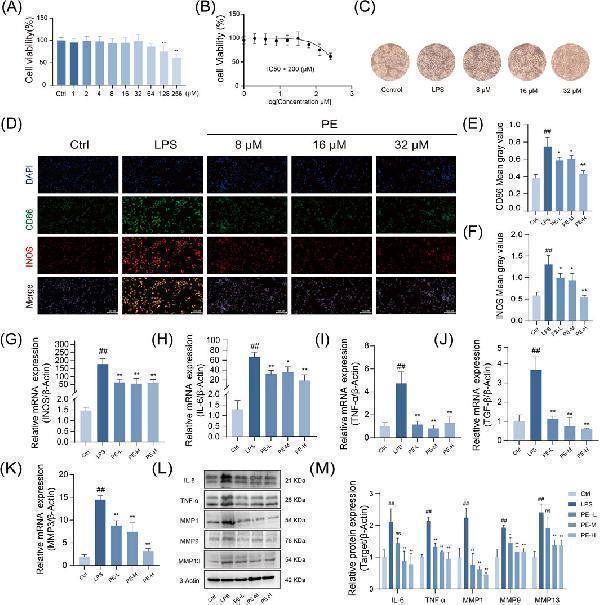
Nti-inflammatory activity of PE against LPS-Induced M1 polarization in RAW264.7 macrophages. (A) Assessment of RAW264.7 cell viability after PE treatment; (B) Determination of the half-inhibitory concentration of PE on RAW264.7 cells (>200 μM) (n = 6); (C) Changes in cell morphology of RAW264.7 cells stimulated with LPS and treated with PE at concentrations of 8, 16, and 32 μM; (D) Measurement of fluorescence intensity of CD86 and INOS in RAW264.7 cells via immunofluorescence staining; (E,F) Quantification of fluorescence intensity from images (D) ; (G–K) Analysis of gene expression of INOS, IL-6, TNF-α, TGF-β, and MMP3 in RAW264.7 cells after modeling and PE treatment by RT-PCR; (L) Evaluation of protein expression of TNF-α, IL-6, MMP1, MMP9, and MMP13 in RAW264.7 cells after modeling and PE treatment; (M) Densitometric analysis of the protein expression shown in image (L) . Data are the mean ± SD of 3 independent experiments. # P < 0.05, ## P < 0.01, vs. Ctrl group; * P < 0.05, ** P < 0.01, vs. LPS group; ns, not significant.
Index in PubMed under a CC BY license. PMID: 41230092
Click image to see more details
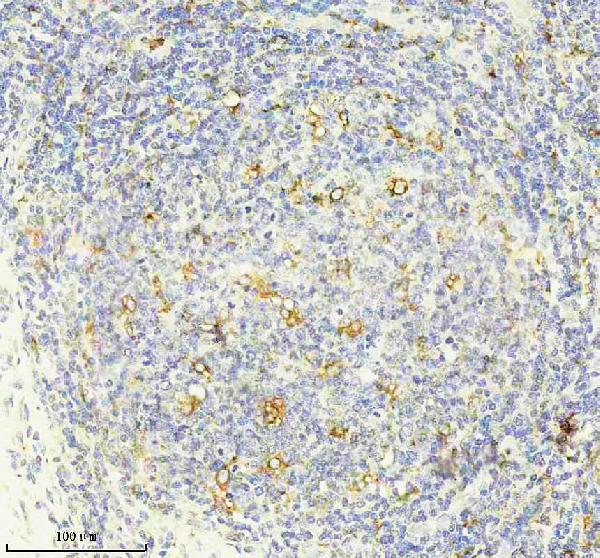
IHC analysis of MMP9 using anti-MMP9 antibody (M00139).
MMP9 was detected in a paraffin-embedded section of human tonsil tissue. Heat mediated antigen retrieval was performed in EDTA buffer (pH 8.0, epitope retrieval solution). The tissue section was blocked with 10% goat serum. The tissue section was then incubated with 1:50 rabbit anti-MMP9 Antibody (M00139) overnight at 4°C. Peroxidase Conjugated Goat Anti-rabbit IgG was used as secondary antibody and incubated for 30 minutes at 37°C. The tissue section was developed using HRP Conjugated Rabbit IgG Super Vision Assay Kit (Catalog # SV0002) with DAB as the chromogen.
Click image to see more details
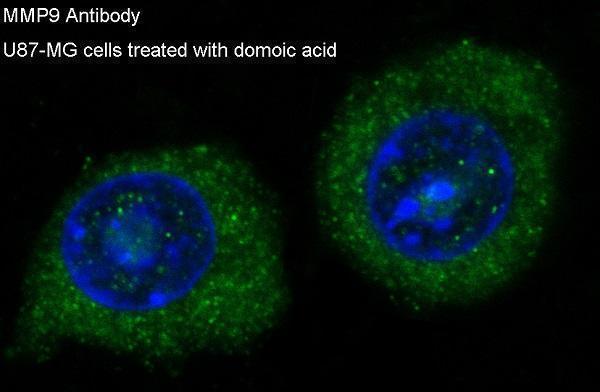
Immunofluorescent analysis of U87-MG cells, using MMP9 Antibody.
Click image to see more details
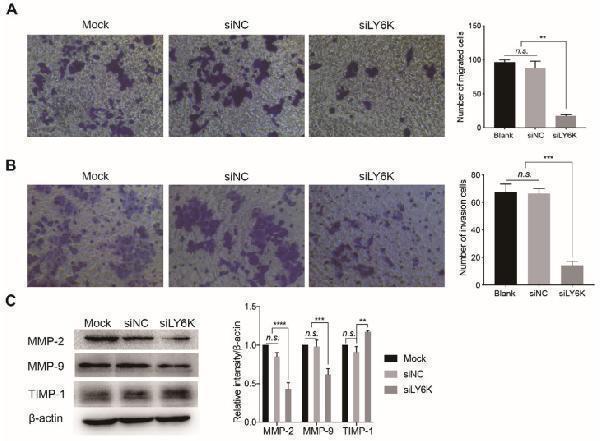
Knockdown of LY6K inhibits migration and invasion of CCSCs in vitro. Optical micrographs and the number of migrated ( A ) and invaded ( B ) CCSCs following siLY6K or siNC transfection for 48 h according to Transwell migration and invasion assay. n = 3. ( C ) Western blot analyses showing the protein levels of MMP-2, MMP-9, and TIMP-1 in CCSCs after treatment with siLY6K or siNC for 48 h. Values are the mean ± SE (n = 3). ** p < 0.01, *** p < 0.001, or **** p < 0.0001 indicates significant differences from the Mock and siNC group as assessed by one-way ANOVA with Tukey–Kramer multiple comparisons tests. LY6K, lymphocyte antigen 6, locus K; CCSC, colon cancer stem cells; MMP, matrix metalloproteinase; TIMP-1, tissue inhibitor of MMP-1; n.s., not significant.
Index in PubMed under a CC BY license. PMID: 39727968
Click image to see more details
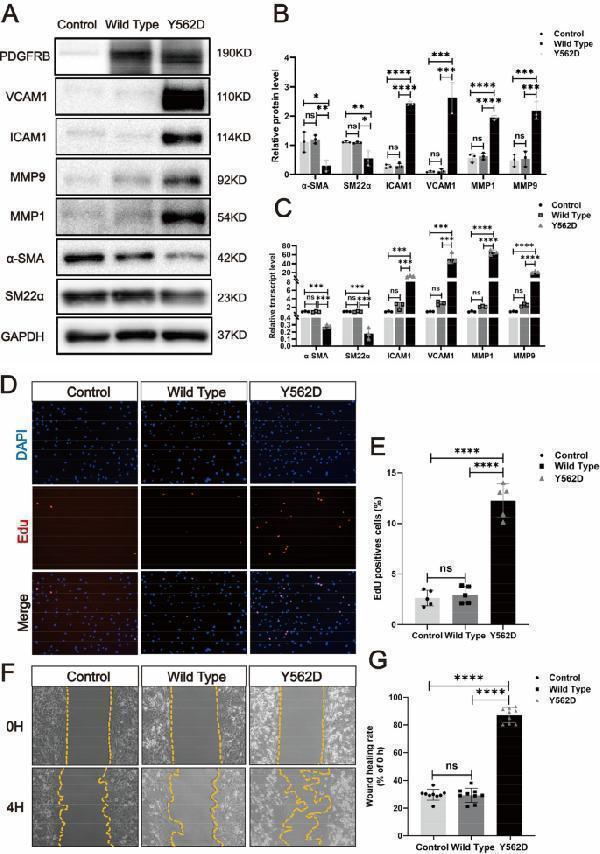
PDGFRB somatic mutation induce phenotypic modulation in SMCs. Immunostaining reveals the expression levels of smooth muscle markers (a-SMA and SM22a) and inflammatory markers (VCAM1, ICAM1, MMP1 and MMP9) in HBVSMCs transfected with different viruses (Control: vector; Wild Type: PDGFRB; Y562D: PDGFRB Y562D ) ( a ). The relative density of immunoblot bands about markers shown in ( A ) were display ( B ) (normalized to those in cells transfected with vector viruses). RT-qPCR ( C ) of SMCs markers (α-SMA and SM22α) and inflammatory markers (VCAM-1, ICAM1, MMP-9 and MMP-1) in HBVSMCs underwent different treatments. Student's t-test and Benjamini–Hochberg correction are employed to assess the statistical significance. Edu assay exhibit the proliferation ability of HBVSMCs under different treatment conditions ( D ). Statistical analysis of the proportion of Edu-positive cells in the different groups from 5 different fields of each group at × 200 magnification. Tukey's multiple comparisons test is used for statistical differences ( E ). Scratch assay displays migratory ability of HBVSMCs underwent different treatment ( F ). Statistical analysis of the rate of wound healing (reduced area at 4H /area at 0H) in the different groups from 9 different fields of each group at × 200 magnification. Tukey's multiple comparisons test is utilized to evaluate the statistical significance. * p adj < 0.05, ** p adj < 0.01, *** p adj < 0.001, **** p adj < 0.0001 ( G ). The above experiments are all repeated three times
Index in PubMed under a CC BY license. PMID: 38741091
Click image to see more details
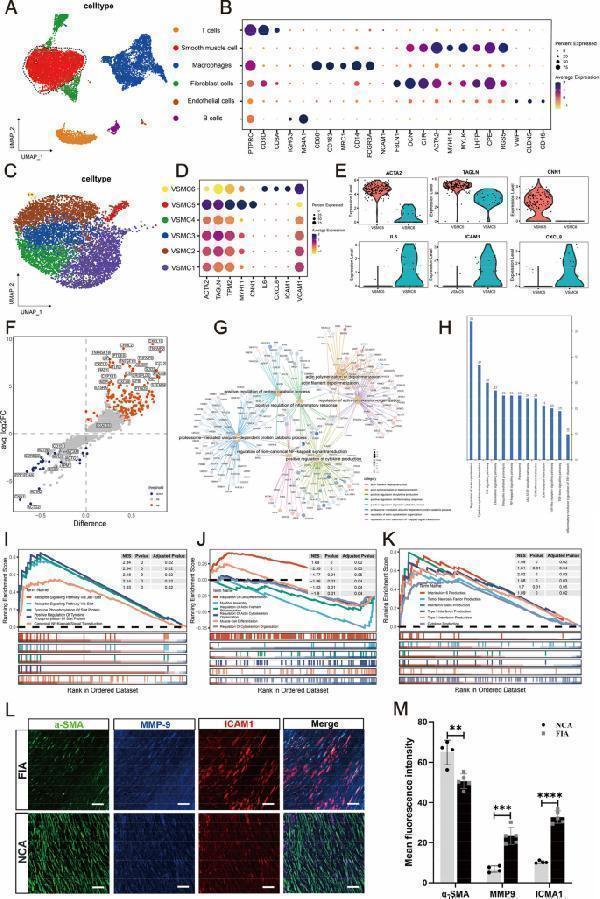
Single-cell transcriptional profiling of intracranial fusiform aneurysmal cells ( A - K ) and multi-color immunofluorescence (mIF) of smooth muscle cells (SMCs) markers and inflammatory markers between intracranial fusiform aneurysms (IFAs) and normal cerebral arteries (NCAs) ( L - M ). T-SNE visualization of intracranial fusiform aneurysmal cells type. Colored according to cell type ( A ). Visualization of specific gene expression patterns related to cell subsets identified in ( A ) using a bubble plot ( B ). T-SNE visualization of VSMC cell clusters. Colored according to clusters ( C ). Visualization of structural protein and inflammation-related genes expression patterns within the subsets of smooth muscle cells identified in ( C ) using a bubble plot ( D ). The violin plots show the expression differences of structural protein genes and inflammatory genes between the contraction subgroup (VSMC5) and the inflammatory subgroup (VSMC6) ( E ). The volcano plot specifically shows the gene expression differences between the two cell groups ( F ). The petal plot displays the GO enrichment analysis results of differential genes between the VSMC5 and VSMC6 ( G ). The bar graph shows the KEGG enrichment analysis results of differential genes between these two cell subsets ( H ). The GSEA enrichment analysis results of differential genes between the two groups. The enrichment results of differential genes related to signaling pathways ( I ). The enrichment results of differential genes related to structural protein genes ( J ). The enrichment results of differential genes related to the process of inflammatory factor secretion ( K ). α-SMA (green, SMCs marker), MMP-9 (blue, inflammatory marker) and ICAM-1 (red, inflammatory marker) in FIAs and NCAs are detected using mIF. Scale bar, 100 μm ( L ). Statistical analysis of mean fluorescence intensity about SMCs marker (α-SMA) and inflammatory markers (ICAM-1 and MMP-9) between NCAs ( n = 4) and FIAs ( n = 5). 'n' represented the number of samples. Three random fields were selected for statistical analysis in each sample, and the average value represented the detection value of this marker in this sample. The Student's t-test is utilized to examine the statistical differences among each marker. ns, no significant; ** p < 0.01, *** p < 0.01 (M). n values indicate number of independent experiments performed
Index in PubMed under a CC BY license. PMID: 38741091
Specific Publications For Anti-MMP9 Rabbit Monoclonal Antibody (M00139)
Loading publications
Recommended Resources
Here are featured tools and databases that you might find useful.
- Boster's Pathways Library
- Protein Databases
- Bioscience Research Protocol Resources
- Data Processing & Analysis Software
- Photo Editing Software
- Scientific Literature Resources
- Research Paper Management Tools
- Molecular Biology Software
- Primer Design Tools
- Bioinformatics Tools
- Phylogenetic Tree Analysis
Customer Reviews
Have you used Anti-MMP9 Rabbit Monoclonal Antibody?
Share your experimental results or join a short interview to earn up to $1,000 in product credits or other rewards.
0 Reviews For Anti-MMP9 Rabbit Monoclonal Antibody
Customer Q&As
Have a question?
Find answers in Q&As, reviews.
Can't find your answer?
Submit your question
18 Customer Q&As for Anti-MMP9 Rabbit Monoclonal Antibody
Question
I see that the anti-MMP9 Rabbit Monoclonal antibody M00139 works with IHC, what is the protocol used to produce the result images on the product page?
Verified Customer
Verified customer
Asked: 2020-04-21
Answer
You can find protocols for IHC on the "support/technical resources" section of our navigation menu. If you have any further questions, please send an email to support@bosterbio.com
Boster Scientific Support
Answered: 2020-04-21
Question
What secondary antibody would best work for Anti-MMP9 Rabbit Monoclonal Antibody for flow cytometry?
Verified customer
Asked: 2019-11-25
Answer
The recommended for M00139 for flow cytometry is BA1127 Goat Anti-Rabbit IgG (H+L) Secondary Antibody, DyLight®488 Conjugate.
Boster Scientific Support
Answered: 2019-11-27
Question
Is this M00139 anti-MMP9 Rabbit Monoclonal antibody reactive to the isotypes of MMP9?
Verified Customer
Verified customer
Asked: 2019-11-22
Answer
The immunogen of M00139 anti-MMP9 Rabbit Monoclonal antibody is A synthesized peptide derived from human MMP9. Could you tell me which isotype you are interested in so I can help see if the immunogen is part of this isotype?
Boster Scientific Support
Answered: 2019-11-22
Question
My boss were satisfied with the WB result of your anti-MMP9 Rabbit Monoclonal antibody. However we have observed positive staining in fibrosarcoma extracellular space using this antibody. Is that expected? Could you tell me where is MMP9 supposed to be expressed?
Verified Customer
Verified customer
Asked: 2019-10-24
Answer
Based on literature, fibrosarcoma does express MMP9. Generally MMP9 expresses in secreted, extracellular space, extracellular. Regarding which tissues have MMP9 expression, here are a few articles citing expression in various tissues:
B-cell, Pubmed ID: 15489334
Blood, Pubmed ID: 1480034, 1281792
Fibrosarcoma, Pubmed ID: 1400481, 7669817
Monocytic leukemia, Pubmed ID: 20800577
Neutrophil, Pubmed ID: 1645657, 1464361, 1653055
Umbilical cord blood, Pubmed ID: 14702039
Boster Scientific Support
Answered: 2019-10-24
Question
Do you have a BSA free version of anti-MMP9 Rabbit Monoclonal antibody M00139 available?
Verified Customer
Verified customer
Asked: 2019-10-14
Answer
We appreciate your recent telephone inquiry. I can confirm that some lots of this anti-MMP9 Rabbit Monoclonal antibody M00139 are BSA free. For now, these lots are available and we can make a BSA free formula for you free of charge. It will take 3 extra days to prepare. If you require this antibody BSA free again in future, please do not hesitate to contact me and I will be pleased to check which lots we have in stock that are BSA free.
Boster Scientific Support
Answered: 2019-10-14
Question
I appreciate helping with my inquiry over the phone. Here are the WB image, lot number and protocol we used for tibia using anti-MMP9 Rabbit Monoclonal antibody M00139. Let me know if you need anything else.
D. Jones
Verified customer
Asked: 2019-10-02
Answer
I appreciate the data. You have provided everything we needed. Our lab team are working to resolve your inquiry as quickly as possible, and we appreciate your patience and understanding! Please let me know if there is anything you need in the meantime.
Boster Scientific Support
Answered: 2019-10-02
Question
Is a blocking peptide available for product anti-MMP9 Rabbit Monoclonal antibody (M00139)?
Verified Customer
Verified customer
Asked: 2019-10-02
Answer
We do provide the blocking peptide for product anti-MMP9 Rabbit Monoclonal antibody (M00139). If you would like to place an order for it please contact support@bosterbio.com and make a special request.
Boster Scientific Support
Answered: 2019-10-02
Question
Will M00139 anti-MMP9 Rabbit Monoclonal antibody work on parafin embedded sections? If so, which fixation method do you recommend we use (PFA, paraformaldehyde, other)?
Verified Customer
Verified customer
Asked: 2019-08-29
Answer
It shows on the product datasheet, M00139 anti-MMP9 Rabbit Monoclonal antibody as been validated on IHC. It is best to use PFA for fixation because it has better tissue penetration ability. PFA needs to be prepared fresh before use. Long term stored PFA turns into formalin, as the PFA molecules congregate and become formalin.
Boster Scientific Support
Answered: 2019-08-29
Question
My question regarding product M00139, anti-MMP9 Rabbit Monoclonal antibody. I was wondering if it would be possible to conjugate this antibody with biotin. I would need it to be without BSA or sodium azide. I am planning on using a buffer exchange of sodium azide with PBS only. Would there be problems for me to conjugate the antibody and store it in -20 degrees in small aliquots?
Verified Customer
Verified customer
Asked: 2019-06-27
Answer
We do not recommend storing this antibody with PBS buffer only in -20 degrees. If you want to store it in -20 degrees it is best to add some cryoprotectant like glycerol. If you want carrier free M00139 anti-MMP9 Rabbit Monoclonal antibody, we can provide it to you in a special formula with trehalose and/or glycerol. These molecules will not interfere with conjugation chemistry and provide a good level of protection for the antibody from degradation. Please be sure to specify this in your purchase order.
Boster Scientific Support
Answered: 2019-06-27
Question
Will A00306-2 and M00139 be able to work on ELISA experiment?
Verified customer
Asked: 2019-06-17
Answer
The Anti-IFNAR1 Antibody Picoband™ (A00306-2) and Anti-MMP9 Rabbit Monoclonal Antibody (M00139 are not experimentally validated for the ELISA experiment. Please run a pilot test if you want to try.
Boster Scientific Support
Answered: 2019-06-17
Question
We are currently using anti-MMP9 Rabbit Monoclonal antibody M00139 for rat tissue, and we are satisfied with the IF results. The species of reactivity given in the datasheet says human, rat. Is it likely that the antibody can work on dog tissues as well?
Verified Customer
Verified customer
Asked: 2019-05-17
Answer
The anti-MMP9 Rabbit Monoclonal antibody (M00139) has not been validated for cross reactivity specifically with dog tissues, but there is a good chance of cross reactivity. We have an innovator award program that if you test this antibody and show it works in dog you can get your next antibody for free. Please contact me if I can help you with anything.
Boster Scientific Support
Answered: 2019-05-17
Question
Will anti-MMP9 Rabbit Monoclonal antibody M00139 work for IHC with tibia?
Verified Customer
Verified customer
Asked: 2019-05-02
Answer
According to the expression profile of tibia, MMP9 is highly expressed in tibia. So, it is likely that anti-MMP9 Rabbit Monoclonal antibody M00139 will work for IHC with tibia.
Boster Scientific Support
Answered: 2019-05-02
Question
See attached the WB image, lot number and protocol we used for tibia using anti-MMP9 Rabbit Monoclonal antibody M00139. Please let me know if you require anything else.
M. Brown
Verified customer
Asked: 2019-02-13
Answer
Thank you very much for the data. Our lab team are working to resolve this as quickly as possible, and we appreciate your patience and understanding! You have provided everything we needed. Please let me know if there is anything you need in the meantime.
Boster Scientific Support
Answered: 2019-02-13
Question
My lab would like using your anti-MMP9 Rabbit Monoclonal antibody for cytokine-mediated signaling pathway studies. Has this antibody been tested with western blotting on kidney tissue? We would like to see some validation images before ordering.
Verified Customer
Verified customer
Asked: 2019-01-09
Answer
Thank you for your inquiry. This M00139 anti-MMP9 Rabbit Monoclonal antibody is validated on tissue lysate, kidney tissue, lung tissue. It is guaranteed to work for IF, IHC, WB in human, rat. Our Boster guarantee will cover your intended experiment even if the sample type has not been be directly tested.
Boster Scientific Support
Answered: 2019-01-09
Question
We purchased anti-MMP9 Rabbit Monoclonal antibody for IF on fibrosarcoma last year. I am using human, and I plan to use the antibody for IHC next. We are interested in examining fibrosarcoma as well as umbilical cord blood in our next experiment. Could give a recommendation on which antibody would work the best for IHC?
Verified Customer
Verified customer
Asked: 2017-05-26
Answer
I looked at the website and datasheets of our anti-MMP9 Rabbit Monoclonal antibody and it seems that M00139 has been tested on human in both IF and IHC. Thus M00139 should work for your application. Our Boster satisfaction guarantee will cover this product for IHC in human even if the specific tissue type has not been validated. We do have a comprehensive range of products for IHC detection and you can check out our website bosterbio.com to find out more information about them.
Boster Scientific Support
Answered: 2017-05-26
Question
We have observed staining in rat b-cell. What should we do? Is anti-MMP9 Rabbit Monoclonal antibody supposed to stain b-cell positively?
G. Bhatt
Verified customer
Asked: 2017-02-13
Answer
From what I have seen in literature b-cell does express MMP9. From what I have seen in Uniprot.org, MMP9 is expressed in tibia, umbilical cord blood, b-cell, neutrophil, fibrosarcoma, blood, monocytic leukemia, among other tissues. Regarding which tissues have MMP9 expression, here are a few articles citing expression in various tissues:
B-cell, Pubmed ID: 15489334
Blood, Pubmed ID: 1480034, 1281792
Fibrosarcoma, Pubmed ID: 1400481, 7669817
Monocytic leukemia, Pubmed ID: 20800577
Neutrophil, Pubmed ID: 1645657, 1464361, 1653055
Umbilical cord blood, Pubmed ID: 14702039
Boster Scientific Support
Answered: 2017-02-13
Question
I am looking for to test anti-MMP9 Rabbit Monoclonal antibody M00139 on rat tibia for research purposes, then I may be interested in using anti-MMP9 Rabbit Monoclonal antibody M00139 for diagnostic purposes as well. Is the antibody suitable for diagnostic purposes?
S. Li
Verified customer
Asked: 2016-12-26
Answer
The products we sell, including anti-MMP9 Rabbit Monoclonal antibody M00139, are only intended for research use. They would not be suitable for use in diagnostic work. If you have the means to develop a product into diagnostic use, and are interested in collaborating with us and develop our product into an IVD product, please contact us for more discussions.
Boster Scientific Support
Answered: 2016-12-26
Question
I was wanting to use your anti-MMP9 Rabbit Monoclonal antibody for IHC for rat tibia on frozen tissues, but I want to know if it has been tested for this particular application. Has this antibody been tested and is this antibody a good choice for rat tibia identification?
T. Rodriguez
Verified customer
Asked: 2015-09-17
Answer
You can see on the product datasheet, M00139 anti-MMP9 Rabbit Monoclonal antibody has been validated for IF, IHC, WB on human, rat tissues. We have an innovator award program that if you test this antibody and show it works in rat tibia in IHC-frozen, you can get your next antibody for free.
Boster Scientific Support
Answered: 2015-09-17