This website uses cookies to ensure you get the best experience on our website.


- Table of Contents
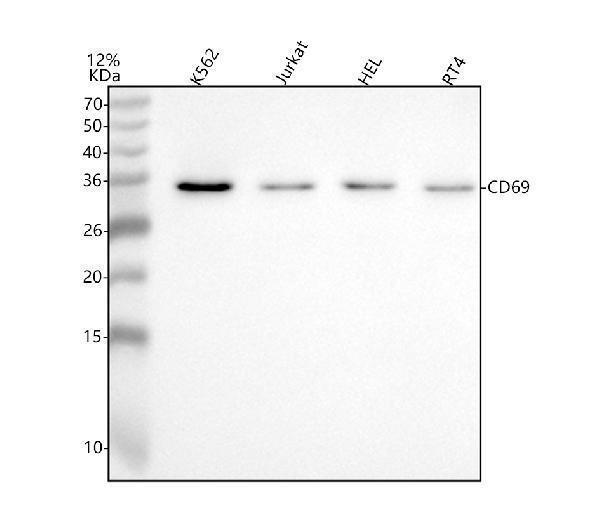
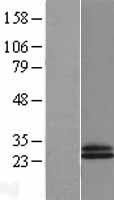
Designing a Western blot for CD69? The guide has the expected band size, antibodies backed by real blot images, the controls to run alongside, and protocols taken from published papers.
Open the CD69 Western Blot Guide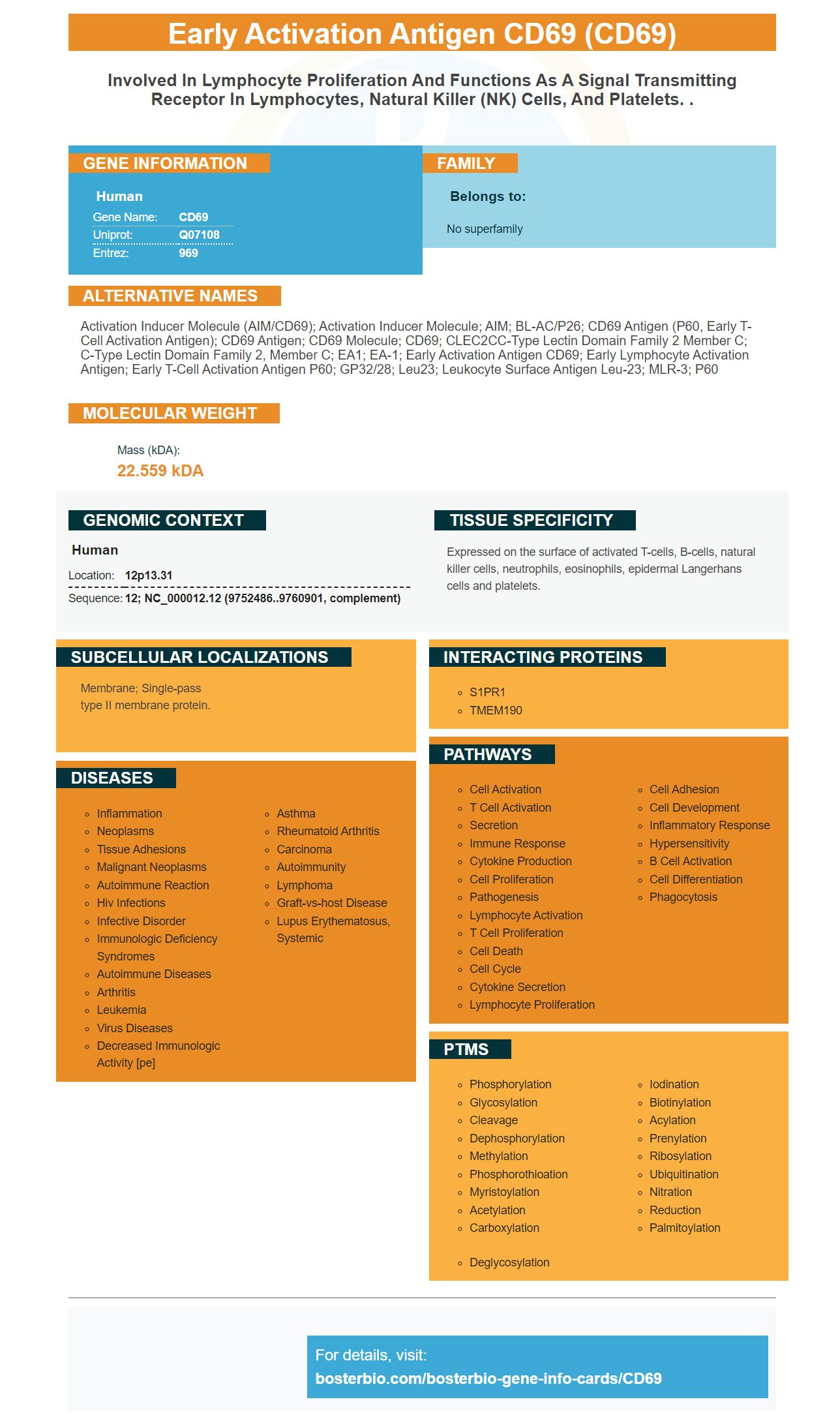
2 Citations

Facts about Early activation antigen CD69.
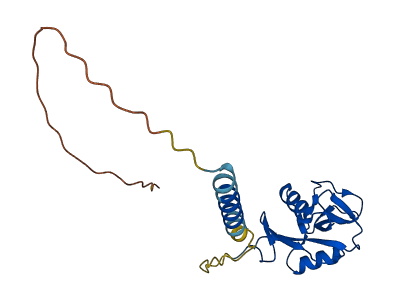
| Human | |
|---|---|
| Gene Name: | CD69 |
| Uniprot: | Q07108 |
| Entrez: | 969 |
| Belongs to: |
|---|
| No superfamily |

activation inducer molecule (AIM/CD69); Activation inducer molecule; AIM; BL-AC/P26; CD69 antigen (p60, early T-cell activation antigen); CD69 antigen; CD69 molecule; CD69; CLEC2CC-type lectin domain family 2 member C; C-type lectin domain family 2, member C; EA1; EA-1; early activation antigen CD69; early lymphocyte activation antigen; Early T-cell activation antigen p60; GP32/28; Leu23; Leukocyte surface antigen Leu-23; MLR-3; p60
Mass (kDA):
22.559 kDA

| Human | |
|---|---|
| Location: | 12p13.31 |
| Sequence: | 12; NC_000012.12 (9752486..9760901, complement) |
Expressed on the surface of activated T-cells, B-cells, natural killer cells, neutrophils, eosinophils, epidermal Langerhans cells and platelets.
Membrane; Single-pass type II membrane protein.



PMID: 8496594 by Hamann J., et al. Expression cloning of the early activation antigen CD69, a type II integral membrane protein with a C-type lectin domain.
PMID: 8340758 by Lopez-Cabrera M., et al. Molecular cloning, expression, and chromosomal localization of the human earliest lymphocyte activation antigen AIM/CD69, a new member of the C-type animal lectin superfamily of signal-transmitting receptors.
*More publications can be found for each product on its corresponding product page