This website uses cookies to ensure you get the best experience on our website.


- Table of Contents
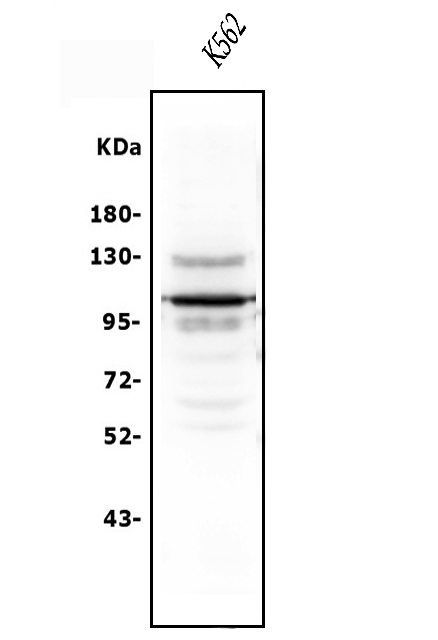
Designing a Western blot for USP15? The guide has the expected band size, antibodies backed by real blot images, the controls to run alongside, and protocols taken from published papers.
Open the USP15 Western Blot Guide
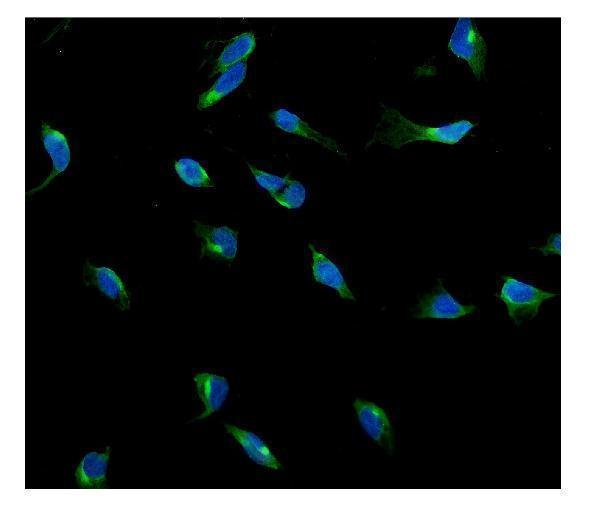
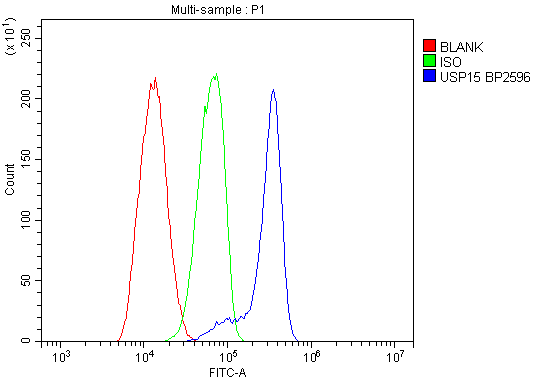
Facts about Ubiquitin carboxyl-terminal hydrolase 15.
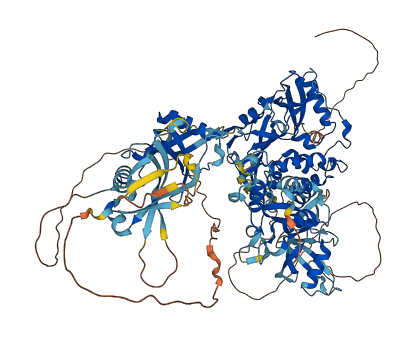
According to another reports, regulates the TGF-beta receptor signaling pathway by mediating deubiquitination and stabilization of TGFBR1, leading to an enhanced TGF-beta signal (PubMed:22344298). Able to mediate deubiquitination of monoubiquitinated substrates and'Lys- 48'-linked polyubiquitin chains, protecting them against proteasomal degradation.
| Human | |
|---|---|
| Gene Name: | USP15 |
| Uniprot: | Q9Y4E8 |
| Entrez: | 9958 |
| Belongs to: |
|---|
| peptidase C19 family |

Deubiquitinating enzyme 15; EC 3.1.2.15; EC 3.4.19.12; Gcap18; KIAA0529; KIAA0529ubiquitin carboxyl-terminal hydrolase 15; MGC131982; MGC149838; MGC74854; ubiquitin specific peptidase 15; ubiquitin specific protease 15; ubiquitin thioesterase 15; Ubiquitin thiolesterase 15; Ubiquitin-specific-processing protease 15; Ubp109; UNPH-2; UNPH4; USP15
Mass (kDA):
112.419 kDA

| Human | |
|---|---|
| Location: | 12q14.1 |
| Sequence: | 12; NC_000012.12 (62260340..62416389) |
Expressed in skeletal muscle, kidney, heart, placenta, liver, thymus, lung, and ovary, with little or no expression in other tissues.
Cytoplasm. Nucleus. Mitochondrion.





PMID: 10444327 by Baker R.T., et al. Identification, functional characterization, and chromosomal localization of USP15, a novel human ubiquitin-specific protease related to the UNP oncoprotein, and a systematic nomenclature for human ubiquitin-specific proteases.
PMID: 12532266 by Angelats C., et al. Isolation and characterization of the mouse ubiquitin-specific protease Usp15.