This website uses cookies to ensure you get the best experience on our website.


- Table of Contents
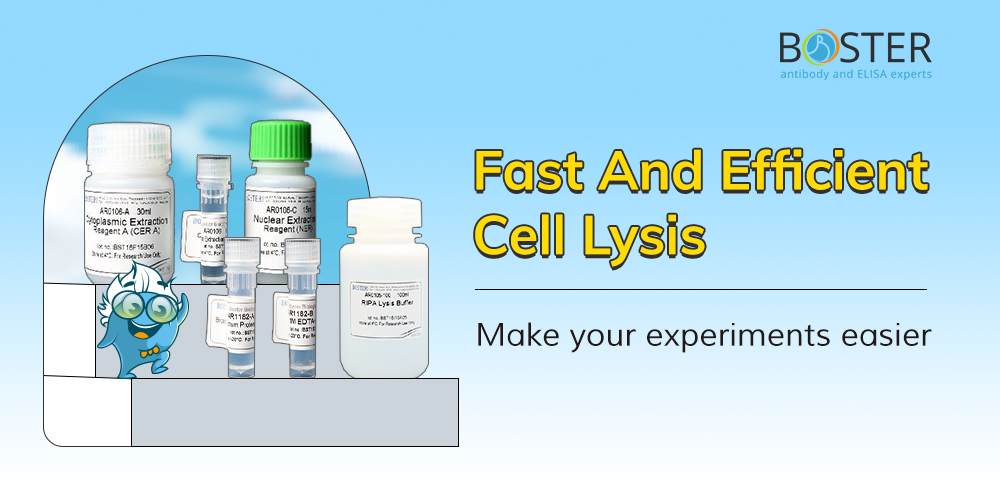
Cell lysis refers to the process of breaking down the cell membrane through physical, chemical, or enzymatic methods, allowing the release of intracellular components such as proteins, nucleic acids, and small molecules. Cell lysis is crucial in molecular biology and biochemistry, especially when extracting and analyzing intracellular target molecules. Effective cell disruption is a foundational step in western blot sample preparation, where maintaining protein integrity during lysis directly impacts downstream results.
Once proteins are extracted well, the next quality checkpoint is whether transfer onto the membrane has worked as expected. This guide on how to check transfer quality in Western blot is useful for separating lysis-related problems from transfer-related signal loss later in the workflow.
Because inhibitor timing affects whether degradation or dephosphorylation is prevented early enough, this guide on when to add protease and phosphatase inhibitors for Western blot is a useful companion when setting up lysis buffers for sensitive targets.
To extract proteins from different cellular locations, different types of cell lysis buffers are required due to the distinct structures and compositions of various cellular regions. When working with transfected or engineered cells, reporter cell lines provide a convenient and reproducible system to validate lysis buffer effectiveness across cellular compartments. Different lysis buffer formulations can selectively lyse specific cellular structures, thereby releasing proteins from the target locations.
If your main question is how to match buffer strength to target protein type, solubility, and downstream blot quality, this practical guide on which lysis buffer to use for Western blot offers a more direct workflow for choosing between common options before sample prep begins.
For example, the Enhanced RIPA Lysis Buffers have advantage ranges in the following areas:
| Location of Protein | Lysis Buffer Recommended |
|---|---|
| Whole Cell | NP40、RIPA |
| Cytoplasmic | Cytoplasmic and Nuclear Protein Extraction Kit |
| Membrane bound | NP40/RIPA |
| Nuclear | Cytoplasmic and Nuclear Protein Extraction Kit |
| Mitochondria | RIPA |
| Golgi Apparatus | Enhanced RIPA |
(use RIPA as an example)
Note: Pre-chill an appropriate volume of RIPA Lysis Buffer at 4°C. If desired, add protease inhibitor and phosphatase inhibitor to the lysis buffer immediately before use.
Note: RIPA lysis buffer can be added directly to the flask containing cells. Please see the following procedures.
1. Carefully remove the culture medium from adherent cells.
2. Wash cells with chilled PBS. Carefully remove PBS.
3. Add chilled RIPA lysis buffer to the cells. Vortex briefly. Incubate on ice for 30 minutes. (For the volume of the lysis buffer, follow the instructions listed below)
| SIZE of the plate/surface area | Volume of the lysis buffer |
|---|---|
| 100mm | 500-1000μL |
| 60mm | 250-500μL |
| 6-well plate | 200-400μL per well |
| 24-well plate | 100-200μL per well |
| 96-well plate | 50-100μL per well |
4. Centrifuge samples at 14000xg for 10 minutes.
5. Transfer the supernatant to a new tube for further analysis.
Cell lysis is an essential process in molecular biology, facilitating the release of intracellular components for analysis. Various methods, including mechanical, chemical, and enzymatic approaches, are used depending on the experimental needs. Chemical lysis buffers, containing detergents, buffers, salts, chelating agents, and inhibitors, play a crucial role in stabilizing proteins during lysis. Enhanced lysis buffers, with fortified compositions, are particularly effective for challenging samples, such as membrane proteins or complex tissues. Selecting the appropriate lysis method and buffer ensures efficient protein extraction while preserving the natural structure and function of the target molecules.