This website uses cookies to ensure you get the best experience on our website.


- Table of Contents

A clean loading control band can still normalize the wrong thing. If the control is saturated, treatment-sensitive, or mismatched to the sample fraction, it can make a blot look corrected while quietly distorting the target result. In Western blotting, a reliable internal loading control should remain proportional to the amount of sample loaded and independent of changes in the protein of interest.
To choose a reliable Western blot loading control, define what variation you need to control: total protein loading, transfer efficiency, fraction recovery, or densitometry normalization. Selecting appropriate loading controls antibodies can help ensure the chosen reference is suitable for the type of variation being assessed. The control should be stable under the treatment, appropriate for the sample fraction, detected within the linear range, and processed under the same workflow as the target. GAPDH, beta-actin, and tubulin can work for routine total lysates, but they are not universal references. Across different experimental conditions, the selected reference should reflect technical variation without changing alongside protein expression or overall protein abundance.
A loading control is not just a band under the target. It is the reference used to argue that target differences are biological rather than technical. If that reference is unstable or overloaded, normalization can make weak data look stronger than it is. For a broader product starting point, Boster's Loading Control Antibodies page is useful, but the real decision still depends on the experiment. A sound Western blot analysis therefore requires evidence that the internal loading control is suitable for the sample type and treatment.
Most Western blot normalization relies on one assumption: the loading control changes because of technical variation, not because of the biology being tested. This means the internal loading control should remain stable even when the protein of interest and related protein levels respond to treatment.
That assumption is easy to violate. If a treatment lowers both the target protein and GAPDH, normalizing the target to GAPDH may underestimate the real target decrease. If the target is unchanged but beta-actin changes because the treatment affects cytoskeletal organization, normalization may create a false target difference. If the loading control is saturated, every lane can look equal even when loading differences remain. This concern is especially important when the control is a cytoskeletal protein or when the experiment examines signaling proteins that can alter cell structure or metabolism.
The question is not simply, “Do I have a loading control?” The better question is whether that control is allowed to behave as a reference in this experiment.
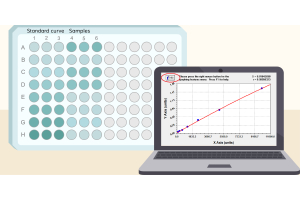
Different blots need different reference logic. In routine total lysate experiments, the main concern is usually lane-to-lane loading and transfer variation. A common housekeeping protein may be enough if it is stable and not saturated. Before loading, a protein assay should be performed against a standard curve so that comparable amounts of sample enter each lane.
Fractionated samples are different. A nuclear fraction needs a nuclear reference. A mitochondrial fraction needs a mitochondrial reference. A membrane-enriched sample should not be normalized blindly to a soluble cytoplasmic protein. Equal total protein loading does not always mean equal recovery of the compartment you care about. The internal loading control should match the subcellular localization of the fraction and should represent recovery of the compartment containing the target.
This is where mismatched controls become dangerous. Strong GAPDH signal in a nuclear fraction may be a contamination warning, not a loading control. A cytosolic control in a membrane prep may not reflect membrane protein recovery. Boster's Western Blot Antibody Selection Guide gives a useful overview of compartment-based antibody choices, but the key is to match the control to the technical question. For nuclear proteins, lamin B1 can serve as a nuclear reference when its stability has been validated. However, lamin B1 may change during apoptosis, senescence, or nuclear envelope disruption. For mitochondrial samples, a marker associated with the mitochondrial membrane may better reflect organelle recovery than a total lysate control.
GAPDH, beta-actin, and tubulin are popular because they are abundant and easy to detect. That convenience is also why they can mislead.
GAPDH is tied to glycolysis and can shift in metabolism, hypoxia, stress, and cell-state experiments. Beta-actin becomes risky when the study affects migration, differentiation, morphology, apoptosis, or the cytoskeleton. Tubulin needs caution in microtubule-drug, cell-cycle, neuronal, or differentiation models. In these settings, altered protein levels may reflect biology rather than loading variation.
Nuclear controls such as Histone H3, Lamin, or TBP are better suited to nuclear fractions, but they still need context. Apoptosis, chromatin remodeling, or nuclear envelope disruption can change what looks like a stable marker. Cell-cycle synchronization can also influence histone abundance during DNA replication. In studies focused on DNA replication, validate Histone H3 and other nuclear references before using them for normalization.
A housekeeping protein becomes a bad control the moment the experiment starts regulating it. Post-translational modifications can also change antibody recognition or apparent band migration, even when the amount of the reference protein has not changed.
One of the most common loading-control failures is not absence. It is saturation.
Housekeeping proteins are often so abundant that their bands become too strong before the target is detected well. A clean, dark GAPDH or beta-actin band may look reassuring, but if the signal has plateaued, it no longer reflects protein amount. A saturated loading control cannot correct loading differences. It only makes different lanes look more equal than they are. For quantitative Western blot analysis, the internal loading control and the target must both remain within a response range where signal intensity tracks protein levels.
A simple warning sign is that shorter exposure or lower sample loading no longer changes the control band proportionally. For important quantification, test a short exposure series or a small loading series before using the control for normalization. Boster's Western Blot Quantification Guide and Total Protein Normalization vs Loading Control Antibodies article are useful follow-ups when densitometry matters. Total protein stains and gel staining can provide an additional view of lane loading before or after transfer.
Also watch the gap between target and control exposure. If the target needs a long exposure but the control is already strong at a short exposure, the two signals may not be measured in the same useful response window. They do not need identical intensity, but both must remain interpretable. Antibody dilution should be optimized so the control band remains measurable without overwhelming the signal from the protein of interest.
A single housekeeping protein can work for routine comparisons. It becomes weaker evidence when the biology is unstable.
Use extra caution when the treatment affects metabolism, cytoskeleton, apoptosis, stress response, differentiation, organelle abundance, cell size, or total protein composition. In those cases, consider a second loading control, total protein normalization, fraction purity markers, or a preliminary check showing that the reference stays stable. Using a second validated reference can help determine whether a change reflects sample loading or regulated protein levels.
Total protein normalization can be especially useful when one housekeeping protein may be treatment-sensitive or saturated. It is not a shortcut around clean sample preparation, but it reduces the risk of placing the whole normalization argument on one regulated protein. Total protein stains can also support this approach by measuring a broad lane signal rather than relying on a single abundant protein.
A normal-looking loading control does not validate the whole blot.
It does not prove that the target was extracted efficiently. It does not prove that a high-molecular-weight protein transferred well. It does not rule out degradation, fraction contamination, sample overload, salt interference, viscosity, or antibody specificity problems. Boster's Western Blot Sample Preparation Guide and Western Blot Troubleshooting Guide are better references when the pattern points upstream. Poor protein transfer can affect a high molecular weight target differently from a smaller loading control, so equal control bands do not confirm equal recovery of every protein.
A loading control corrects part of the workflow. It does not rescue a poorly matched experiment.
Antibody validation is another part of Western blotting that should not be replaced by normalization. A positive control containing a known target, such as a validated recombinant protein or a lysate with established expression, can confirm that the detection system is working. A negative control, such as a knockout lysate or omission of the primary antibody, can help identify nonspecific signal. The antibody datasheet should report the expected molecular weight, validated applications, and host species.
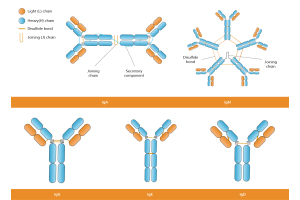
Antibody controls must also be selected for the assay. Isotype controls are common in flow cytometry, but isotype controls are not a direct substitute for no-primary or knockout controls in Western blotting. Their value depends on matching the host species and antibody class. When isotype controls are used in related assays, record the host species for both the primary antibody and the control. Isotype controls do not establish target specificity by themselves, and the host species of the secondary antibody must remain compatible with the primary antibody.
For absolute or semi-quantitative work, a purified recombinant protein may be used to create a calibration series, provided the antibody recognizes the standard and the native sample similarly. Differences in folding, post-processing, or matrix composition can still affect the comparison.
| Situation | Why it may mislead | Better strategy |
|---|---|---|
| Routine total lysate | Common controls can work but may saturate | Validate GAPDH, beta-actin, tubulin, or total protein signal within the linear range |
| Metabolic treatment | GAPDH may change with biology | Use an alternative control or total protein normalization |
| Cytoskeleton-related treatment | Beta-actin or tubulin may be regulated | Avoid cytoskeletal controls unless validated |
| Nuclear fraction | Cytoplasmic controls do not represent nuclear loading | Use Histone H3, Lamin, or TBP, plus contamination check |
| Membrane fraction | Soluble controls may not reflect membrane recovery | Use a membrane-associated control or total protein strategy |
| Mitochondrial fraction | Total lysate control may hide enrichment differences | Use VDAC1, COX IV, or another validated mitochondrial marker |
| Quantitative Western blot | Saturated control breaks normalization | Confirm linear range before densitometry |
What makes a Western blot loading control reliable?
A reliable loading control is stable under the experimental condition, matched to the sample fraction, detected within the linear range, and suitable for the normalization claim being made. It should also remain proportional to the loaded sample across the full comparison.
Is GAPDH always a good loading control?
No. GAPDH works for many total lysates, but it can be affected by metabolism, hypoxia, stress, and changes in cell state. It should not be assumed stable in experiments that may regulate glycolysis or cellular stress.
Why is loading control saturation a problem?
Once saturated, band intensity no longer increases proportionally with protein amount. Densitometry can no longer correct lane-to-lane loading differences accurately.
When should I use total protein normalization?
Consider total protein normalization when a single housekeeping protein may be treatment-sensitive, saturated, or poorly matched to the sample. It is most useful when the goal is quantitative comparison rather than simple band confirmation.
A reliable loading control is not simply the most familiar band. It is a reference that must match the sample, treatment, detection range, and normalization question.
Choose the control by asking what variation it should correct and what biology might change it. If the control is saturated, treatment-sensitive, or mismatched to the sample fraction, it can make unreliable data look normalized. For important Western blot comparisons, validate the loading control before trusting the normalized result. A defensible Western blot analysis should confirm that the internal loading control remains stable, that the expected molecular weight is correct, and that measured protein levels reflect the experiment rather than the normalization method.