This website uses cookies to ensure you get the best experience on our website.


- Table of Contents
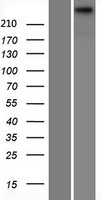
Designing a Western blot for Alpha-tectorin? The guide has the expected band size, antibodies backed by real blot images, the controls to run alongside, and protocols taken from published papers.
Open the TECTA Western Blot Guide
Facts about Alpha-tectorin.
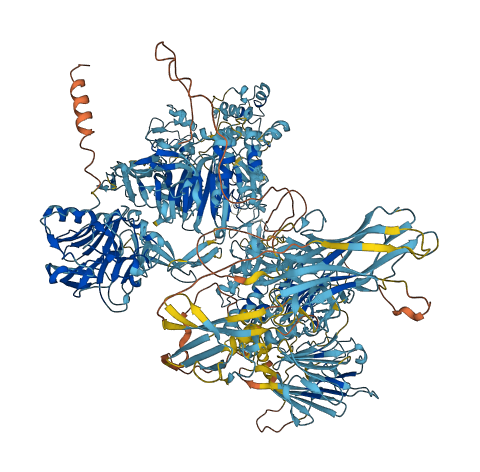
Sound induces movement of these hair cells relative to the tectorial membrane, deflects the stereocilia and leads to fluctuations in hair-cell membrane potential, transducing sound into electrical signals. .
| Human | |
|---|---|
| Gene Name: | TECTA |
| Uniprot: | O75443 |
| Entrez: | 7007 |

| Belongs to: |
|---|
| No superfamily |

alpha-tectorin; DFNA12; DFNA8; DFNB21; tectorin alpha
Mass (kDA):
239.527 kDA

| Human | |
|---|---|
| Location: | 11q23.3 |
| Sequence: | 11; NC_000011.10 (121101243..121191490) |
Cell membrane; Lipid-anchor, GPI-anchor; Extracellular side. Secreted, extracellular space, extracellular matrix. Found in the non-collagenous matrix of the tectorial membrane.




PMID: 9590290 by Verhoeven K., et al. Mutations in the human alpha-tectorin gene cause autosomal dominant non-syndromic hearing impairment.
PMID: 21368133 by Zheng J., et al. Carcinoembryonic antigen-related cell adhesion molecule 16 interacts with alpha-tectorin and is mutated in autosomal dominant hearing loss (DFNA4).