This website uses cookies to ensure you get the best experience on our website.


- Table of Contents
ANALYTICAL & FUNCTIONAL ANTIBODY TESTING
Testing plans that confirm an antibody's identity, purity, binding, specificity and activity, for research reagents and discovery-stage leads.
Explore Our ServicesBoster tailors each antibody characterization plan to your molecule and research goals. A panel of hybridoma clones needs fast binding and specificity triage to rank candidates. A discovery-stage lead needs a deeper look at sequence, stability, off-target binding and activity. A research reagent needs validation in the assay it will be used in, such as western blot, IHC or flow cytometry.
Each project starts with a short scoping conversation: what the molecule is (monoclonal, polyclonal, bispecific, nanobody or conjugate), its intended use and the decision the results will support. The plan is then assembled from identity, purity, binding, specificity, PTM, epitope and functional assays, choosing only the ones that inform your next step. Work is carried out through Boster and its partner labs.
Binding, specificity and initial identity checks help shortlist clones for further characterization.
Structural, stability and off-target profiling on a few research-stage leads, plus activity assays matched to the target biology.
Identity, purity and binding comparisons between reagent lots, or between a hybridoma antibody and its recombinant version.
Testing tied to the antibody's end use, whether a research reagent or a pairing partner for an immunoassay, run in the actual application format.
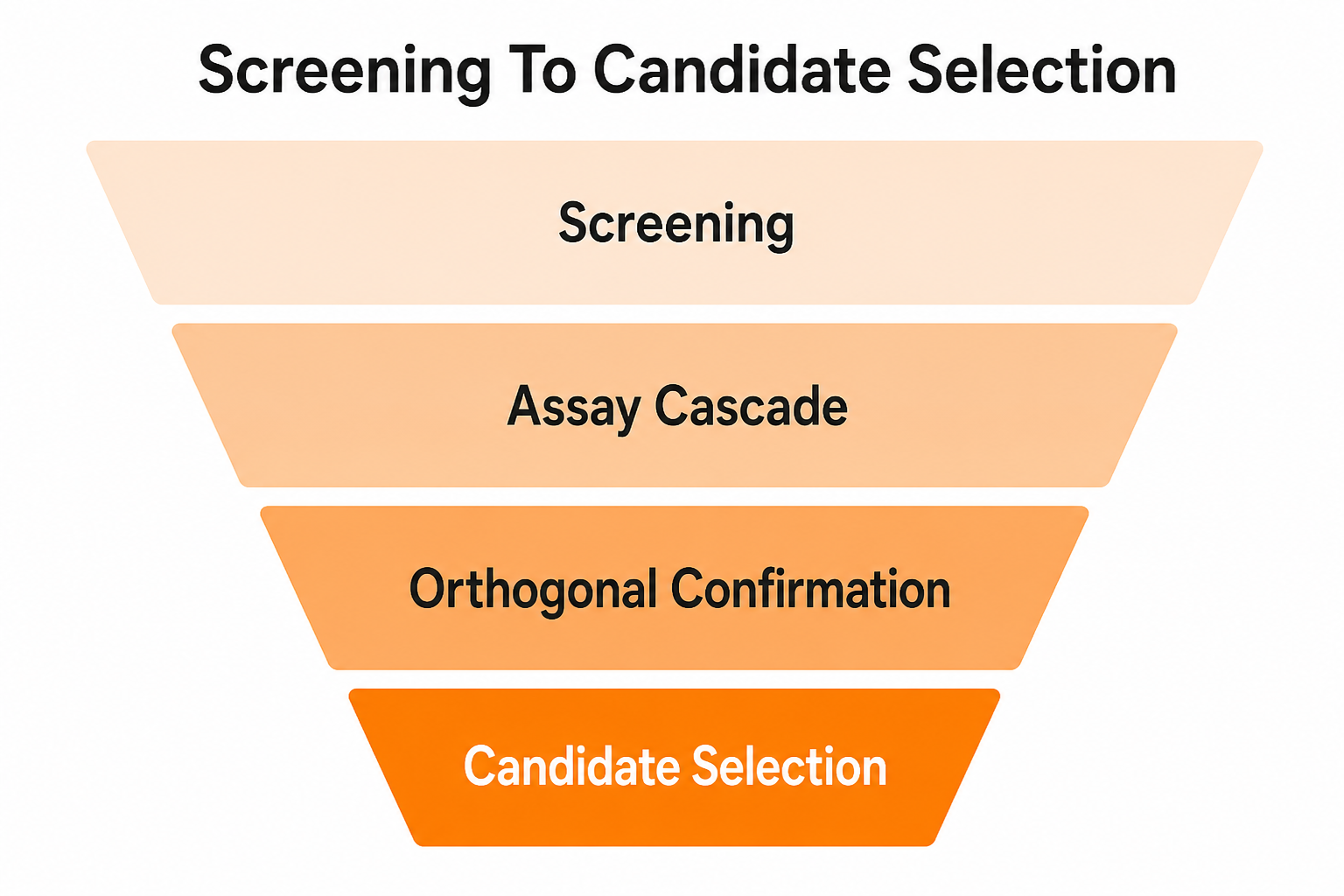
A staged program follows the antibody from broad screening to a justified choice of lead.
Binding and specificity triage across the full candidate pool to drop clear non-performers early.
A staged sequence that advances promising candidates to more detailed testing.
Key results such as affinity, specificity and activity are confirmed by a second, independent method.
A report sets every result against criteria agreed at the start, as a basis for choosing a lead.
Characterization also supports antibody production. After custom monoclonal antibody development or custom antibody production, it confirms that a clone or lot meets your criteria. When a hybridoma antibody is converted through recombinant antibody production, it checks that the recombinant version matches the original in binding, specificity and activity.
If you plan to label the antibody, characterization can be run before and after antibody conjugation to confirm binding is retained.
Sample amount, concentration and buffer depend on the assays in your plan and are confirmed at quote, before you ship anything. Turnaround is quoted per project.
Deliverables are agreed before testing and may include:
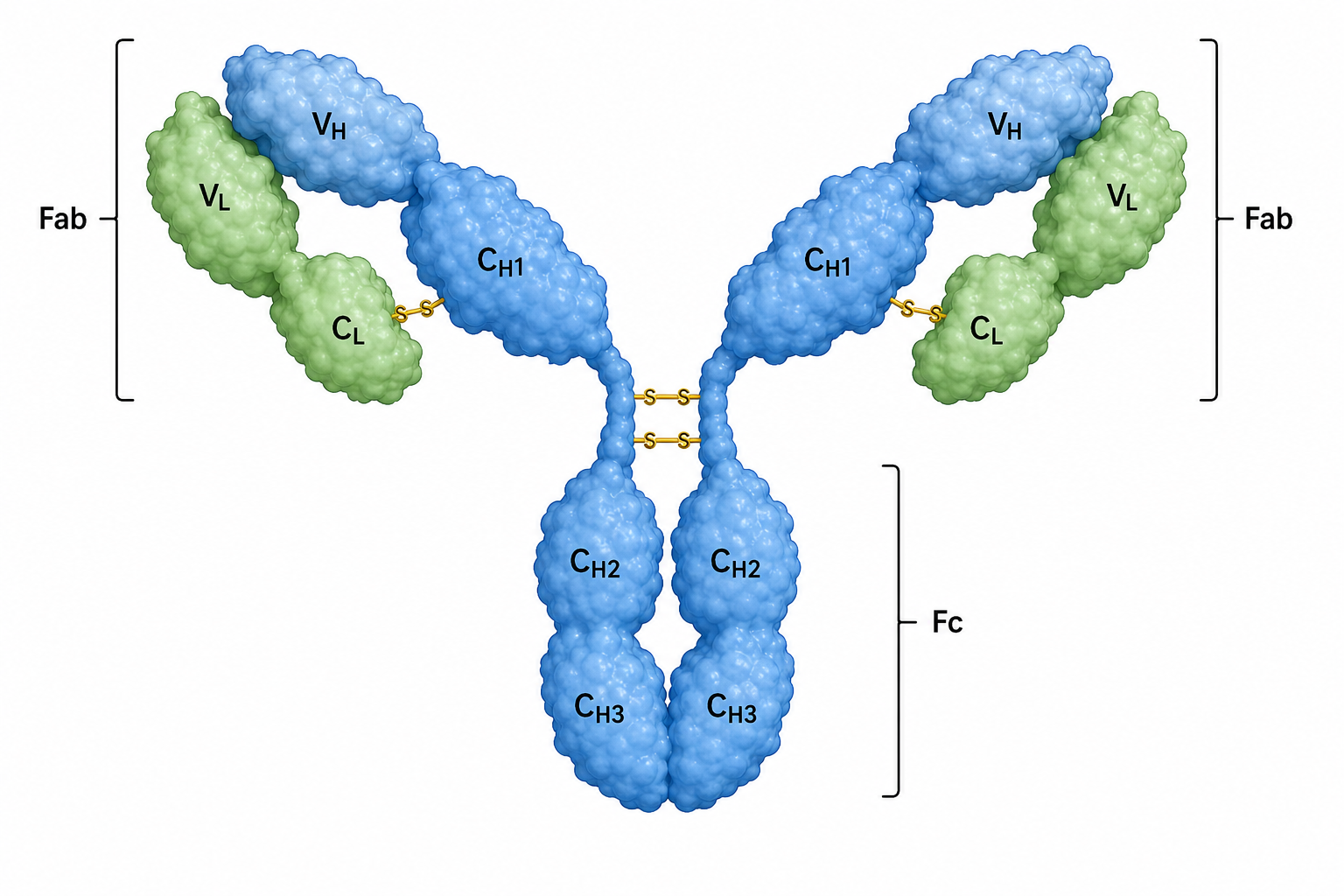
Every later result depends on knowing the antibody is what it should be. A simple identity check and a full structural profile answer different questions, and the plan states which one each assay addresses.
An antibody with the right sequence can still fail in an assay if it aggregates, fragments or forms particles during storage. Purity and aggregation testing measures this.
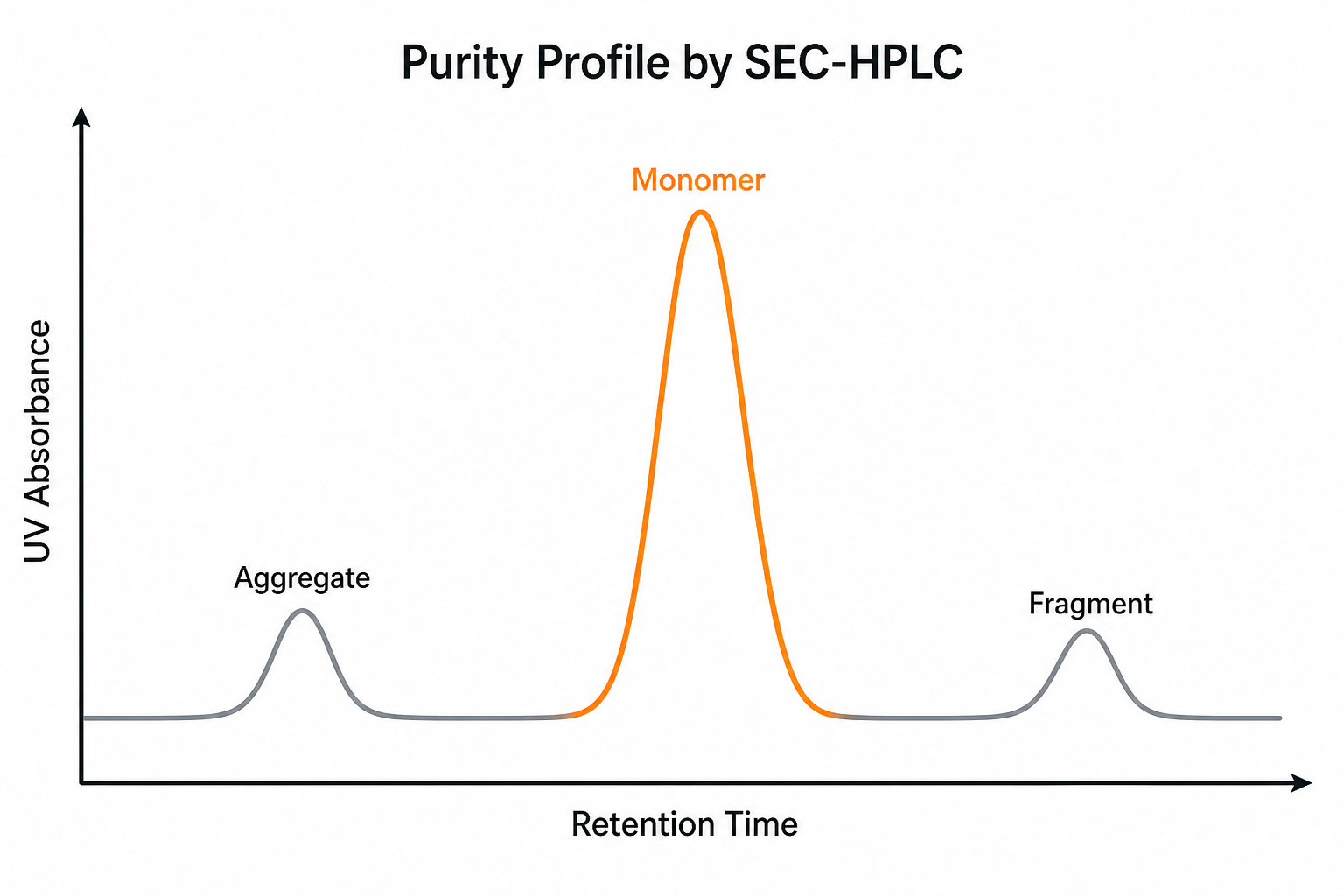
These results guide storage and buffer choices and help explain inconsistent performance between lots.
Label-free affinity and kinetics (kon, koff and KD) are covered by Boster's SPR binding kinetics service. Within a characterization plan, those numbers are paired with binding tests in a more biological context:
Measures binding to cell-surface targets, where target density and accessibility can affect the result.
For bivalent, multivalent or bispecific formats, apparent affinity can differ substantially from the intrinsic affinity of a single binding arm, which helps interpret binding and potency results.

Off-target binding is easy to miss. An antibody can look clean against a few related proteins and still bind something unrelated. Many groups add a broader specificity screen before choosing a lead.
Targeted panels only test the off-targets you already suspect. A broad protein-array screen (see the partner-lab list above) can find ones you did not.
Purity testing alone does not fully reveal chemical modifications. Mass spectrometry helps identify and measure changes that may affect antibody performance.
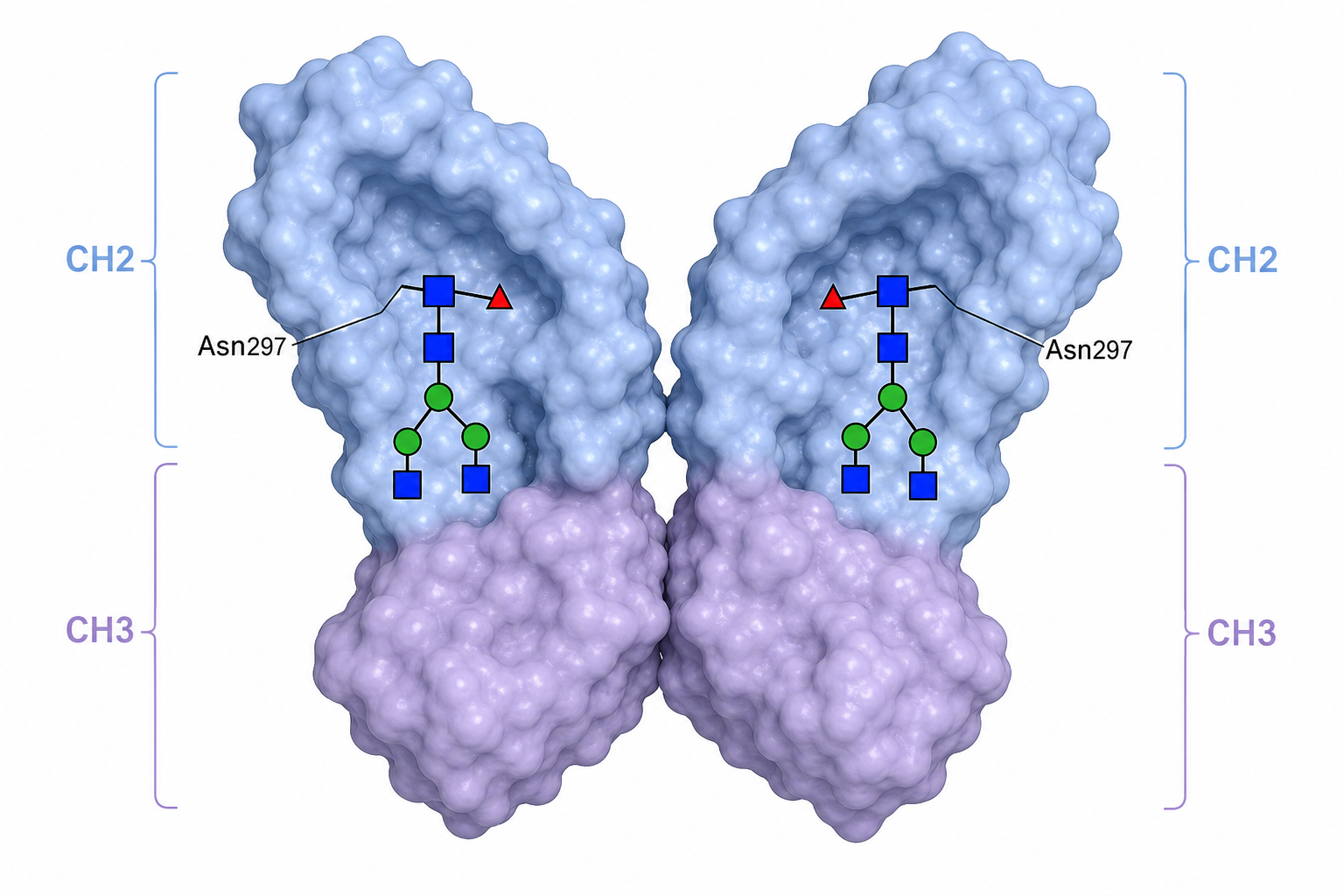
Profiles antibody glycans to compare lots or production cell lines. For IgG antibodies, Fc glycans can influence Fc receptor binding and effector function.
Detects and localizes methionine or tryptophan oxidation and asparagine or glutamine deamidation, common degradation pathways that can reduce activity over storage.
Identifies proteolytic clipping sites and low-level fragmentation that SEC may under-report, using peptide-level MS to locate them.
Glycan composition is resolved by released-glycan or glycopeptide MS methods; oxidation, deamidation and clipping are localized through peptide mapping with targeted MS/MS. Functional and stability data help show whether a modification affects performance.
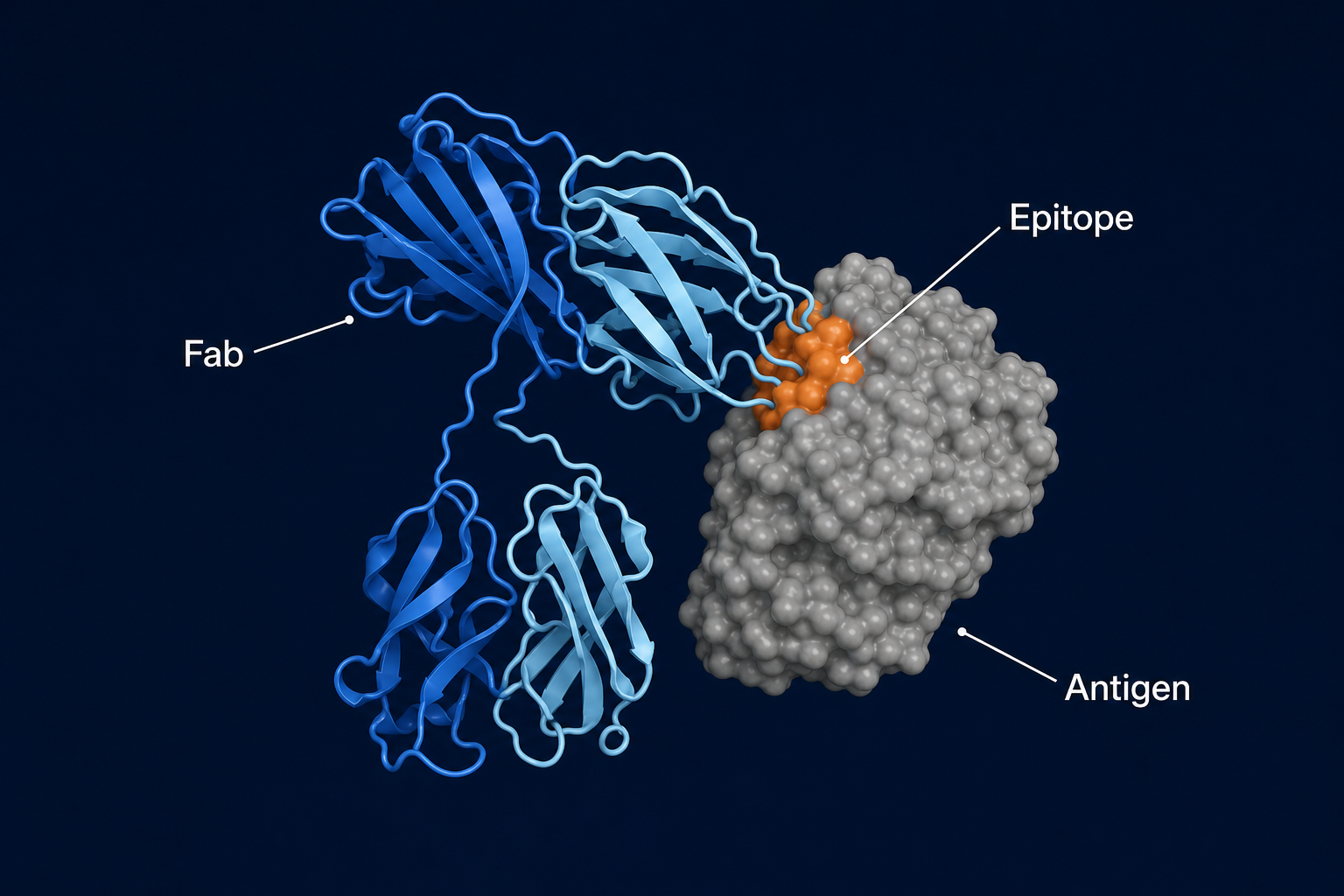
Epitope mapping locates the residues or region of the target that the antibody binds. That location matters for several reasons:
Peptide-based and mutagenesis methods help map epitopes, while competition binning assesses binding compatibility. Structural methods are available on request.
An antibody that binds tightly can still fail to block or trigger the biology it was meant to affect. Functional testing checks what the antibody does in a biological system.
ELISA suits soluble antigens and screening many candidates or dilutions. Flow cytometry assesses antibody binding to cell-surface targets and can include negative-control cell lines in the same run. The right mix depends on whether the target is soluble, membrane-bound or intracellular.
Cell- and reporter-based assays test whether binding turns into activity: receptor agonism or antagonism, pathway modulation (reporter constructs or phospho-signaling readouts), receptor internalization, or effects on migration or proliferation. These are built around the specific target biology.
When the Fc region is part of the mechanism, ADCC, CDC and ADCP assays measure effector activity. Isotype, glycosylation and Fc engineering all affect these results, so they are read alongside the glycan data. Primary-cell formats are offered through partner labs.
An antibody that works in one format can fail in another. A common case is an antibody that performs in ELISA but gives no usable IHC signal, because fixation changes epitope accessibility. Application-specific validation tests the antibody in the format you will use. Western blot is Boster's core validation method, and the same testing is available on its own through Boster's assay services.
Evaluates antibody reactivity in relevant lysates, using positive and negative controls to assess specificity. See the western blotting service.
Checks staining pattern, signal-to-background and specificity on relevant tissue sections against expected tissue distribution. See the IHC and histology services.
Confirms surface reactivity, titration and specificity on live cells, and checks for interference when the antibody joins a multicolor panel. See the flow cytometry service.
Identifies compatible capture and detection antibodies and tests their performance in the intended sandwich assay.
Acceptance criteria are set by what "working" means in each application, not a generic pass/fail threshold.
Tell us about your antibody and what you need to know, and we will propose a characterization plan.
Email services@bosterbio.com or call (888) 466-3604.
GLP and other quality requirements are confirmed for each project before quotation.
We select assays based on your antibody format, intended use and the decision you need the data to support.
A targeted panel is usually enough when the realistic off-target risk is a small, known set of related proteins or species orthologs. A broad protein-array screen can help assess off-target binding beyond the selected panel.
It follows the expected mechanism: receptor agonists and antagonists usually need reporter or signaling assays, and Fc-mediated mechanisms need ADCC, CDC or ADCP testing. A short discussion of the mechanism usually narrows the options to two or three formats.
It is read against the criteria set for that decision. It may lead to a confirmatory orthogonal assay, flag a specific liability (aggregation, off-target binding, a PTM hotspot) that can be engineered around, or be a real reason to deprioritize a candidate.
Yes. Western blot, IHC and flow cytometry validation can be included to assess performance in your intended application.
Share your molecule, intended use and the questions you need answered, and we will propose a plan built around your antibody.
Request a Quote