This website uses cookies to ensure you get the best experience on our website.


- Table of Contents
DISCOVERY PROTEOMICS BY LC-MS/MS
Unbiased LC-MS/MS profiling of the proteins in your samples, with label-free or TMT quantitation, protein identification and a bioinformatics report.
Explore Our ServicesBoster's discovery proteomics service measures thousands of proteins across your samples by LC-MS/MS without a predefined target list. Use it when you need to know which proteins change between conditions and don't yet have a candidate list.
Liquid chromatography tandem mass spectrometry (LC-MS/MS) is the standard method for proteome-wide discovery work. Antibody-based multiplex panels also quantify many proteins, but only ones chosen beforehand. Work is delivered through Boster and its partner labs.
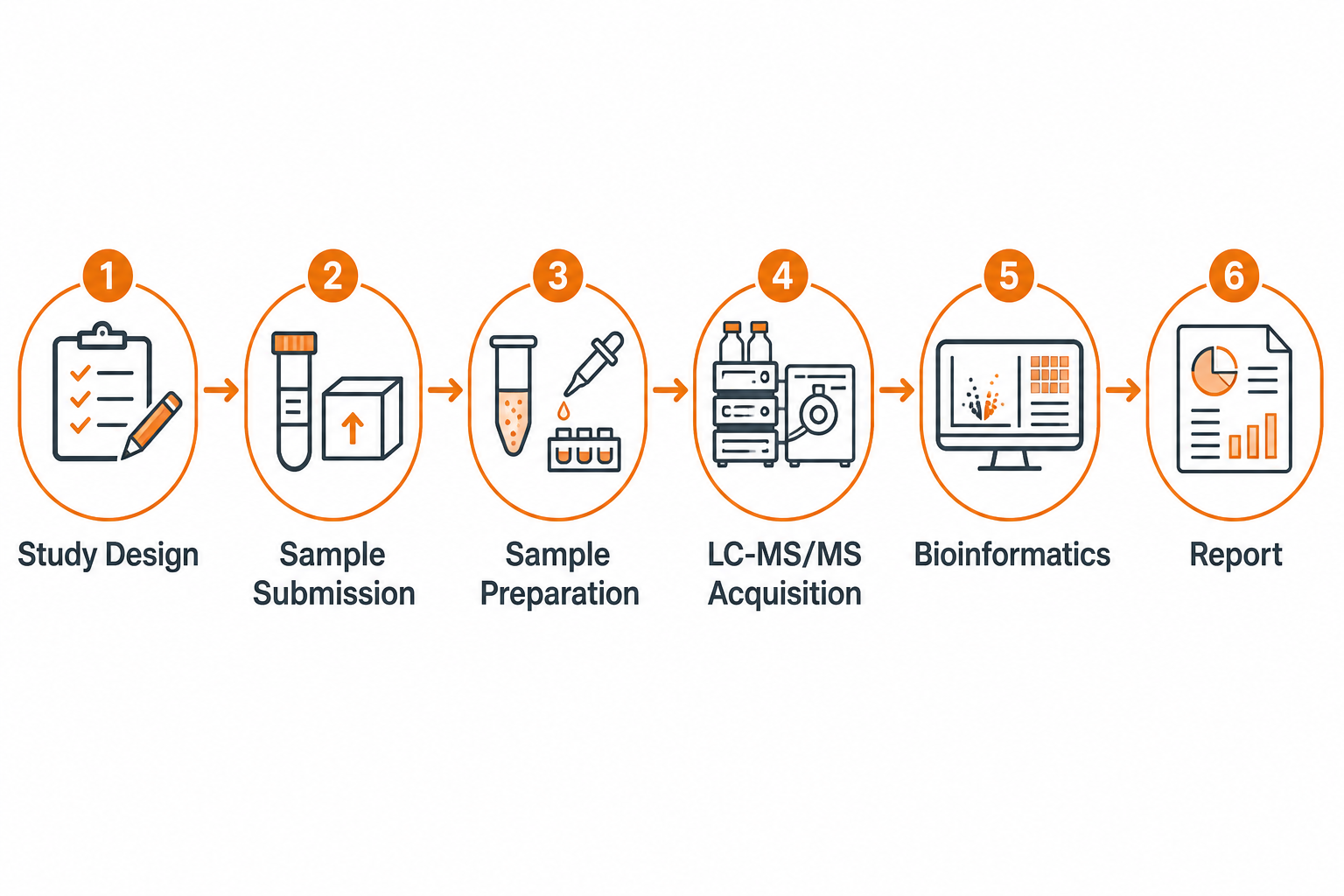
Each project covers the steps from sample to report. Scope is set with you at the quote stage.
Protein extraction, reduction and alkylation, and enzymatic digestion of proteins into peptides, typically with trypsin.
Peptides are separated by liquid chromatography and analyzed by tandem mass spectrometry in data-dependent (DDA) or data-independent (DIA) mode.
Label-free or TMT-multiplexed quantitation to compare protein abundance across treatment groups, time points or research cohorts.
Proteins in gel bands, spots or purified samples are identified by LC-MS/MS peptide analysis and database searching.
Protein identification and quantification tables, differential-abundance statistics, pathway enrichment and QC metrics.
Comparison groups, replicates, acquisition mode and quantitation method are agreed before samples ship.
A phosphoproteomics service is available on request to profile phosphorylation sites and compare their relative abundance between conditions.
Discovery proteomics profiles proteins without a predefined target list. Proteins are digested into peptides, the peptides are separated and fragmented, and the data are searched to identify and quantify as many proteins as the sample allows, often several thousand per run with DIA. It is the right starting point when you need a candidate list or want to compare whole proteomes between conditions.
Targeted assays measure selected proteins and can offer greater sensitivity for those targets, supporting follow-up across many samples. Once discovery gives you a shortlist, hits can be checked with multiplex assay services, or one protein at a time with a western blotting service or IHC and histology services.
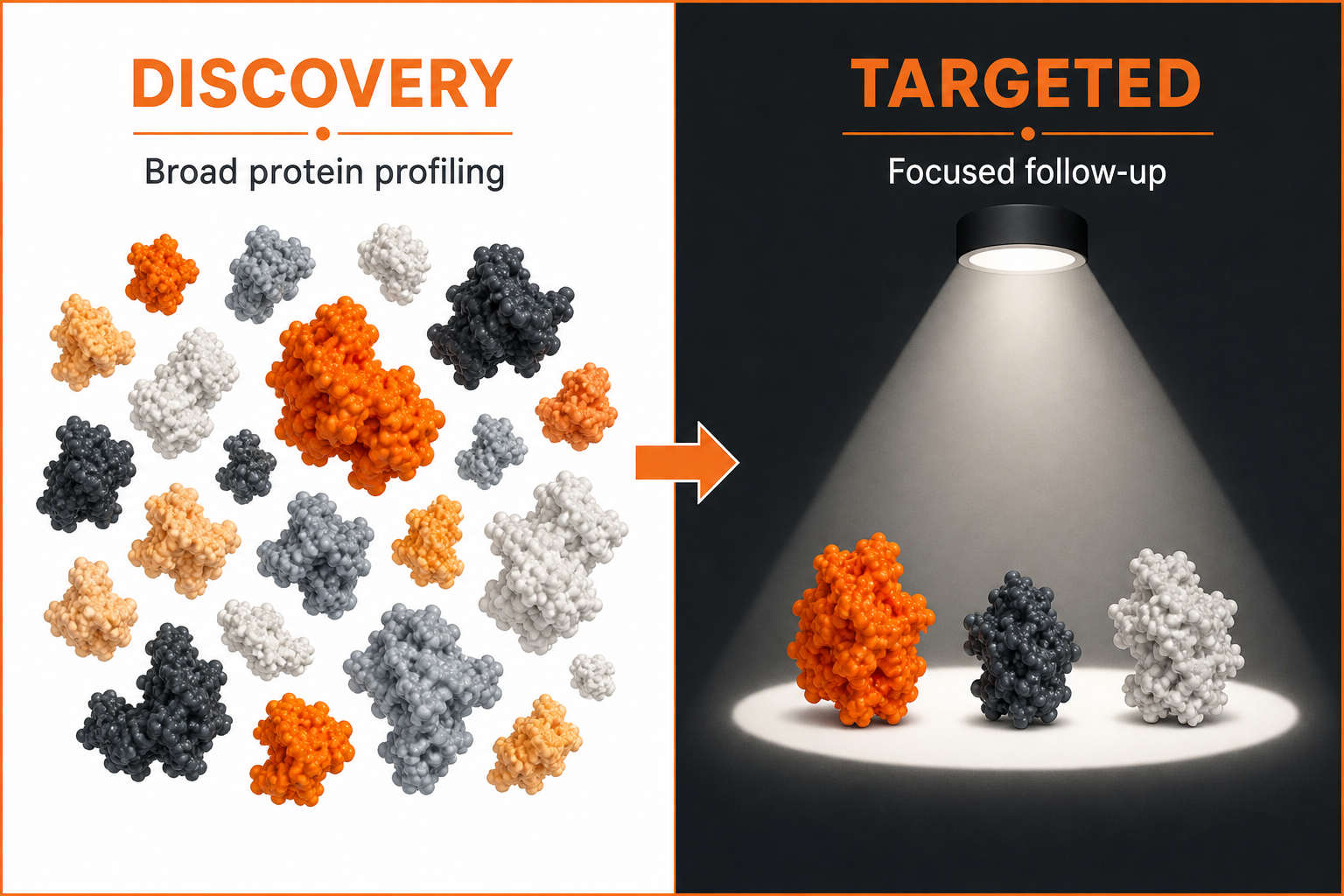
| Criterion | Discovery proteomics | Targeted follow-up |
|---|---|---|
| Coverage | Broad profiling without a predefined target list | A defined panel of candidates |
| Sensitivity | Moderate; low-abundance proteins may be missed | Can be higher for selected targets |
| Typical study size | Pilot or discovery cohort | Larger validation cohorts |
| Best use | Hypothesis generation, candidate screening | Confirming and quantifying hits |
Rule of thumb: if you can't yet list the proteins you expect to change, start with discovery.
Label-free and TMT are quantification strategies; DDA and DIA describe how MS/MS data are acquired.
The quantitation method depends on sample number, the depth you need and how much run-to-run consistency matters.
Peptide intensities are compared across separately run samples. There is no labeling step and it scales to large sample numbers, but it is more sensitive to run-to-run variation, so consistent sample prep and randomized run order matter.
Peptides from each sample are tagged with isobaric labels and pooled for analysis. This supports consistent comparisons within a batch; batch size depends on the TMT format.
DIA systematically fragments precursor ions within defined mass-to-charge windows. Combined with label-free quantification, it supports broad, reproducible protein profiling.
| Method | Throughput | Reproducibility | Depth | Best fit |
|---|---|---|---|---|
| Label-free (DDA) | High; samples analyzed individually | Moderate | Good | Large sample sets, budget-sensitive studies |
| TMT | Moderate (batch-limited) | High | Very good | Precise multi-condition comparisons |
| Label-free DIA | High | Very high | Very good | Large cohorts needing depth and consistency |
A large research cohort usually favors label-free DIA for throughput. TMT can suit multi-condition studies that fit within a multiplexed batch.
The research question, comparison groups, replicate structure, acquisition mode and quantitation method are agreed first. Timeline and price are quoted per project.
You ship samples that meet the agreed input and preservation requirements, with a completed sample manifest.
Proteins are extracted, reduced, alkylated and digested into peptides. Fractionation is available on request.
Peptides are separated by liquid chromatography and analyzed by tandem mass spectrometry in DDA or DIA mode.
Raw spectra are processed into identified and quantified proteins, followed by statistical comparison, QC review and pathway analysis.
Good sample collection and preservation are essential for reliable proteomics results.
Other sample types can be discussed at quote.
For complex samples, peptide fractionation before LC-MS/MS adds depth at the cost of extra preparation and instrument time. It is available on request:
| Method | Purpose | Typical use |
|---|---|---|
| Strong cation exchange (SCX) | Separates peptides by charge before MS analysis | Deep profiling of complex lysates |
| High-pH reverse phase | Separation orthogonal to on-line low-pH reverse phase, reducing co-elution | TMT studies needing extra depth |
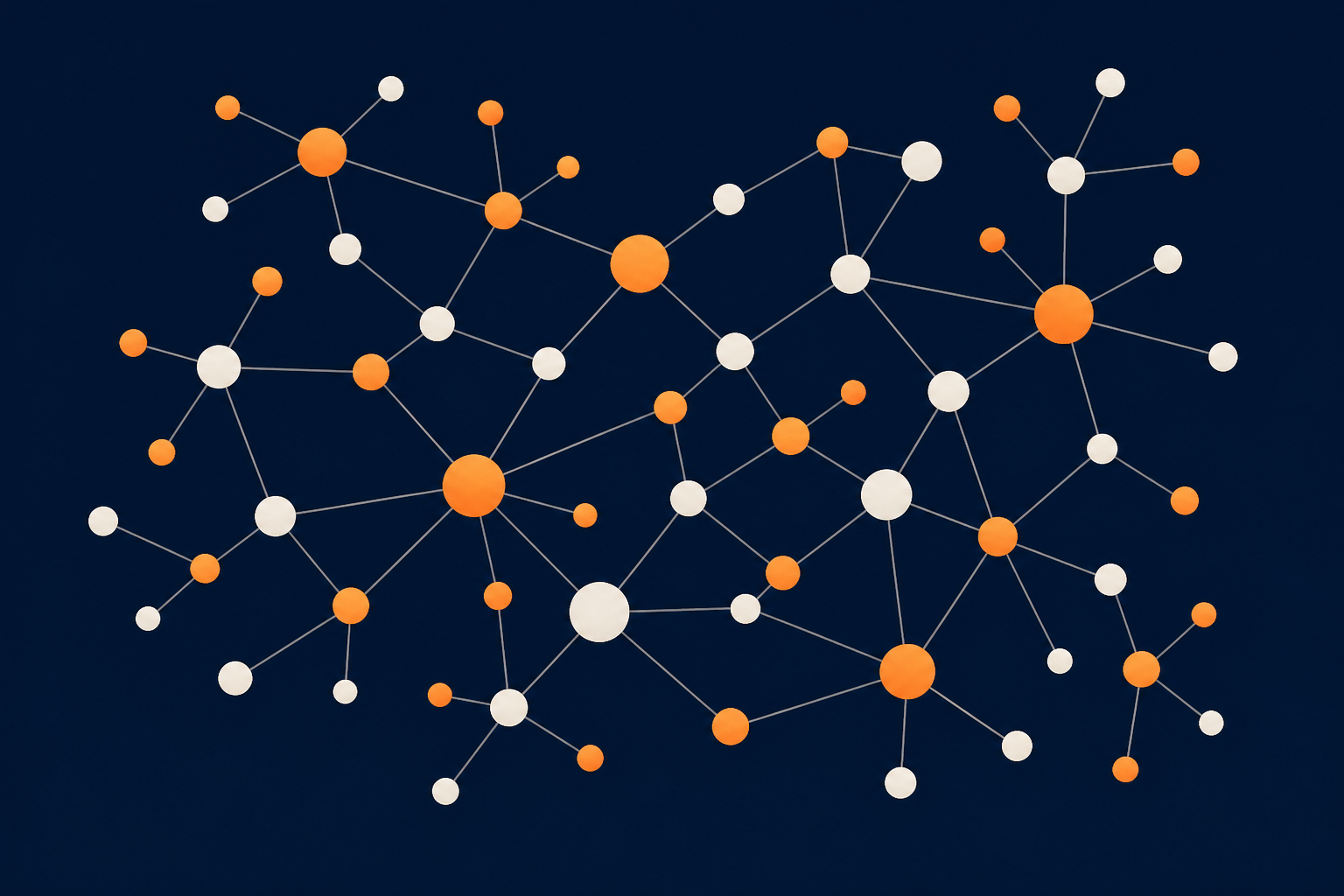
The analysis turns raw spectra into results you can act on: which proteins changed, by how much, with what confidence, and which pathways they point to.
Deliverables are quoted per project and can include a written summary, protein and peptide identification and quantification tables, differential-abundance results, pathway enrichment output and QC metrics. Raw and processed files can be included in the deliverables.
Differential-abundance testing between conditions with multiple-testing correction, reporting effect sizes and confidence rather than raw p-values alone.
Gene Ontology and pathway enrichment, and protein-protein interaction network mapping, to place changed proteins in biological context.
Chromatographic performance, identification false discovery rates (FDR), missed-cleavage rates and sample-level QC metrics help assess dataset quality.
Proteins, not transcripts, are usually the direct targets, mediators or biomarkers in a study, which makes discovery proteomics useful at several points in a research program.
Compare disease and control models, or treated and untreated samples, to identify proteins associated with a phenotype.
Screen research cohorts, including human plasma or tissue samples, for candidate biomarkers, then confirm the hits with targeted assays.
Profile protein-abundance changes after treatment to identify pathways associated with the response.
When choosing a proteomics CRO, discuss sample requirements, acquisition options and deliverables before collection. Boster’s protein analysis services can be tailored to your research question. For follow-up work, see Boster’s assay services.
Discuss Your ProjectTell us about your samples and research question, and we will scope a discovery proteomics project for you.
Email services@bosterbio.com or call (888) 466-3604.
GLP and other quality requirements are confirmed for each project before quotation.
Minimum protein input depends on sample type and study design and is confirmed at quote. Settling it before collection avoids the most common cause of project delay.
Timeline and price depend on sample number, acquisition mode and whether fractionation is needed. Both are quoted per project.
A discovery run produces a candidate list. Candidates are then confirmed in a larger sample set with targeted methods such as multiplex immunoassays, western blot or IHC.
Raw and processed files can be included in the deliverables alongside the written report.
Standard label-free and TMT workflows measure relative protein abundance. Absolute quantification requires a dedicated assay and suitable standards.
Coverage depends on sample type, preparation, instrument and acquisition method. Expected depth is discussed during project planning.