This website uses cookies to ensure you get the best experience on our website.


- Table of Contents
and ELISA kits, proteins related to T-cells.
T-cells are integral components of the immune system, acting as frontline warriors in the body’s defense against infections and diseases. These specialized white blood cells recognize and respond to foreign invaders, such as viruses and bacteria, by identifying specific antigens. In the realm of antibody research, T-cells play a crucial role in orchestrating immune responses, aiding in the production and regulation of antibodies that neutralize pathogens. Advances in T-cell research are paving the way for innovative therapies, including cancer immunotherapy and personalized medicine, by harnessing their ability to target and eliminate diseased cells with precision. Understanding and manipulating T-cell functions opens new horizons for developing effective treatments, enhancing vaccine efficacy, and ultimately improving patient outcomes. Explore our cutting-edge research on T-cells and discover how we are shaping the future of immunological therapies.
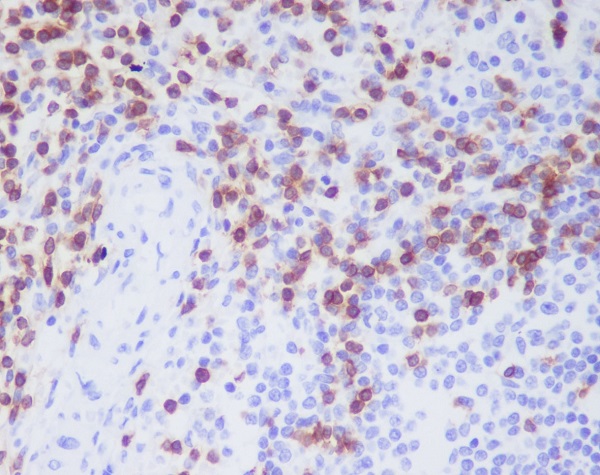
Anti-CD3D Rabbit Monoclonal AntibodyImmunohistochemical analysis of paraffin-embedded human spleen, using CD3D Antibody....
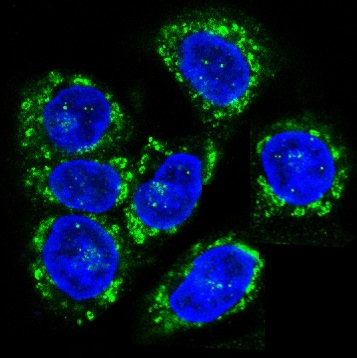
Anti-CCR7 Rabbit Monoclonal Antibody, Immunofluorescent analysis of Hela cells, using CCR7 Antibody ....
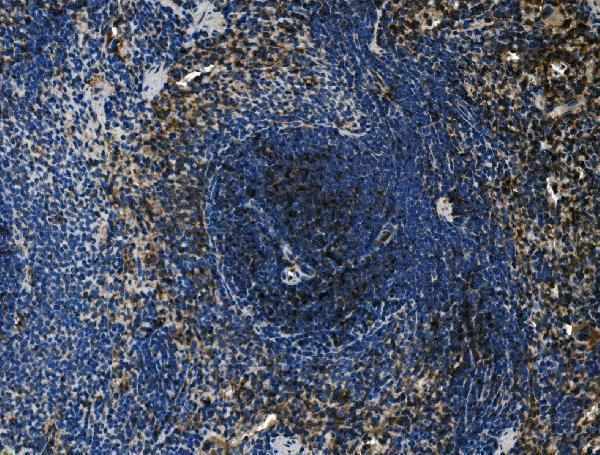
Anti-Cd4 AntibodyFigure 1. IHC analysis of Cd4 using anti-Cd4 antibody (A00344-3)..
Cd4 was detected in a paraffin-embedded section of rat spleen tissue. ...
| Protein Name | Gene Name | Function |
|---|---|---|
| CD3 | CD3D | Part of the T-cell receptor complex involved in T-cell activation |
| CD4 | CD4 | Co-receptor that assists the T-cell receptor in communicating with MHC class II molecules |
| CD8 | CD8A | Co-receptor that assists the T-cell receptor in interacting with MHC class I molecules |
| CD28 | CD28 | Provides co-stimulatory signals necessary for T-cell activation and survival |
| CTLA-4 | CTLA4 | Inhibitory receptor that downregulates T-cell activation |
| PD-1 | PDCD1 | Inhibitory receptor that regulates T-cell activity and prevents autoimmunity |
| CD25 | IL2RA | Alpha chain of the IL-2 receptor, important for T-cell proliferation |
| CD45 | PTPRC | Protein tyrosine phosphatase involved in T-cell receptor signaling |
| CD127 | IL7R | Alpha chain of the IL-7 receptor, crucial for T-cell development and homeostasis |
| CD69 | CD69 | Early activation marker on T-cells |
| CD25 | IL2RA | High-affinity IL-2 receptor alpha chain, marker for regulatory T-cells |
| FoxP3 | FOXP3 | Transcription factor critical for regulatory T-cell development and function |
| CD40L | CD40LG | Expressed on activated T-cells, interacts with CD40 on antigen-presenting cells |
| ICOS | ICOS | Inducible co-stimulator involved in T-cell activation and function |
| LAG-3 | LAG3 | Inhibitory receptor that regulates T-cell proliferation and function |
| TIM-3 | HAVCR2 | Checkpoint receptor involved in T-cell exhaustion and regulation |
| CD103 | ITGAE | Integrin involved in T-cell adhesion and retention in tissues |
| CCR7 | CCR7 | Chemokine receptor important for T-cell trafficking to lymphoid tissues |
| KLRG1 | KLRG1 | Marker of terminally differentiated T-cells |
| CD38 | CD38 | Enzyme involved in cell adhesion and signal transduction in T-cells |
T-cell activation and signaling are fundamental processes that underpin the adaptive immune response. When a T-cell receptor (TCR) recognizes and binds to a specific antigen presented by an antigen-presenting cell (APC) via the major histocompatibility complex (MHC), a cascade of intracellular signaling events is initiated. This initial recognition event leads to the activation of various signaling pathways, including the MAPK, PI3K/Akt, and NF-κB pathways, which collectively regulate T-cell proliferation, differentiation, and survival. Co-stimulatory signals, such as those mediated by CD28 binding to B7 molecules on APCs, are also crucial for full T-cell activation and to prevent anergy, a state of unresponsiveness. The precise modulation of these signaling mechanisms ensures that T-cells respond appropriately to pathogens while maintaining self-tolerance to prevent autoimmunity. Understanding the intricacies of T-cell activation and signaling is essential for developing targeted immunotherapies, enhancing vaccine efficacy, and managing immune-related disorders.
Immune checkpoint regulation is a critical mechanism that maintains immune homeostasis and prevents autoimmunity by modulating T-cell responses. Checkpoints are inhibitory receptors expressed on T-cells, such as PD-1 (Programmed Death-1) and CTLA-4 (Cytotoxic T-Lymphocyte Antigen-4), which interact with their ligands to dampen T-cell activation and proliferation. Tumors often exploit these checkpoints to evade immune surveillance by upregulating ligands like PD-L1, thereby inhibiting effective T-cell-mediated anti-tumor responses. The discovery and subsequent development of immune checkpoint inhibitors—monoclonal antibodies that block PD-1, PD-L1, or CTLA-4—have revolutionized cancer therapy, offering significant clinical benefits in various malignancies. Beyond cancer, checkpoint regulation plays a role in chronic infections and autoimmune diseases, making it a versatile target for therapeutic intervention. Ongoing research aims to better understand the complex interactions of immune checkpoints, optimize combination therapies, and mitigate adverse effects, thereby enhancing the efficacy and safety of immunotherapeutic strategies.