This website uses cookies to ensure you get the best experience on our website.


- Table of Contents
and ELISA kits, proteins related to Heart Disease.
Heart disease remains the leading cause of mortality worldwide, affecting millions of lives each year. Characterized by conditions such as coronary artery disease, heart failure, and arrhythmias, heart disease poses significant challenges to global health. Recent advances in biomedical research have shed light on the complex mechanisms underlying cardiovascular disorders, paving the way for innovative treatment strategies. Among these, the development of antibody-based therapies offers promising avenues for targeted intervention and improved patient outcomes. By harnessing the power of antibodies to modulate immune responses and address specific pathological processes, researchers are striving to transform heart disease management. Our dedicated efforts in heart disease research aim to uncover novel insights and accelerate the translation of groundbreaking discoveries into effective therapies, ultimately striving to reduce the burden of this pervasive condition.
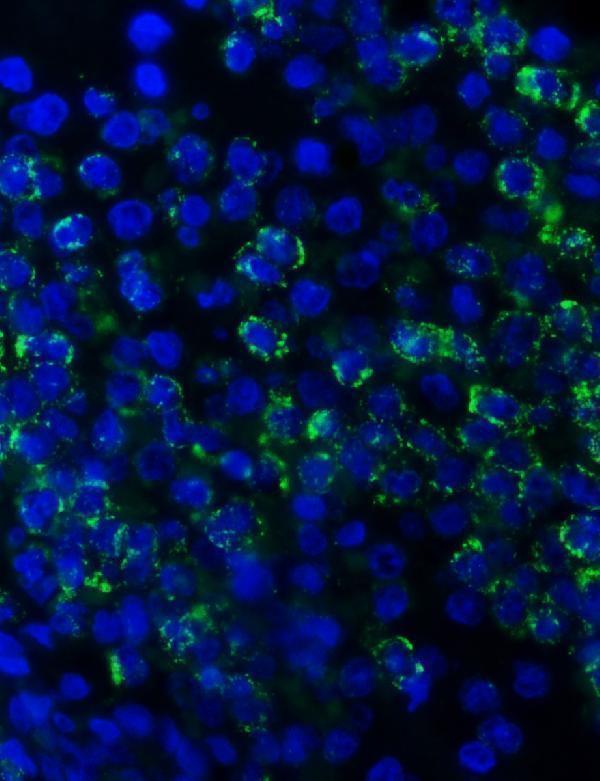
Anti-Myeloperoxidase/MPO Antibody Picoband®, Figure 5. IF analysis of MPO using anti-MPO antibody (PA1054).
MPO was detected in a paraffin-embedded section of human spleen tissue. Heat med...
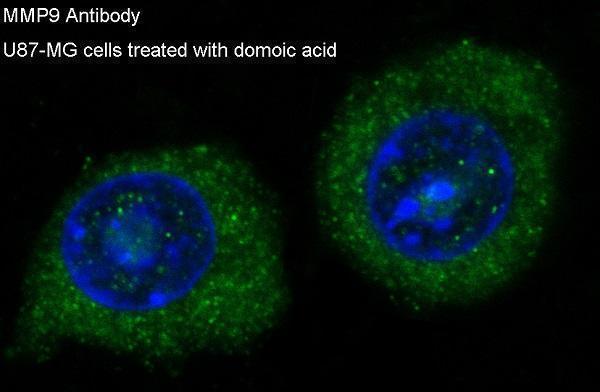
Anti-MMP9 Rabbit Monoclonal Antibody, Immunofluorescent analysis of U87-MG cells, using MMP9 Antibody....

Anti-Galectin 3/LGALS3 Antibody Picoband®, Figure 4. IF analysis of Galectin-3 using anti-Galectin-3 antibody (PB9081).
Galectin-3 was detected in immunocytochemical se...
| Protein Name | Gene Name | Function |
|---|---|---|
| Troponin I | TNNI3 | Regulates cardiac muscle contraction by inhibiting actomyosin ATPase. |
| BNP (B-type Natriuretic Peptide) | NPPB | Regulates blood pressure and fluid balance by promoting vasodilation and natriuresis. |
| C-Reactive Protein (CRP) | CRP | Serves as an inflammatory marker indicating systemic inflammation and cardiovascular risk. |
| LDL Cholesterol | LDLR | Carries cholesterol to cells; high levels are associated with increased risk of atherosclerosis. |
| HDL Cholesterol | APOA1 | Transports cholesterol away from arteries to the liver for excretion, reducing atherosclerosis risk. |
| Apolipoprotein B | APOB | Essential component of LDL particles, contributing to lipid transport and atherosclerosis. |
| Homocysteine | CBS | Amino acid associated with endothelial dysfunction and increased risk of coronary artery disease. |
| Fibrinogen | FGA | Plasma protein involved in blood clot formation; elevated levels linked to thrombosis risk. |
| Myeloperoxidase | MPO | Enzyme involved in oxidative stress and inflammation in atherosclerotic plaques. |
| Interleukin-6 | IL6 | Pro-inflammatory cytokine contributing to inflammation and plaque instability in arteries. |
| Matrix Metalloproteinase-9 | MMP9 | Enzyme involved in extracellular matrix remodeling and plaque rupture in coronary arteries. |
| Galectin-3 | LGALS3 | Marker of fibrosis and inflammation, associated with heart failure and adverse cardiovascular events. |
| Lipopolysaccharide Binding Protein | LBP | Mediator of immune response to bacterial endotoxins, linked to atherosclerosis progression. |
| Soluble ST2 | IL1RL1 | Marker of cardiac stress and fibrosis, predictive of heart failure and mortality. |
| PCSK9 | PCSK9 | Regulates LDL receptor degradation, influencing LDL cholesterol levels and atherosclerosis risk. |
| Galectin-3 | LGALS3 | Involved in inflammation and fibrosis, associated with heart failure prognosis. |
| Soluble CD40 Ligand | CD40LG | Involved in platelet activation and inflammation, contributing to atherothrombosis. |
| Endothelin-1 | EDN1 | Potent vasoconstrictor implicated in hypertension and endothelial dysfunction. |
| Plasminogen Activator Inhibitor-1 | SERPINE1 | Inhibits fibrinolysis, promoting thrombosis and contributing to cardiovascular events. |
Atherosclerosis is a fundamental pathological process contributing to heart disease, characterized by the buildup of plaques within the arterial walls. These plaques are composed of lipids, cholesterol, calcium, and cellular debris, which accumulate over time and lead to the narrowing and hardening of arteries. The development of atherosclerosis is influenced by various risk factors including hypertension, high cholesterol levels, smoking, and diabetes. Understanding the mechanisms behind plaque formation, such as endothelial dysfunction, inflammation, and lipid metabolism, is crucial for developing effective therapeutic strategies. Research in this sub-area focuses on identifying molecular pathways that drive plaque growth and instability, which can lead to acute cardiovascular events like myocardial infarction. Innovative approaches aim to prevent plaque progression, enhance plaque stability, and promote arterial health through pharmacological interventions and lifestyle modifications.
Heart failure and cardiomyopathy represent critical areas within heart disease research, focusing on the heart's ability to pump blood effectively. Cardiomyopathy encompasses a group of disorders affecting the heart muscle's structure and function, leading to impaired cardiac performance. These conditions can be caused by genetic mutations, viral infections, prolonged high blood pressure, or exposure to toxins. Heart failure arises when the heart cannot supply sufficient blood to meet the body's needs, often resulting from chronic cardiomyopathy, ischemic heart disease, or valvular defects. Research in this area delves into the cellular and molecular mechanisms underlying cardiac remodeling, apoptosis, and fibrosis, which contribute to the progression of heart failure. Advanced imaging techniques, biomarkers, and novel therapeutic interventions are continually being developed to diagnose, monitor, and treat these conditions, aiming to improve patient outcomes and quality of life.