

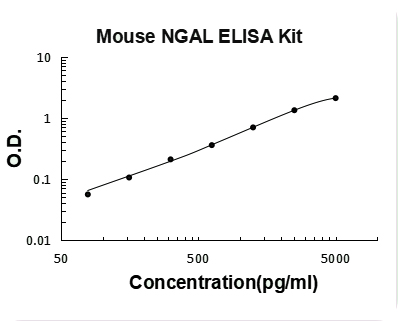
Click image to see more details
Product Info Summary
| SKU: | EK0854 |
|---|---|
| Size: | 96 wells/kit, with removable strips. |
| Reactive Species: | Mouse |
| Application: | ELISA |
| Sample Types: | cell culture supernatants, serum, plasma (heparin, EDTA) and urine. |
Product info
Product Name
Mouse Lipocalin-2/NGAL ELISA Kit PicoKine®
SKU/Catalog Number
EK0854
Size
96 wells/kit, with removable strips.
*Question: How many samples can I assay/run in this kit?
Description
Mouse Lipocalin-2/NGAL ELISA Kit PicoKine® (96 Tests). Quantitate Mouse Lcn2 in cell culture supernatants, serum, plasma (heparin, EDTA) and urine. Sensitivity: 10pg/ml. The brand Picokine indicates this is a premium quality ELISA kit. Each Picokine kit delivers precise quantification, high sensitivity, and excellent reproducibility. Only our most reliable and effective kits qualify as Picokine, guaranteeing top-tier results for your assays.
Storage & Handling
Store at 4°C for 6 months, at -20°C for 12 months. Avoid multiple freeze-thaw cycles (Ships with gel ice, can store for up to 3 days in room temperature. Freeze upon receiving.)
Cite This Product
Mouse Lipocalin-2/NGAL ELISA Kit PicoKine® (Boster Biological Technology, Pleasanton CA, USA, Catalog # EK0854)
Clonality of Antibodies
See Datasheet for details
Standard Protein
Expression system for standard: NS0; Immunogen sequence: Q21-N200
Sensitivity
<10 pg/ml
Assay Range
78 pg/ml - 5,000 pg/ml
Standard Dilution Instructions
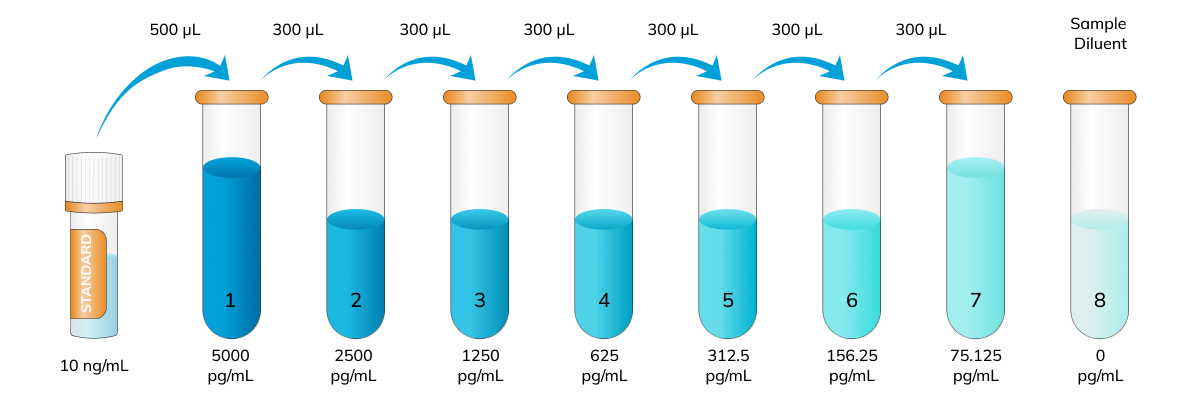
See datasheet of EK0854 for more details
Cross-reactivity
There is no detectable cross-reactivity with other relevant proteins.
Reactive Species
EK0854 is reactive to Lcn2 in Mouse samples
Validated Sample Types
cell culture supernatants, serum, plasma (heparin, EDTA) and urine.
Application Guarantee
EK0854 is guaranteed for ELISA in Mouse by Boster Guarantee
See how Boster Bio validate our ELISA kits: ELISA Validation Information
Background of Lcn2
Lipocalin-2 (LCN2), also known as NGAL, is a protein associated with neutrophil gelatinase.1 The LCN2 gene is located at 9q34 and contains 7 exons.2 The 25-kD LCN2 protein is believed to bind small lipophilic substances such as bacteria-derived lipopolysaccharide (LPS) and formylpeptides and may function as a modulator of inflammation. NGAL tightly binds bacterial catecholate-type ferric siderophores through a cyclically permuted, hybrid electrostatic/cation-pi interaction and is a potent bacteriostatic agent in iron-limiting conditions.3 The primary LCN2 transcript is 3,696 nucleotides long, and the processed transcript is 809 nucleotides long.4 LCN2 expression in adult bone marrow, uterus, prostate, salivary gland, stomach, appendix, colon, trachea, and lung, and in fetal spleen and lung. The standard product used in this kit is recombinant mouse NGAL, consisting of 179 amino acids with the molecular mass of 22KDa.
Kit Components
| Catalog Number | Description | Quantity |
|---|---|---|
| EK0854-CAP | Anti-Mouse Lcn2 Pre-coated 96-well strip microplate | 1 |
| EK0854-ST | Mouse Lcn2 Standard | 2 vials, 10 ng/tube |
| EK0854-DA | Mouse Lcn2 Biotinylated antibody (100x) | 100ul |
| AR1103 | Avidin-Biotin-Peroxidase Complex (100x) | 100ul |
| AR1106-1 | Sample Diluent | 30ml |
| AR1106-2 | Antibody Diluent | 12ml |
| AR1106-3 | Avidin-Biotin-Peroxidase Diluent | 12ml |
| AR1104 | Color Developing Reagent (TMB) | 10ml |
| AR1105 | Stop Solution | 10ml |
| AR1106-5 | Wash Buffer (25x) | 20ml |
| PLA-SEA | Adhesive plate sealers | 4 |
*The kit components are not available for individual purchase.
Materials Required But Not Included In Kit
- Microplate Reader capable of reading absorbance at 450nm.
- Incubator.
- Automated plate washer (optional).
- Pipettes and pipette tips capable of precisely dispensing 0.5 µl through 1 ml volumes of aqueous solutions.
- Multichannel pipettes are recommended for large amount of samples.
- Deionized or distilled water.
- 500ml graduated cylinders.
- Test tubes for dilution.
Data Examples, Quality Control Data & Sample Dilution
Validation Standard Curve O.D. At 450nm
| Concentration (pg/ml) | 0 | 78 | 156 | 312 | 625 | 1250 | 2500 | 5000 |
| O.D. | 0.017 | 0.073 | 0.123 | 0.227 | 0.376 | 0.717 | 1.355 | 2.128 |
Data Example Images
Click image to see more details
Mouse Lipocalin-2/NGAL PicoKine ELISA Kit standard curve
Recommended Sample Dilution Ratios
According to our internal validation assays using this ELISA kit, to detect Lcn2,
| Application | Dilution | Species |
|---|---|---|
| Dilution ratio of 1:50 | concentration in serum and plasma is around 15 ng/ml. |
Intra Assay Consistency & Inter Assay Consistency
We measured random samples of Mouse Lipocalin-2/NGAL ELISA Kit PicoKine® within the same batch/lot to ensure the consistency of the kits' performances. ELISA intra assay consistency is measured using wells from the same plate/assay kit. ELISA inter assay consistency is measured using wells from different plates from the same batch production/lot.
| Intra-Assay Precision | Inter-Assay Precision | |||||
|---|---|---|---|---|---|---|
| Sample | 1 | 2 | 3 | 1 | 2 | 3 |
| n | 16 | 16 | 16 | 24 | 24 | 24 |
| Mean (pg/ml) | 141 | 785 | 2588 | 130 | 817 | 2606 |
| Standard deviation | 6.2 | 38.46 | 113.87 | 7.54 | 54.73 | 161.57 |
| CV (%) | 4.4% | 4.9% | 4.4% | 5.8% | 6.7% | 6.2% |
Specific Publications For Mouse Lipocalin-2/NGAL ELISA Kit PicoKine® (EK0854)
Loading publications
Recommended Resources
Here are featured tools and databases that you might find useful.
- Boster's Pathways Library
- Protein Databases
- Bioscience Research Protocol Resources
- Data Processing & Analysis Software
- Photo Editing Software
- Scientific Literature Resources
- Research Paper Management Tools
- Molecular Biology Software
- Primer Design Tools
- Bioinformatics Tools
- Phylogenetic Tree Analysis
Customer Reviews
0 Reviews For Mouse Lipocalin-2/NGAL ELISA Kit PicoKine®
Customer Q&As
Have a question?
Find answers in Q&As, reviews.
Can't find your answer?
Submit your question
8 Customer Q&As for Mouse Lipocalin-2/NGAL ELISA Kit PicoKine®
Question
Q: how are cell lysates prepared for use in Picokine® ELISA kits?
J. Baker
Verified customer
Asked: 2020-09-13
Answer
A: in those Picokine® ELISAs where cell or tissue lysate is a validated sample type, sample preparation instructions for lysate are included in the product insert. Components in lysate and lysis buffer can have an affect on immunoreactivity, so if lysate is not a validated sample type, care must be taken in sample preparation and validation.
Boster Scientific Support
Answered: 2020-09-13
Question
Q: how many samples can be assayed in a Picokine® ELISA Kit?
D. Campbell
Verified customer
Asked: 2020-08-22
Answer
A: The Picokine® ELISA Kits will generally run a 7-point standard curve, non-specific binding wells, and 39 samples in duplicate. this may vary slightly by kit so please refer to each datasheet for details.
Boster Scientific Support
Answered: 2020-08-22
Question
Q: if the enzyme conjugated Lipocalin-2 antibodies are mixed with the substrate, will that convert the substrate into the enzymatic reaction product? Or the enzyme function is only activated when the antibody is attached with the Lipocalin-2 antigen?
Verified Customer
Verified customer
Asked: 2019-12-25
Answer
A: The enzyme is always active. Avoid contaminating the substrate with enzyme prior to the incubation otherwise it compromises the assay with false positive signal.
Boster Scientific Support
Answered: 2019-12-25
Question
Is the Mouse Lipocalin-2/NGAL ELISA Kit PicoKine™ (EK0854) suitable for samples of plasma with EDTA?
Verified customer
Asked: 2019-12-06
Answer
Yes, the Mouse Lipocalin-2/NGAL ELISA Kit PicoKine™ (EK0854) is suitable for samples of plasma with EDTA.
Boster Scientific Support
Answered: 2019-12-06
Question
Q: how to analyze ELISA data? I have obtained Lipocalin-2 level in urine.
Verified Customer
Verified customer
Asked: 2019-05-07
Answer
A: we recommend you this article on ELISA data analysis. bosterbio.com/elisa-data-analysis-instructions. we also provide a convenient online tool that you can use to analyze ELISA data. bosterbio.com/biology-research-tools/elisa-data-analysis-online
Boster Scientific Support
Answered: 2019-05-07
Question
Q: Can Lipocalin-2 ELISA Kits be used with tissue homogenates (or other non-validated sample types)?
Verified Customer
Verified customer
Asked: 2018-08-19
Answer
A: Unfortunately, Boster Bio has not routinely validated tissue homogenates as a sample type for ELISA kits. This does not mean that ELISA kits are not suitable for other sample types than we have tested: it means further investigation is required. One will need to perform a spike and recovery study to determine if an unvalidated sample type will work with a particular kit. To perform a spike and recovery experiment, one should divide a sample into two aliquots. In one of the aliquots, the user should spike in a known amount of the kit standard. a dilution series is performed comparing the spiked versus the unspiked sample. Generally, samples with expected recovery and linearity between 80-120% are considered acceptable. This method can be used to validate any sample type that has not been assessd by Boster Bio. for a more detailed spike and recovery protocol, please contact technical support.
Note: acceptable ranges should be determined individually by each laboratory. Additionally, technical support can help determine if a buffer component is not compatible with a given ELISA kit. please check the Citations tab on the product webpage for peer-reviewed papers utilizing a wide range of sample types. We also have an innovator's reward program where if the user validates our ELISA kits in applications or samples previously not validated by Boster Bio or other users, and share such information with us by submit a review, we will reward the user's efforts with a free antibody or ELISA kit from our catalog. Biocompare.com will also give $20 Amazon giftcard as an additional reward, if the review is submitted there as well.
Boster Scientific Support
Answered: 2018-08-19
Question
Q: What is the optimal O.D. value for Lipocalin-2 ELISA kit? I performed your Lipocalin-2 ELISA on serum samples. For my positive control, I received an O.D. value of 0.826, while my negative control received a value of 0.136. I obtained both of these controls from the ELISA kit, where your kit's typical data shows O.D. values much higher than my positive control and your background is lower. My samples O.D. values are around 0.225 and the highest is only 0.357. can I consider these samples contain Lipocalin-2 even though the O.D. values are not very high?
Verified Customer
Verified customer
Asked: 2018-03-25
Answer
A: The absolute O.D. values may change according to incubation time. The more you incubate the higher the O.D. values are going to be. an important assessment should be is whether your sample O.D. values are statistically significantly higher than your blank values. regarding your assay, you could extend your development time in the substrate incubation step to obtain higher O.D. values, as long as your negative controls' O.D. values are not increasing faster in proportion to your positive controls. normally, a sample with O.D. value 2 standard deviations higher than your negative controls can be considered positive. We calculate the sensitivity of this ELISA kit by changeing cutoff O.D. value, calculated as the average of 20 negative controls plus 2 standard deviations of the 20 negative controls, into a concentration. in other words, when we claim this Lipocalin-2 ELISA kit to have sensitivity of 10pg/ml, that means the minimum amount of Lipocalin-2 that can be declared/interpreted as positive by the above standard is 10pg/ml.
Boster Scientific Support
Answered: 2018-03-25
Question
Q: is there any online tool I can use to streamline the data analysis for my ELISA results?
Verified Customer
Verified customer
Asked: 2016-03-01
Answer
A: We have a web based ELISA curve fitting (4pl) and data analysis tool. Please give it a try: bosterbio.com/biology-research-tools/elisa-data-analysis-online. You can also consult our article on ELISA data analysis: bosterbio.com/elisa-data-analysis-instructions
Boster Scientific Support
Answered: 2016-03-01

