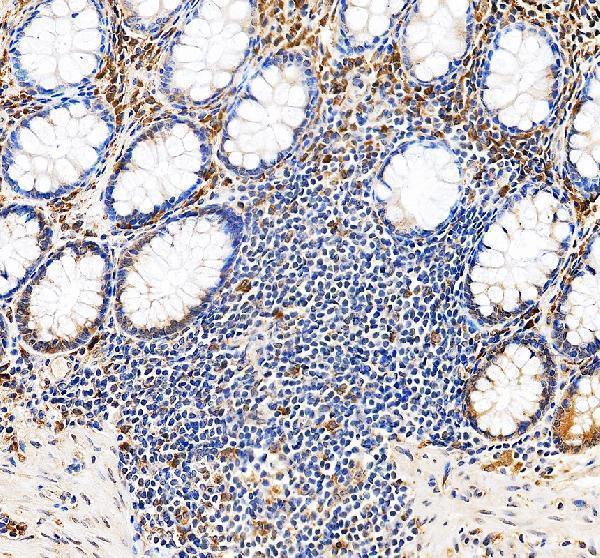
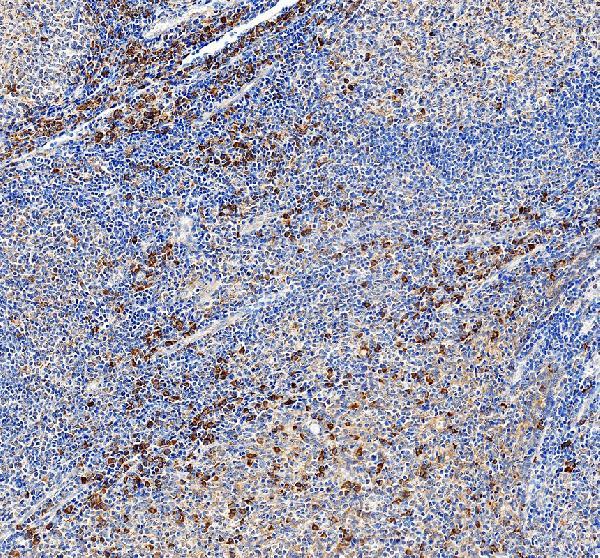
TLR5 antibody (PB9451) performs well in IHC, WB and shows reactivity with Human.
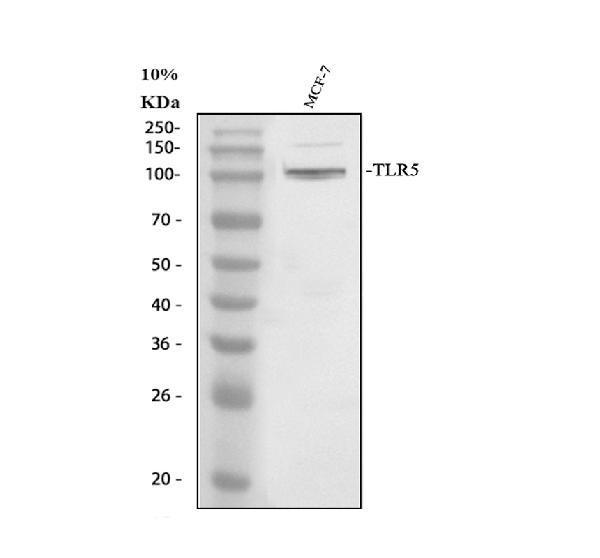
  • Validated for inter-lot consistency, specificity, and reproducibility
  • Committed to quality since 1993
Filter:
pb9451 tlr5 primary antibodies wb testing 1pb9451 tlr5 primary antibodies ihc testing 1pb9451 tlr5 primary antibodies ihc testing 2

Anti-TLR5 Antibody Picoband®

TLR5 antibody

Reactive SpeciesHostApplication
HumanRabbitIHC, WB

SKU: PB9451

Size: 100 μg

Bundle to save: I do not want free secondary ab
Price:
$370/100 μg

5 in stock. Ships Next Business Day.

Quantity: 1

1
Get A Quote
Guarantee / Product Promise

Tested Applications

TLR5 antibody was positively detected by WB in:

human MCF-7 whole cell

Suggested blocking solution with 5% non-fat milk or BSA; (*)Recommended protein loading: 20-40 ug per lane

TLR5 antibody was positively detected by IHC in:

human colon tissue, human tonsil tissue

Use TE buffer pH 9.0 for antigen retrieval; (*) citrate buffer pH 6.0 is an alternative.

Recommend Dilution

Application
Dilution
Species
Western blot
0.1-0.5μg/ml
Human
Immunohistochemistry (Paraffin-embedded Section)
2-5μg/ml
Human

* It is recommended to optimize the amount of this reagent in each experimental system to achieve the best results.

Reactive Data

Filter:
Boster Guarantee:What is this?
WB
IHC
IF
Human
Tested
Tested
Recommend
Monkey
Predicted
Predicted
Predicted

Product Information

Product Name
Anti-TLR5 Antibody Picoband®
View all TLR5 Antibodies
Form
Lyophilized
Uniprot
Gene ID
Storage & Handling
Store at -20˚C for one year from date of receipt. After reconstitution, at 4˚C for one month. It can also be aliquotted and stored frozen at -20˚C for six months. Avoid repeated freeze-thaw cycles.
Host
Rabbit
Contents
Each vial contains 4 mg Trehalose, 0.9 mg NaCl and 0.2 mg Na2HPO4.
Clonality
Polyclonal
Isotype
Rabbit IgG
Immunogen
A synthetic peptide corresponding to a sequence at the C-terminus of human TLR5, different from the related mouse sequence by five amino acids.
Cross-Reactivity
No cross-reactivity with other proteins
Reconstitution
Add 0.2ml of distilled water will yield a concentration of 500ug/ml.
Observed Molecular Weight
98 kDa
Calculated Molecular Weight

97.8 kDa

Background of TLR5
TLR5 encodes a member of the toll-like receptor (TLR) family, which plays a fundamental role in pathogen recognition and activation of innate immune responses. These receptors recognize distinct pathogen-associated molecular patterns that are expressed on infectious agents. The protein encoded by this gene recognizes bacterial flagellin, the principal component of bacterial flagella and a virulence factor. The activation of this receptor mobilizes the nuclear factor NF-kappaB, which in turn activates a host of inflammatory-related target genes. Mutations in this gene have been associated with both resistance and susceptibility to systemic lupus erythematosus, and susceptibility to Legionnaire disease.
Cite This Product
Anti-TLR5 Antibody Picoband® (Boster Biological Technology, Pleasanton CA, USA, Catalog # PB9451)

Protocols

Western Blot protocol for TLR5 antibody
Immunohistochemistry (IHC) protocol for TLR5 antibody

Review

Have you used Anti-TLR5 Antibody Picoband®?

Submit a review and receive $370 in product credits, a $185 Amazon gift card, or our carefully curated gift bundles.

Product Promise

We promise Anti-TLR5 Antibody Picoband® performs excellently in relevant applications for IHC, WB. If it doesn't perform as promised, we will refund the product. Learn more


In stock
Order Product
PB9451
Buy one primary antibody get one 0.5ml HRP or Biotin secondary antibody for free.
*Sample sizes are prepared on demand and will take extra lead time. (cannot be conjugated)
$370.00

Troubleshooting

troubleshooting-box-image

Download troubleshooting handbooks for IHC, Western blot and ELISA for FREE.

Download Free PDFs Now

Boster Guarantee

Guaranteed product quality

Guaranteed product quality

We promise all of our products perform as described in datasheets.

This product is for Research Use Only. Not for use in diagnostic procedures.

Update date: Oct 8, 2026