This website uses cookies to ensure you get the best experience on our website.


- Table of Contents
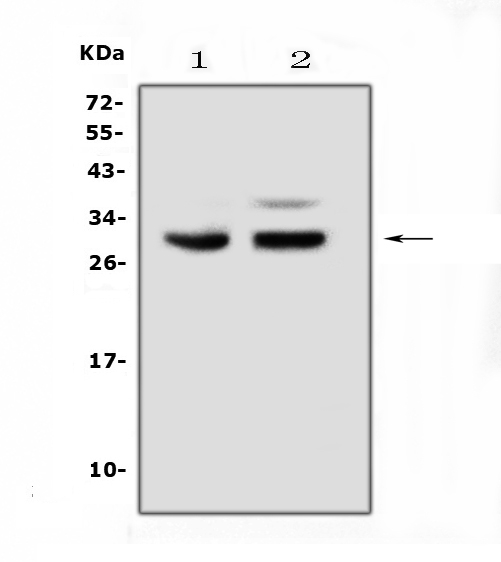
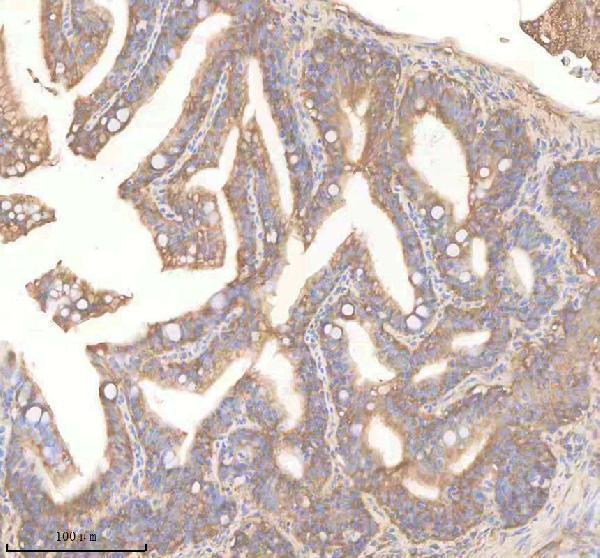
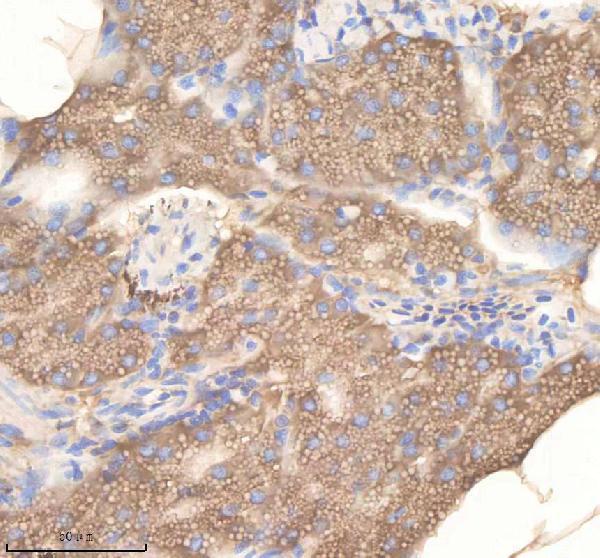
Designing a Western blot for PDCD10? The guide has the expected band size, antibodies backed by real blot images, the controls to run alongside, and protocols taken from published papers.
Open the PDCD10 Western Blot Guide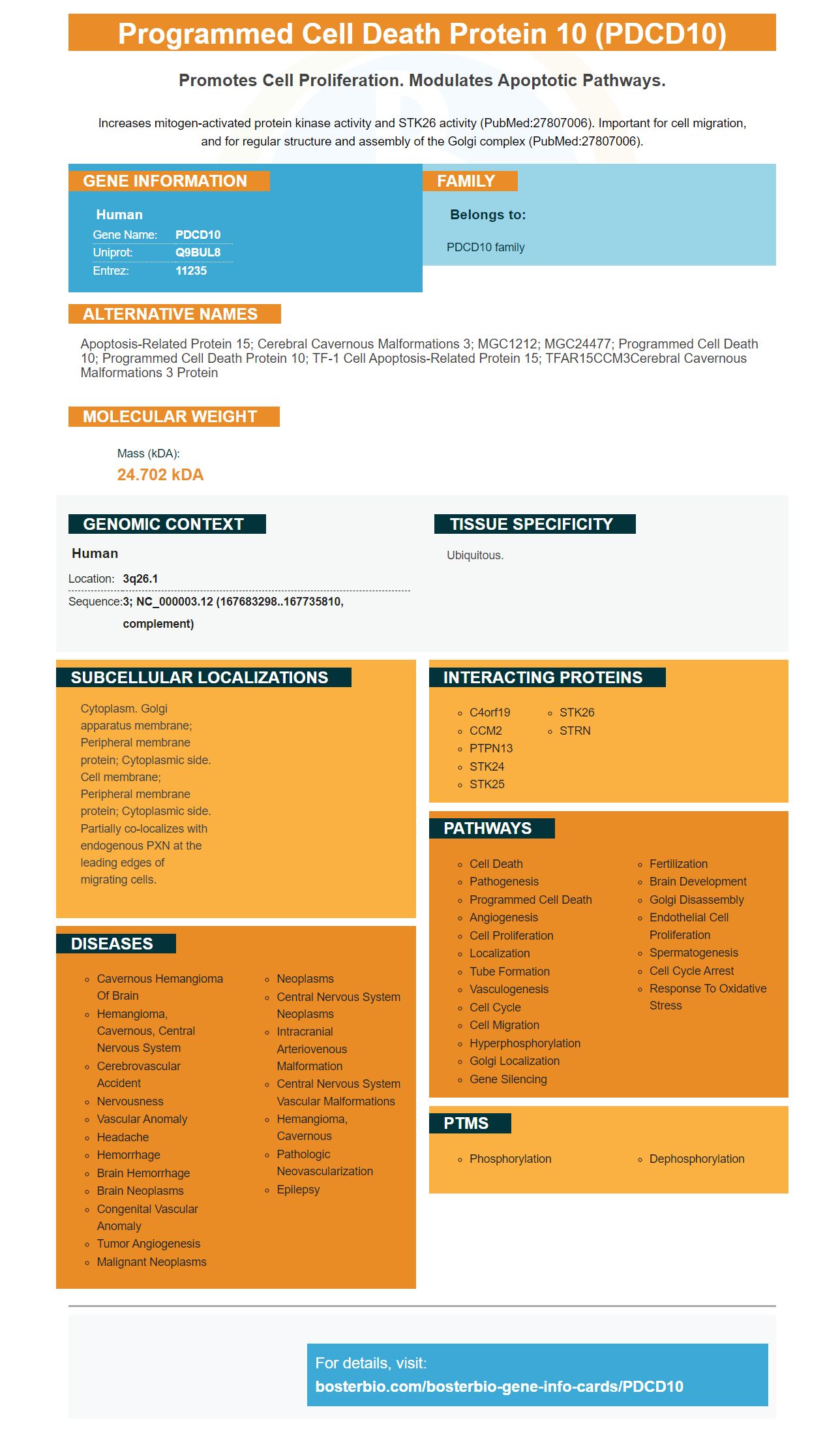
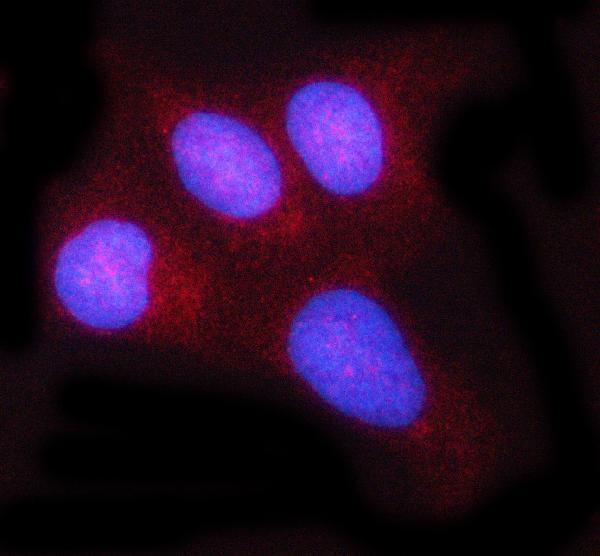
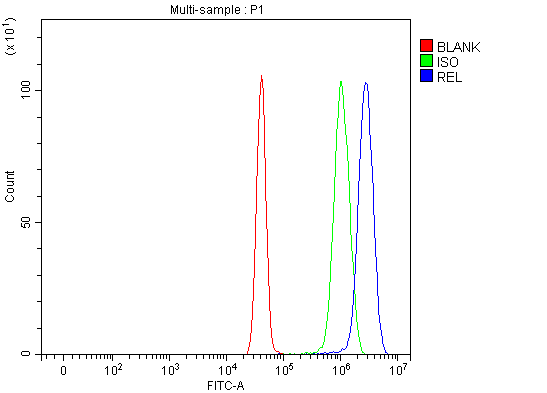
Facts about Programmed cell death protein 10.
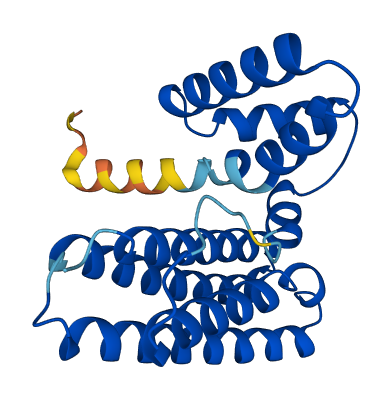
Increases mitogen-activated protein kinase activity and STK26 activity (PubMed:27807006). Important for cell migration, and for regular structure and assembly of the Golgi complex (PubMed:27807006).
| Human | |
|---|---|
| Gene Name: | PDCD10 |
| Uniprot: | Q9BUL8 |
| Entrez: | 11235 |

| Belongs to: |
|---|
| PDCD10 family |

apoptosis-related protein 15; cerebral cavernous malformations 3; MGC1212; MGC24477; programmed cell death 10; programmed cell death protein 10; TF-1 cell apoptosis-related protein 15; TFAR15CCM3Cerebral cavernous malformations 3 protein
Mass (kDA):
24.702 kDA

| Human | |
|---|---|
| Location: | 3q26.1 |
| Sequence: | 3; NC_000003.12 (167683298..167735810, complement) |
Ubiquitous.
Cytoplasm. Golgi apparatus membrane; Peripheral membrane protein; Cytoplasmic side. Cell membrane; Peripheral membrane protein; Cytoplasmic side. Partially co-localizes with endogenous PXN at the leading edges of migrating cells.





PMID: 15543491 by Bergametti F., et al. Mutations within the programmed cell death 10 gene cause cerebral cavernous malformations.
PMID: 17360971 by Ma X., et al. PDCD10 interacts with Ste20-related kinase MST4 to promote cell growth and transformation via modulation of the ERK pathway.