This website uses cookies to ensure you get the best experience on our website.


- Table of Contents
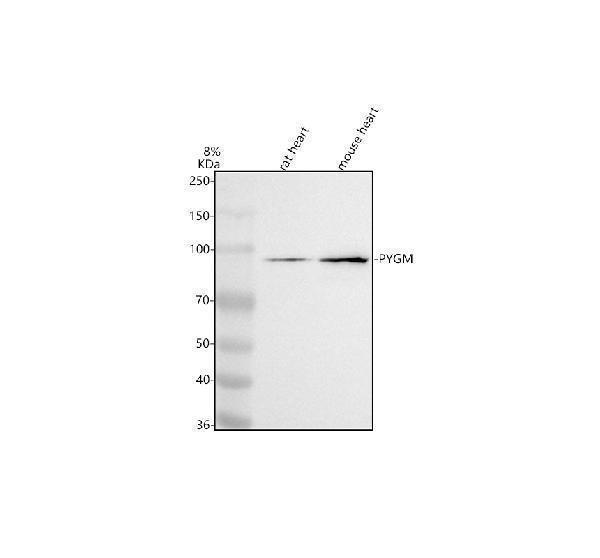
Designing a Western blot for PYGM? The guide has the expected band size, antibodies backed by real blot images, the controls to run alongside, and protocols taken from published papers.
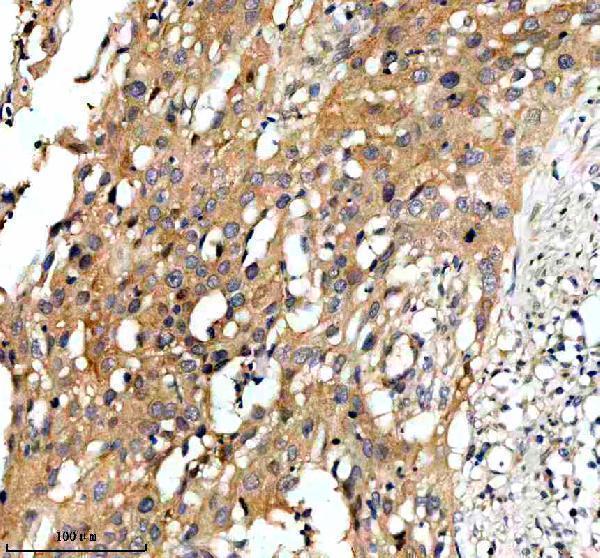
Open the PYGM Western Blot GuideDesigning an IHC experiment for PYGM? The guide has the expected staining pattern, antigen retrieval and fixation, antibodies backed by real IHC images, the tissue controls to run alongside, and protocols taken from published papers.
Open the PYGM IHC Guide
Facts about Glycogen phosphorylase, muscle form.
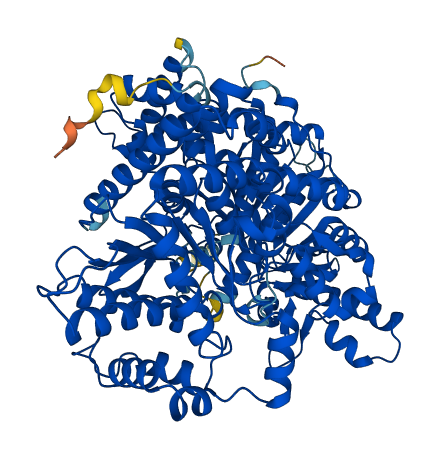
However, all known phosphorylases share catalytic and structural properties. .
| Human | |
|---|---|
| Gene Name: | PYGM |
| Uniprot: | P11217 |
| Entrez: | 5837 |

| Belongs to: |
|---|
| glycogen phosphorylase family |

EC 2.4.1.1; glycogen phosphorylase, muscle form; myophosphorylase; phosphorylase, glycogen, muscle; phosphorylase, glycogen; muscle
Mass (kDA):
97.092 kDA

| Human | |
|---|---|
| Location: | 11q13.1 |
| Sequence: | 11; NC_000011.10 (64746389..64760715, complement) |





PMID: 3447177 by Burke J., et al. Intron/exon structure of the human gene for the muscle isozyme of glycogen phosphorylase.
PMID: 9633816 by Kubisch C., et al. Molecular diagnosis of McArdle disease: revised genomic structure of the myophosphorylase gene and identification of a novel mutation.