This website uses cookies to ensure you get the best experience on our website.


- Table of Contents
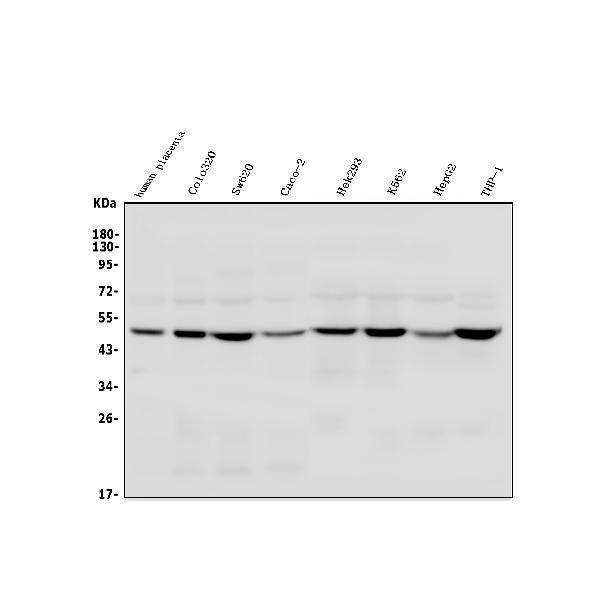
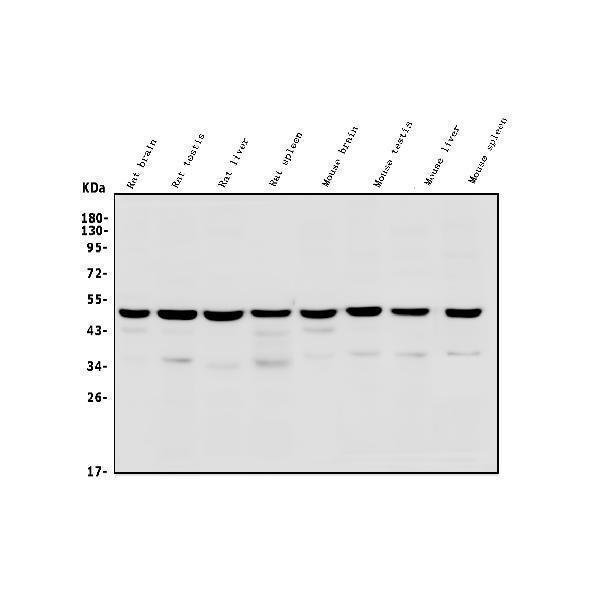
Designing a Western blot for TSG101? The guide has the expected band size, antibodies backed by real blot images, the controls to run alongside, and protocols taken from published papers.
Open the TSG101 Western Blot GuideDesigning an IHC experiment for TSG101? The guide has the expected staining pattern, antigen retrieval and fixation, antibodies backed by real IHC images, the tissue controls to run alongside, and protocols taken from published papers.
Open the TSG101 IHC Guide
6 Citations
10 Citations

Facts about Tumor susceptibility gene 101 protein.

Mediates the association between the ESCRT-0 and ESCRT-I complicated. Required for completion of cytokinesis; the function requires CEP55.
| Human | |
|---|---|
| Gene Name: | TSG101 |
| Uniprot: | Q99816 |
| Entrez: | 7251 |

| Belongs to: |
|---|
| ubiquitin-conjugating enzyme family |

ESCRT-I complex subunit TSG101; TSG10; tumor susceptibility gene 10; tumor susceptibility gene 101 protein; tumor susceptibility gene 101; tumor susceptibility protein; VPS23
Mass (kDA):
43.944 kDA

| Human | |
|---|---|
| Location: | 11p15.1 |
| Sequence: | 11; NC_000011.10 (18480311..18526942, complement) |
Heart, brain, placenta, lung, liver, skeletal, kidney and pancreas.
Cytoplasm. Early endosome membrane; Peripheral membrane protein; Cytoplasmic side. Late endosome membrane; Peripheral membrane protein. Cytoplasm, cytoskeleton, microtubule organizing center, centrosome. Midbody, Midbody ring. Nucleus. Mainly cytoplasmic. Membrane-associated when active and soluble when inactive. Nuclear localization is cell cycle-dependent. Interaction with CEP55 is required for localization to the midbody during cytokinesis.



PMID: 9019400 by Li L., et al. The TSG101 tumor susceptibility gene is located in chromosome 11 band p15 and is mutated in human breast cancer.
PMID: 9366528 by Gayther S.A., et al. Aberrant splicing of the TSG101 and FHIT genes occurs frequently in multiple malignancies and in normal tissues and mimics alterations previously described in tumours.
*More publications can be found for each product on its corresponding product page