This website uses cookies to ensure you get the best experience on our website.


- Table of Contents

Facts about Tubby-related protein 1.
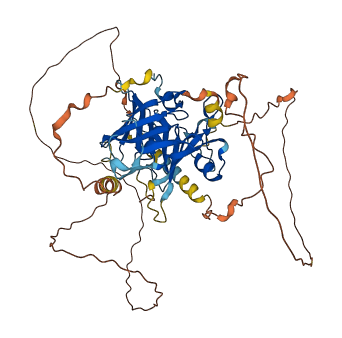
Interacts with cytoskeleton proteins and might play a role in protein transport in photoreceptor cells (By similarity). Binds lipids, especially phosphatidylinositol 3-phosphate, phosphatidylinositol 4- phosphate, phosphatidylinositol 5-phosphate, phosphatidylinositol 3,4-bisphosphate, phosphatidylinositol 4,5-bisphosphate, phosphatidylinositol 3,4,5-bisphosphate, phosphatidylserine and phosphatidic acid (in vitro).
| Human | |
|---|---|
| Gene Name: | TULP1 |
| Uniprot: | O00294 |
| Entrez: | 7287 |
| Belongs to: |
|---|
| TUB family |

LCA15; RP14; tubby like protein 1; Tubby related protein 1 (Tubby-like protein 1); Tubby-like Protein 1; Tubby-Related Protein 1; TUBL1; TUBL1Tubby-like protein 1; TULP1
Mass (kDA):
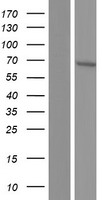
60.609 kDA

| Human | |
|---|---|
| Location: | 6p21.31 |
| Sequence: | 6; NC_000006.12 (35497874..35512896, complement) |
Retina-specific.
Cytoplasm. Cell membrane; Peripheral membrane protein; Cytoplasmic side. Secreted. Cell junction, synapse. Detected at synapses between photoreceptor cells and second-order neurons. Does not have a cleavable signal peptide and is secreted by an alternative pathway (By similarity).





PMID: 9096357 by North M.A., et al. Molecular characterization of TUB, TULP1, and TULP2, members of the novel tubby gene family and their possible relation to ocular diseases.
PMID: 9462751 by Banerjee P., et al. TULP1 mutation in two extended Dominican kindreds with autosomal recessive retinitis pigmentosa.