This website uses cookies to ensure you get the best experience on our website.


- Table of Contents
and ELISA kits, proteins related to Epithelial cells.
Epithelial cells are fundamental building blocks that form the protective and functional linings of organs and tissues throughout the body. These versatile cells create barriers on surfaces such as the skin, respiratory tract, digestive system, and blood vessels, playing crucial roles in absorption, secretion, and sensation. Their ability to regenerate and adapt makes them essential for maintaining homeostasis and defending against environmental threats and pathogens. In the realm of biomedical research, understanding the behavior and regulation of epithelial cells is pivotal for uncovering the mechanisms behind various diseases, including cancers, inflammatory disorders, and infections. Antibodies targeting specific epithelial cell markers are invaluable tools that enable scientists to visualize, isolate, and manipulate these cells with precision. By leveraging these specialized antibodies, researchers can advance their studies on epithelial cell functions, interactions, and pathologies, driving innovations in diagnostics and therapeutic interventions.

Anti-Pan cytokeratin Antibody (Monoclonal, PCK-26), Figure 3. IF analysis of Pan cytokeratin using anti-Pan cytokeratin antibody (MA1082).
Pan cytokeratin was detected i...
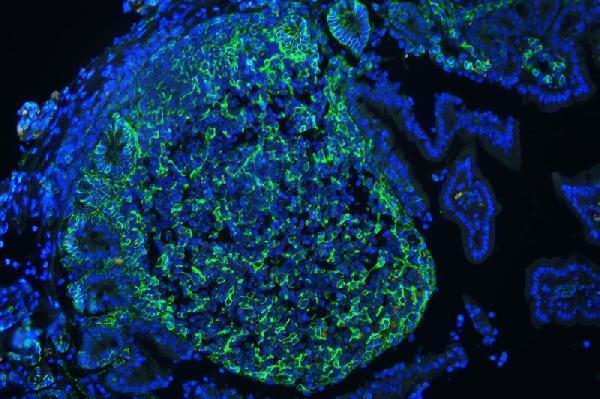
Anti-CD44 Antibody Picoband®, Figure 7. IF analysis of CD44 using anti-CD44 antibody (A00052)
CD44 was detected in paraffin-embedded section of mouse lymphaden tissues. Heat...

Anti-ZO1 tight junction protein/TJP1 Antibody Picoband®, Figure 3. IF analysis of TJP1 using anti-TJP1 antibody (PB9234).
TJP1 was detected in immunocytochemical section of...
| Protein Name | Gene Name | Function |
|---|---|---|
| E-cadherin | CDH1 | Cell-cell adhesion |
| Cytokeratin 8 | KRT8 | Cytoskeletal structure |
| EpCAM | EpCAM | Cell adhesion and proliferation |
| Mucin 1 | MUC1 | Barrier and signaling |
| EGFR | EGFR | Growth signaling |
| Claudin-1 | CLDN1 | Tight junctions |
| Desmoglein-3 | DSG3 | Cell adhesion |
| OVOL1 | OVOL1 | Cell differentiation |
| P-cadherin | CDH3 | Cell adhesion |
| Cytokeratin 19 | KRT19 | Cytoskeletal structure |
| HER2 | ERBB2 | Growth signaling |
| ZO-1 | TJP1 | Tight junctions |
| Integrin beta-4 | ITGB4 | Cell adhesion |
| S100A4 | S100A4 | Cell motility |
| β-catenin | CTNNB1 | Wnt signaling and adhesion |
| MUC16 | MUC16 | Tumor marker |
| CD44 | CD44 | Cell adhesion and migration |
| TROP2 | TACSTD2 | Cell proliferation |
| FOXA1 | FOXA1 | Transcription factor |
| GATA3 | GATA3 | Transcription factor |
Epithelial barrier function is a fundamental aspect of epithelial cell biology, essential for maintaining the integrity and selective permeability of tissues. Epithelial cells line various surfaces and cavities in the body, including the skin, gastrointestinal tract, and respiratory system, serving as the first line of defense against pathogens, toxins, and mechanical stress. Tight junctions, specialized protein complexes located at the apical region of epithelial cells, play a critical role in establishing and regulating this barrier. They control the paracellular pathway, restricting the free passage of ions and molecules between cells, thereby maintaining distinct internal environments necessary for proper cellular function. Disruptions in tight junction integrity can lead to increased permeability, contributing to a range of pathological conditions such as inflammatory bowel disease, asthma, and cancer metastasis. Research in this sub-area focuses on understanding the molecular composition of tight junctions, the signaling pathways that regulate their assembly and disassembly, and the mechanisms by which epithelial barriers respond to physiological and pathological stimuli. Advances in this field hold significant implications for developing therapeutic strategies aimed at restoring barrier function in disease states and improving drug delivery across epithelial barriers.
Epithelial-Mesenchymal Transition (EMT) is a dynamic and reversible biological process wherein epithelial cells lose their characteristic cell polarity and cell-cell adhesion properties to acquire a mesenchymal phenotype, marked by enhanced migratory capacity, invasiveness, and resistance to apoptosis. EMT plays a pivotal role in various physiological processes, including embryonic development, wound healing, and tissue regeneration. However, its dysregulation is implicated in numerous pathological conditions, most notably in cancer progression and metastasis. During EMT, epithelial cells undergo extensive transcriptional reprogramming driven by key signaling pathways such as TGF-β, Wnt, and Notch. This leads to the downregulation of epithelial markers like E-cadherin and the upregulation of mesenchymal markers such as N-cadherin and vimentin. Understanding the molecular mechanisms governing EMT is crucial for developing targeted therapies to inhibit cancer metastasis and overcome therapeutic resistance. Additionally, EMT is being explored in the context of fibrosis and immune regulation, highlighting its broad relevance in health and disease. Current research in this sub-area employs advanced techniques like single-cell RNA sequencing and live-cell imaging to unravel the complexities of EMT and its implications in various biological contexts.