This website uses cookies to ensure you get the best experience on our website.


- Table of Contents
and ELISA kits, proteins related to Chronic lymphocytic leukemia.
Chronic lymphocytic leukemia (CLL) is a type of cancer that originates in the bone marrow and gradually extends into the blood. It primarily affects a group of white blood cells known as lymphocytes, which play a vital role in the body's immune defense. CLL is characterized by the progressive accumulation of these functionally incompetent lymphocytes, which ultimately impairs the immune system and leads to various health complications. CLL is most common in adults over the age of 50 and tends to develop slowly. Many individuals diagnosed with CLL may not experience symptoms in the early stages and are often diagnosed incidentally during routine blood tests. As the disease progresses, symptoms such as swollen lymph nodes, fatigue, and increased susceptibility to infections may emerge. Research into CLL is crucial as it focuses on understanding the underlying genetic and molecular mechanisms of the disease, leading to more targeted and effective treatments. Antibodies specific to CLL play a significant role in both research and treatment, aiding in the identification of disease markers and serving as foundations for therapeutic strategies.
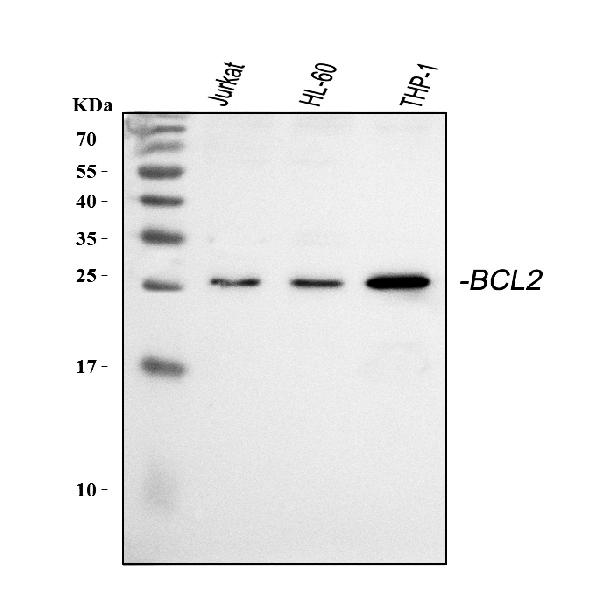
Anti-Bcl-2/BCL2 Antibody Picoband®, Western blot analysis of BCL2 using anti-BCL2 antibody (A00040-2). Electrophoresis was performed on a 5-20% SDS-PAGE gel at 70V (Stacking gel) / 90V (Resolving gel) for 2-3 hours. The sample well of...
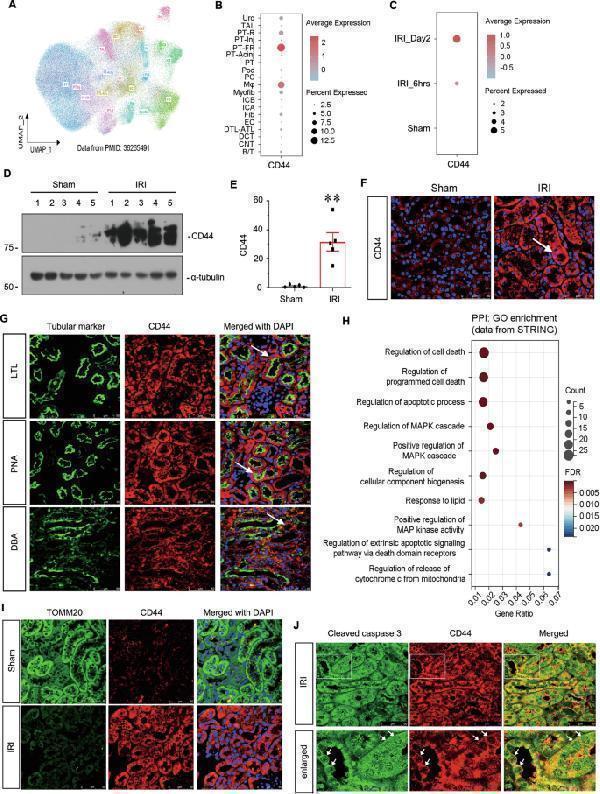
Anti-CD44 Antibody Picoband®, CD44 is upregulated in TECs and associated with mitochondrial dysfunction and apoptosis. A UMAP shows cell population in kidneys of sham and IRI at ...
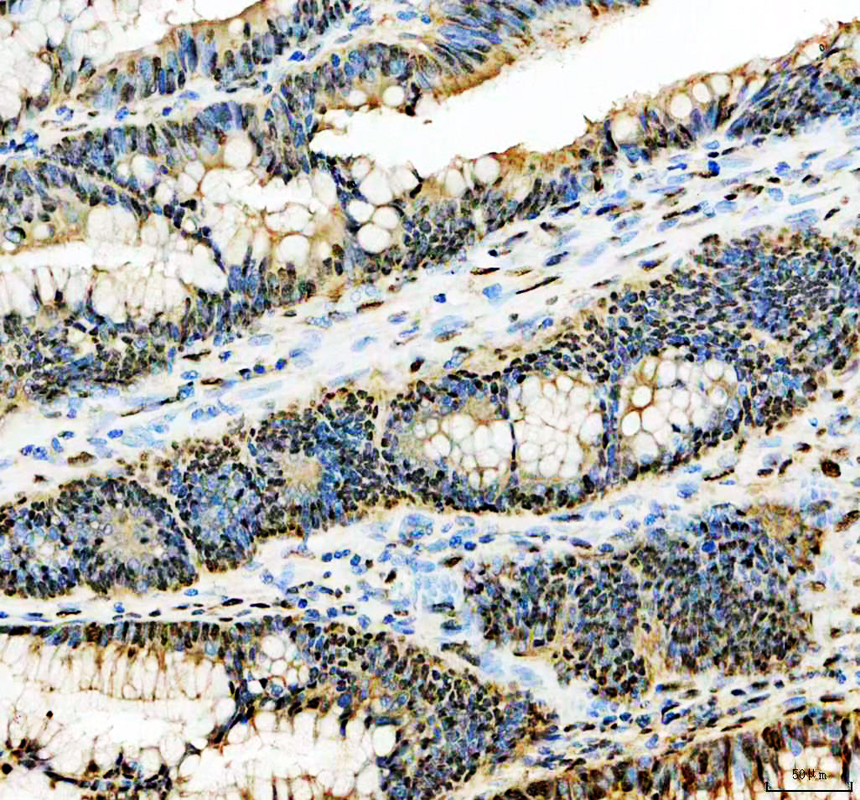
Anti-P53/TP53 Antibody Picoband®, IHC analysis of TP53 using anti-TP53 antibody (PB9008).
TP53 was detected in a paraffin-embedded section of human colon cancer tissue. Heat mediated...
| Protein Name | Gene Name | Function |
|---|---|---|
| CD5 | CD5 | Expressed on B cells in CLL, involved in modulation of antigen-specific receptor signaling. |
| CD23 | FCER2 | A marker for CLL; involved in B cell activation and growth. |
| ZAP-70 | ZAP70 | Tyrosine kinase that predicts aggressive disease, involved in T-cell receptor signaling. |
| CD19 | CD19 | Part of the B cell receptor complex, prevalent in CLL cells. |
| CD20 | MS4A1 | Target for monoclonal antibody therapy in CLL. |
| CD38 | CD38 | Correlates with disease progression; receptor involved in cell adhesion and signal transduction. |
| TP53 | TP53 | Tumor suppressor gene; mutations associated with poor prognosis in CLL. |
| CD79b | CD79B | Component of the B cell receptor, critical for B cell development. |
| BCL-2 | BCL2 | Anti-apoptotic molecule, overexpressed in most cases of CLL. |
| BTK | BTK | Tyrosine kinase essential for B cell development, target for targeted therapies. |
| CD22 | CD22 | Regulates B cell function and survival, potential therapeutic target. |
| CD43 | SPN | Involved in cell adhesion and the activation of B cells. |
| NOTCH1 | NOTCH1 | Transcriptional regulator, mutations linked with CLL pathogenesis. |
| CD44 | CD44 | Cell-surface glycoprotein involved in cell-cell interactions, migration, and adhesion. |
| SF3B1 | SF3B1 | Splicing factor, mutations associated with refractory disease. |
| ATM | ATM | Cell cycle checkpoint kinase, mutated in some CLL cases. |
| BAALC | BAALC | Associated with unfavorable prognosis, role in neural and leukemic cell development. |
| MYD88 | MYD88 | Adapter protein involved in the innate immune response, mutations observed in CLL. |
| CD49d | ITGA4 | Integrin alpha 4, mediates adhesion and migration of B lymphocytes, associated with poor prognosis. |
The microenvironment in Chronic Lymphocytic Leukemia (CLL) plays a crucial role in the survival, proliferation, and resistance to therapy of CLL cells. This sub-research area focuses on how CLL cells interact with their surrounding environments, specifically the bone marrow and lymphoid tissues where these cancer cells reside and receive critical survival signals. Studies in this area explore the cellular and molecular mechanisms by which the microenvironment influences CLL progression, including the secretion of cytokines, chemokines, and the formation of protective niches that shield CLL cells from therapeutic agents. Understanding these interactions provides insights into potential therapeutic targets, aiming to disrupt these supportive networks and enhance the efficacy of CLL treatments.
Genetic and epigenetic modifications are pivotal in the development, progression, and clinical heterogeneity of Chronic Lymphocytic Leukemia. This research area delves into identifying and understanding the various genetic mutations and epigenetic alterations that occur in CLL. Key genes often studied include TP53, ATM, and SF3B1, whose mutations can influence the course of the disease and patient prognosis. Epigenetic studies focus on modifications that do not change the DNA sequence but still affect gene expression, such as DNA methylation and histone modification. Insights gained from this research help in stratifying patients based on risk, developing personalized treatment plans, and discovering novel therapeutic targets that could lead to more effective and less toxic treatments.