This website uses cookies to ensure you get the best experience on our website.


- Table of Contents
and ELISA kits, proteins related to Parkinson's Disease.
Parkinson's Disease is a progressive neurodegenerative disorder that affects millions worldwide. It primarily impacts movement, leading to symptoms such as tremors, stiffness, slowness of movement, and impaired balance. Beyond motor challenges, Parkinson's can also cause non-motor symptoms like cognitive decline, mood disorders, and sleep disturbances, significantly affecting quality of life. The disease arises from the gradual loss of dopamine-producing neurons in the brain, though its exact cause remains uncertain, involving a combination of genetic and environmental factors. Current research is focused on understanding the underlying mechanisms of Parkinson's, with a significant emphasis on developing antibody-based therapies. These antibodies aim to target and neutralize abnormal proteins that contribute to neuronal damage, offering promising avenues for slowing disease progression and improving patient outcomes. Advances in this field bring hope for more effective treatments and ultimately, a cure.

Anti-BDNF Rabbit Monoclonal Antibody, Immunofluorescent analysis of HeLa cells, using BDNF Antibody....

Anti-beta Amyloid/APP Antibody Picoband®, Figure 7. IF analysis of APP using anti-APP antibody (PB9091).
APP was detected in immunocytochemical section of A431 cell. Enzyme ...
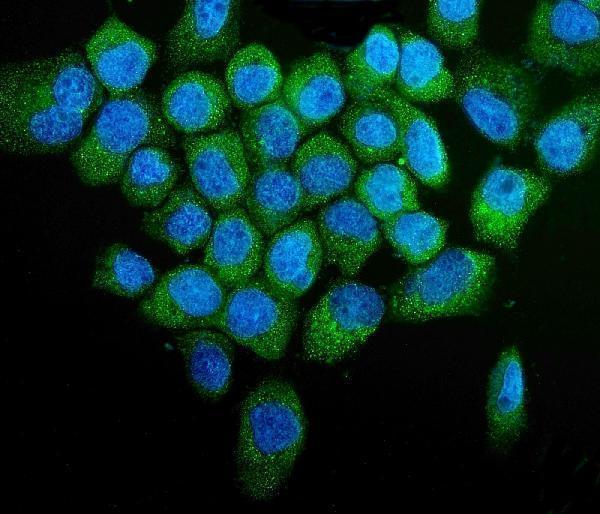
Anti-PINK1 Antibody Picoband®, Figure 2. IF analysis of PINK1 using anti-PINK1 antibody (A00201-2).
PINK1 was detected in immunocytochemical section of A431 cells. Enzym...
| Protein Name | Gene Name | Function |
|---|---|---|
| Alpha-synuclein | SNCA | Aggregates form Lewy bodies, associated with neuronal death. |
| Leucine-rich repeat kinase 2 | LRRK2 | Mutations linked to familial PD, involved in kinase signaling. |
| Parkin | PRKN | E3 ubiquitin ligase involved in mitochondrial quality control. |
| PTEN-induced kinase 1 | PINK1 | Involved in mitochondrial maintenance and mitophagy. |
| DJ-1 | PARK7 | Oxidative stress response and mitochondrial function. |
| Ubiquitin carboxyl-terminal hydrolase L1 | UCHL1 | Involved in protein degradation through ubiquitin processing. |
| Glucocerebrosidase | GBA | Lysosomal enzyme involved in lipid metabolism. |
| Tau | MAPT | Microtubule-associated protein implicated in neurodegeneration. |
| Vacuolar protein sorting-associated protein 35 | VPS35 | Component of the retromer complex involved in protein sorting. |
| ATPase type 13A2 | ATP13A2 | Lysosomal ATPase involved in metal ion homeostasis. |
| Brain-derived neurotrophic factor | BDNF | Supports neuron survival, growth, and differentiation. |
| NURR1 | NR4A2 | Regulates dopaminergic neuron development and maintenance. |
| Eukaryotic translation initiation factor 4 gamma 1 | EIF4G1 | Involved in the initiation of protein translation. |
| GTP cyclohydrolase 1 | GCH1 | Catalyzes the first step in dopamine synthesis. |
| Sirtuin 2 | SIRT2 | Involved in cellular stress responses and metabolism. |
| Phosphorylated tau | MAPT | Associated with neurofibrillary tangles in PD. |
| Neurofilament light chain | NEFL | Structural component of neurons, biomarker for neuronal damage. |
| Cathepsin D | CTSD | Lysosomal enzyme involved in protein degradation. |
| Microtubule-associated protein 2 | MAP2 | Stabilizes microtubules in neurons, indicative of neuronal integrity. |
| Cerebrospinal fluid amyloid-beta | APP | Protein involved in amyloid plaque formation. |
Alpha-synuclein aggregation is a pivotal area of research in Parkinson's Disease (PD) due to its central role in the disease's pathology. Alpha-synuclein is a presynaptic neuronal protein that, under normal conditions, is involved in synaptic function and neurotransmitter release. However, in PD, this protein misfolds and aggregates to form insoluble fibrils known as Lewy bodies, which are a hallmark of the disease. The aggregation process disrupts cellular homeostasis, leading to neuronal dysfunction and death, particularly in dopaminergic neurons of the substantia nigra. Understanding the mechanisms that drive alpha-synuclein aggregation is crucial for developing therapeutic strategies aimed at preventing or reducing these toxic protein accumulations. Research in this area explores factors such as genetic mutations, post-translational modifications, and environmental triggers that influence alpha-synuclein behavior. Additionally, studies are investigating the prion-like propagation of alpha-synuclein aggregates, which may contribute to the progressive nature of PD. Targeting alpha-synuclein aggregation holds promise for disease-modifying therapies that could slow or halt the progression of Parkinson's Disease.
Mitochondrial dysfunction is another critical research focus in Parkinson's Disease, given its impact on neuronal survival and function. Mitochondria are essential organelles responsible for producing energy through oxidative phosphorylation, regulating apoptosis, and maintaining cellular metabolism. In PD, impaired mitochondrial function leads to decreased ATP production, increased production of reactive oxygen species (ROS), and disrupted calcium homeostasis, all of which contribute to neuronal stress and death. Studies have identified several mitochondrial-related factors in PD, including mutations in genes like PINK1 and Parkin, which are involved in mitochondrial quality control and mitophagy—the process of removing damaged mitochondria. Environmental toxins, such as pesticides, have also been shown to induce mitochondrial dysfunction, further linking external factors to PD pathology. Research in this subarea aims to elucidate the precise mechanisms by which mitochondrial deficits contribute to neuronal degeneration and to identify potential therapeutic targets that can restore mitochondrial function or enhance cellular resilience. By addressing mitochondrial dysfunction, scientists hope to develop interventions that can protect neurons and mitigate the progression of Parkinson's Disease.