This website uses cookies to ensure you get the best experience on our website.


- Table of Contents
and ELISA kits, proteins related to Thyroid Cancer.
**Understanding Thyroid Cancer** Thyroid cancer originates in the thyroid gland, a butterfly-shaped organ located at the base of the neck responsible for regulating metabolism through hormone production. While it accounts for a relatively small percentage of all cancer cases, its incidence has been rising globally. There are several types of thyroid cancer, including papillary, follicular, medullary, and anaplastic, each differing in behavior and treatment strategies. Advances in research have significantly enhanced our understanding of the molecular pathways involved, leading to the development of targeted antibodies aimed at more effective and personalized therapies. Ongoing studies focus on improving diagnostic techniques and expanding treatment options, offering hope for better patient outcomes. By investing in thyroid cancer research, especially in the realm of antibody therapies, we move closer to more reliable and efficient solutions for those affected by this disease.
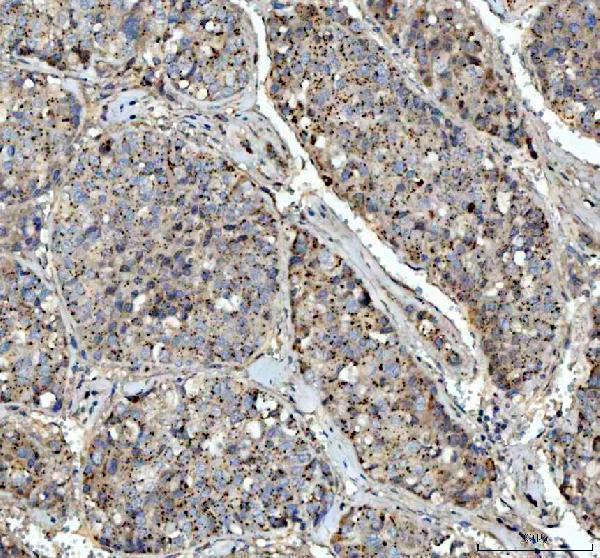
Anti-VEGF/VEGFA Antibody Picoband®, Figure 3. IHC analysis of VEGFA using anti-VEGFA antibody (PA1080).
VEGFA was detected in a paraffin-embedded section of human liver cancer tissue. Hea...
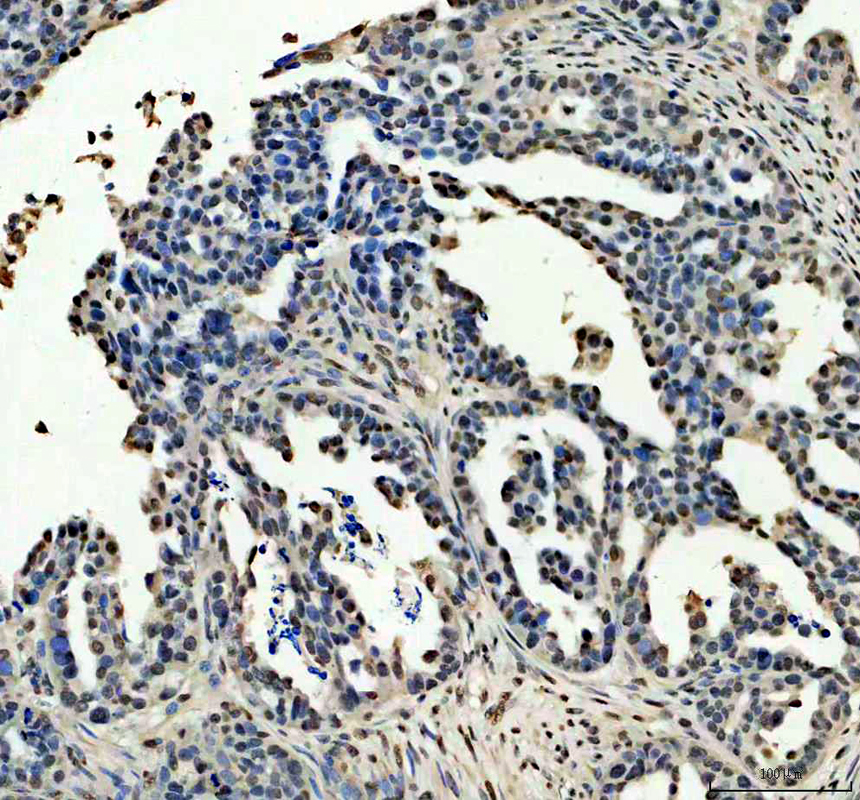
Anti-P53/TP53 Antibody Picoband®, Figure 3. IHC analysis of P53 using anti-P53 antibody (PB9008).
TP53 was detected in a paraffin-embedded section of humn ovarian cancer tissue. Heat mediated antigen retrieval was...

Anti-P53 Tp53 Monoclonal Antibody, Figure 3. IF analysis of p53 using anti-p53 antibody (MA1078).
p53 was detected in immunocytochemical section of A431 cell. Enzyme antigen retrieva...
| Protein Name | Gene Name | Function |
|---|---|---|
| BRAF V600E | BRAF | Mutated protein in MAPK pathway driving papillary thyroid carcinoma |
| RET/PTC | RET | Rearrangements activating MAPK signaling in thyroid cancer |
| p53 | TP53 | Tumor suppressor mutated in anaplastic thyroid cancer |
| PTEN | PTEN | Tumor suppressor regulating PI3K/AKT pathway |
| TERT Promoter | TERT | Mutations associated with thyroid cancer aggressiveness and poor prognosis |
| ALK Fusions | ALK | Gene fusions activating cell growth signaling pathways |
| EGFR | EGFR | Receptor tyrosine kinase involved in cell proliferation and survival |
| PD-L1 | CD274 | Immune checkpoint protein facilitating tumor immune evasion |
| VEGF | VEGFA | Promotes angiogenesis to supply nutrients to tumors |
| Galectin-3 | LGALS3 | Diagnostic marker involved in cell adhesion and metastasis |
| CK19 | KRT19 | Cytokeratin used as a diagnostic marker in thyroid cancer |
| Thyroglobulin | TG | Precursor protein used as a tumor marker in thyroid cancer |
| Thyroid Transcription Factor-1 | NKX2-1 | Regulates thyroid-specific gene expression |
| NIS | SLC5A5 | Sodium-iodide symporter involved in iodine uptake for thyroid hormone synthesis |
| Ki-67 | MKI67 | Proliferation marker indicating tumor growth rate |
| ALK | ALK | Gene rearrangements driving oncogenic signaling in thyroid cancer |
Molecular pathogenesis is a critical sub-research area in thyroid cancer, focusing on understanding the genetic and molecular alterations that drive the development and progression of the disease. This area investigates key mutations and genetic rearrangements, such as BRAF, RAS, and RET/PTC mutations, which are frequently observed in various thyroid cancer types. By elucidating the pathways and mechanisms through which these genetic changes promote tumor growth and metastasis, researchers can identify potential targets for intervention. Additionally, molecular pathogenesis explores the role of epigenetic modifications and non-coding RNAs in thyroid cancer, providing a comprehensive view of the factors contributing to malignancy. Insights gained from this research not only enhance the fundamental understanding of thyroid cancer biology but also pave the way for the development of novel diagnostic markers and therapeutic strategies tailored to specific molecular profiles of tumors.
Targeted therapies represent a pivotal area of research in the fight against thyroid cancer, aiming to develop treatments that specifically inhibit the molecular abnormalities driving tumor growth. Unlike traditional chemotherapy, which non-selectively attacks rapidly dividing cells, targeted therapies focus on specific genetic mutations and signaling pathways implicated in thyroid cancer, such as the BRAF V600E mutation and the VEGF/VEGFR pathway. These therapies often involve the use of tyrosine kinase inhibitors (TKIs) and monoclonal antibodies that block aberrant signals essential for cancer cell survival and proliferation. The advancement of targeted therapies has significantly improved outcomes for patients with advanced or refractory thyroid cancers, offering more effective and personalized treatment options with fewer side effects. Ongoing research in this area seeks to identify new molecular targets, overcome resistance mechanisms, and optimize combination therapies to enhance efficacy and durability of responses, ultimately aiming to improve the prognosis and quality of life for individuals affected by thyroid cancer.