This website uses cookies to ensure you get the best experience on our website.


- Table of Contents
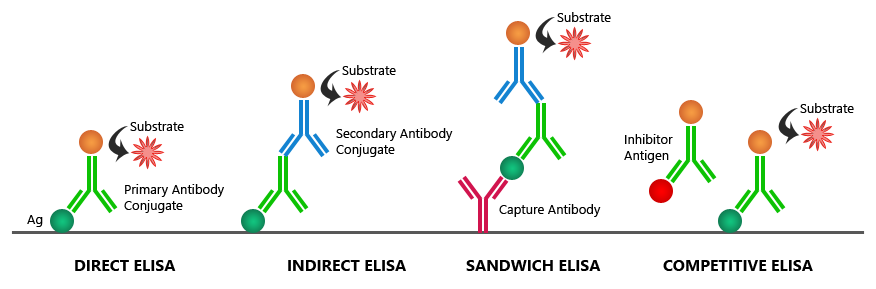
Are you familiar with the multiple methods you could use to perform an ELISA, including the wide range of commercially available elisa kits designed for different targets and sensitivity requirements? Among the standard
If you are having trouble with saturated signals in your ELISA data results, check out this table for Boster’s possible solutions to your problem:
| Possible Causes | Possible Solutions |
|---|---|
| High sample concentration | Use higher sample dilutions (Determine the optimal dilutions by titration assay). In parallel, construct an ELISA standard curve using known concentrations to more accurately map signal intensities to antigen levels. |
| Excessive substrate | Decrease concentration or amount of substrate: Follow manufacturer guidelines (The substrate provided with the ELISA kit might require further dilution) |
| Substrate color changed before use | Make substrate immediately before use |
| Non-specific antibody binding | Try different formulations in coating solutions; Ensure wells are pre-processed to prevent non-specific binding; Use affinity-purified antibody and preferably one that is pre- adsorbed; Use serum (5-10%) from same species as secondary antibody (bovine serum is also recommended). |
| Incubation time too long | Follow the manufacturer guidelines (If the problem persists, try incubating samples at 4°C overnight) |
| Excess antibody | Repeat the assay with lower antibody concentrations to find the optimal one for your experiment |
| Contaminated buffers with metals or HRP | Make and use fresh buffers |
ELISA (enzyme-linked immunosorbent assay) is a plate-based assay used to detect the concentration of a specific protein in a liquid sample and is frequently customized as part of custom assay development services tailored to specific research goals. In applications that require simultaneous measurement of multiple targets, researchers may also utilize multiplex ELISA kits to analyze several proteins within a single sample. It is also commonly performed using standardized elisa kits to ensure consistency across experiments. Three different types of data output can be obtained:

ELISA (enzyme-linked immunosorbent assay) is a convenient and simple method to quantitatively or qualitatively detect peptides, proteins, antibodies, and hormones in samples, rendering it as one of the most widely used immunoassays. Many laboratories perform these assays using standardized elisa kits, which help streamline assay setup and improve reproducibility. To derive accurate concentrations from measured signals, most ELISA protocols rely on constructing an standard curve from known standards, which serves as the reference for sample interpolation. Despite the many advantages of conducting ELISA—or more complex formats like those used in Multiplex Assay Services and multiplex E...
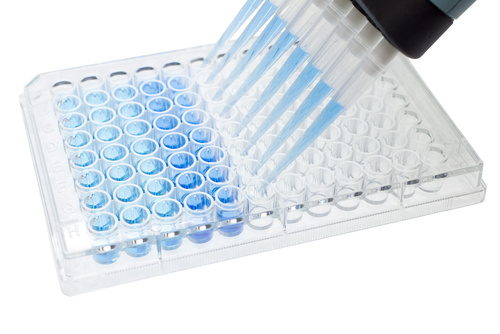
The ELISA (enzyme-linked immunosorbent assay) is recognized by scientists for its many advantages. The assay is convenient, quick, and simple to execute. ELISA’s versatility to detect peptides, proteins, antibodies, and hormones, and its ability to generate quantitative and qualitative data make it one of the most popular and powerful immunoassays available, with further efficiency supported by quick elisa kits in modern laboratory workflows.
In response to popular demand, numerous commercial ELISA kits are offered in the market, but not all ELISA kits are created equal.
How do we sift through the masses and choose a good ELISA kit?
Keep in mind the following points next time you go hunting for an ELISA kit.

At Boster, one common question we get from researchers is, “How do I prepare the ELISA standard?” We’re glad you asked because proper construction of the standard curve is the very first step for every ELISA experiment.The standard curve can help confirm that the quality of th...