Antibody-driven techniques are at the heart of epigenetics research. Commonly used methods—including ChIP-seq, CUT&RUN, CUT&Tag, MeDIP, immunofluorescence (IF), and Western blot—rely heavily on antibodies to enrich or detect histone modifications, DNA methylation, and chromatin-associated proteins. In these applications, well-validated primary antibodies bind directly to the target epitope and support accurate enrichment or detection. The success of these experiments depends on the specificity, affinity, and suitability of the antibodies used.
Key Applications of Antibodies in Epigenetics
1. ChIP-seq (Chromatin Immunoprecipitation Sequencing)
ChIP-seq uses antibodies against histone modifications or transcription factors to immunoprecipitate protein-DNA complexes, followed by high-throughput sequencing, often supported by epitope mapping peptides to refine antibody specificity and binding regions. It enables genome-wide mapping of histone marks or protein binding sites. For example:
H3K4me3 and H3K27ac antibodies reveal active promoters/enhancers.
H3K9me3 and H3K27me3 antibodies highlight repressed chromatin domains.
2. CUT&RUN / CUT&Tag
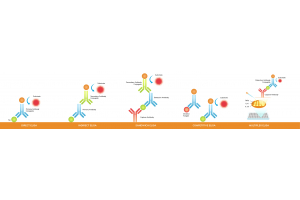
These newer alternatives to ChIP-seq use antibody-targeted enzymes to cleave and release DNA fragments near the target protein under mild conditions. In some assay configurations,
secondary antibodies can be used to help recruit the enzyme complex to the antibody-bound target. They require fewer cells, offer higher signal-to-noise ratios, and reduce background noise. CUT&Tag uses a protein A-Tn5 fusion to simultaneously fragment and tag DNA for sequencing.
3. MeDIP (Methylated DNA Immunoprecipitation)
MeDIP enriches for methylated DNA using antibodies against 5-methylcytosine (5mC), enabling genome-wide DNA methylation profiling. Similarly, 5-hydroxymethylcytosine (5hmC) antibodies are used in hMeDIP to study DNA demethylation dynamics.
4. Immunofluorescence (IF)
IF uses fluorescently labeled secondary antibodies to visualize the spatial distribution of histone marks or DNA methylation in fixed cells. Though less quantitative, it provides single-cell and subcellular resolution, complementing sequencing-based approaches.
5. Western Blot
Western blotting detects global protein levels of chromatin regulators and epigenetic enzymes (e.g., DNMT1, EZH2, HDAC1, TET2). It also monitors total histone modification levels using mark-specific antibodies (e.g., H3K27me3, H3K9ac).
Tips for Antibody-Based Epigenetics Assays
- Always validate antibody specificity for your species and assay type.
- Use appropriate positive/negative controls (e.g., known target loci).
- Consider using CUT&Tag if the input material is limited.
- For ChIP, crosslinking time and chromatin shearing conditions are critical.
- Antibody lot variation can affect results—try to use the same batch throughout a project.
- For IF, optimize fixation and permeabilization to preserve epitope accessibility.
- In MeDIP/hMeDIP, DNA fragmentation size dramatically affects enrichment resolution.
- Use spike-in standards for normalization when comparing histone modification levels across samples.
Where Antibodies Are Used in Epigenetic Research
Antibodies are indispensable in identifying the presence, abundance, and genome-wide localization of epigenetic marks or regulators:
| Target Antibody | Target Type | Applications | Biological Significance |
|---|
| H3K27ac | Histone acetylation | ChIP-seq, CUT&RUN, IF | Marks active enhancers/promoters |
| H3K4me3 | Histone trimethylation | ChIP-seq, CUT&Tag, IF | Marks active promoters |
| H3K9me3 | Histone trimethylation | ChIP-seq, CUT&RUN, IF | Associated with heterochromatin |
| H3K27me3 | Histone trimethylation | ChIP-seq, CUT&RUN, IF | Repressive Polycomb mark |
| 5mC | DNA methylation | MeDIP, IF | Gene silencing |
| 5hmC | DNA hydroxymethylation | hMeDIP, IF | Intermediate in DNA demethylation |
| CTCF | Chromatin organizer | ChIP-seq | Defines topological domain boundaries |
| Oct4 / p53 | Transcription factors | ChIP-seq, IF, WB | Regulate pluripotency or stress responses |
| BRD4 | Histone reader | ChIP-seq, WB | Binds acetylated histones, activates transcription |
| DNMT1 / EZH2 / HDAC1 / TET2 | Enzymes | WB, ChIP | Writers, erasers, or readers of epigenetic marks
|
How to Choose the Right Antibody for Epigenetics Research
Selecting the right antibody for your epigenetics experiment requires more than picking a product that "matches the target." Here are key factors to consider:
- Application validation: Make sure the antibody is validated for your specific technique (e.g., ChIP-seq, CUT&Tag, MeDIP, IF, or WB). Antibodies that work in Western blot may not perform in chromatin-based assays.
- Species reactivity: Check that the antibody has been tested on the species you're working with (e.g., human, mouse, zebrafish). Cross-species reactivity cannot be assumed.
- Epitope specificity: For histone mark detection, the antibody should be modification-specific (e.g., distinguish H3K4me1 vs H3K4me3) and preferably validated by peptide array or knockout controls.
- Published use: Prior usage in peer-reviewed studies (with matching application and target) adds confidence. Look for citations or check platforms like CiteAb or vendor-provided references.
- Lot-to-lot consistency: Especially for long-term projects, recombinant or monoclonal antibodies are preferred to avoid variability across lots.
- Background/affinity performance: Look for data showing low background and high signal-to-noise ratio in relevant sample types.
When in doubt, opt for suppliers that provide full validation data and offer support programs such as Boster's Free Validation service—so you can test before committing. Choosing the right antibody is not just a technical step, but a key determinant of your experiment's success and reproducibility.
Antibody Quality Matters
Selecting high-specificity, well-validated antibodies is critical to ensure experimental reproducibility and data accuracy. Poor-quality antibodies can lead to off-target signals and misinterpretation. Companies like Boster Bio provide antibodies that are:
Cited in over 5,000 peer-reviewed publications;
Batch-tested with stringent quality control;
Part of the PicoBand™ line with high affinity and minimal cross-reactivity.
Boster also offers a
Free Antibody Validation Program.
, allowing researchers to test antibodies in their specific application (WB, IHC, IF, IP, etc.) before purchase. This significantly reduces the risk of wasting time and resources on incompatible antibodies and empowers researchers to choose confidently.
Summary
Antibodies are essential tools for investigating chromatin states, DNA modifications, and regulatory protein activity in epigenetics. Whether you’re mapping histone marks with ChIP-seq, visualizing methylation with IF, or analyzing enzyme levels with Western blot, choosing the right antibody is the foundation of successful experiments.
Use the table above to identify which antibodies match your experimental needs. And when in doubt, take advantage of programs like Boster’s free validation to ensure your antibodies work—before committing budget and time.