This website uses cookies to ensure you get the best experience on our website.


- Table of Contents
Antibody crosslinking is a process in which antibodies are used to link multiple antigens or molecules together. This interaction plays a significant role in various biological processes, experimental assays, and therapeutic applications, particularly those examining antibody-antigen interactions and protein interactions. While often intentional in research settings, crosslinking can also occur as a byproduct of fixation or monoclonal antibody design, influencing biological outcomes.
Antibody crosslinking occurs when an antibody binds to two or more targets at the same time, often pulling them into proximity—a mechanism that also contributes to B cell sorting and activation during antigen recognition. This interaction can occur naturally in biological systems, such as during immune complex formation, or be intentionally induced in the lab using secondary antibodies or chemical crosslinkers.
The resulting crosslinked structures help researchers study protein structures, amplify detection signals, and stabilize complexes for downstream analysis such as cross-linking mass spectrometry or structural modeling.
There are three main types of antibody crosslinking, each with distinct mechanisms and applications:
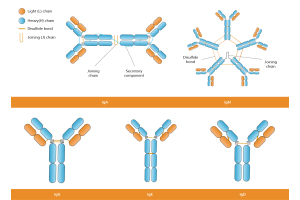
Antibodies are naturally bivalent (e.g. IgG) or multivalent (e.g. IgM), meaning they have two or more antigen-binding sites, structurally supported by intrachain and interchain disulfide bonds that stabilize their conformation. These sites can simultaneously bind identical or closely spaced antigens on the plasma membrane or within a protein complex, and their Fc regions can engage Fc receptors to mediate downstream immune responses. This physical bridging of molecules enables:
This results in:
Chemical crosslinkers are small molecules that form covalent bonds between proteins or between proteins and surfaces, often stabilizing protein structure for analytical or imaging purposes. Common reagents include:
Crosslinking is essential in many experimental workflows and biological processes because it helps localize targets, improve detection sensitivity, and enable selective bonding between specific chemical groups—an approach frequently paired with mass spectrometry for structural or functional analysis. Properly selecting the type of crosslinking ensures better assay design, preservation of protein structure, and reproducibility across applications.
Antibody crosslinking influences several key biological and experimental processes:
Crosslinking of cell surface receptors (e.g. CD3, CD28, Fc receptors) embedded in the plasma membrane by antibodies can activate intracellular signaling cascades. For example:
Naturally, crosslinking enables antibodies to form immune complexes with antigens. These complexes help:
In laboratory workflows, crosslinking amplifies signals:
Learn more about Western blot optimization guides on Boster Bio.
Learn moreDifferent antibody crosslinking methods are suited to specific assay formats like immunoprecipitation, Western blotting, and crosslinking antibodies for IHC. Below are two of the most commonly used approaches.
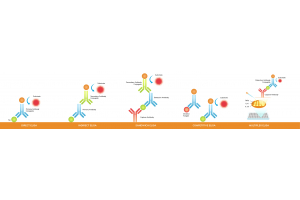
This method is widely used in IHC, ICC, WB, and ELISA. Secondary antibodies are designed to recognize and bind to primary antibodies. Because a single secondary antibody can bind to multiple epitopes on different primary antibodies, this process forms a branched or lattice structure that enhances signal output.
For example:
Applications include:
Chemical crosslinkers form covalent bonds between antibodies and their targets, or between proteins and solid supports, complementing the structural stability provided by natural disulfide bonds.
Common agents include:
Applications include:
Explore Boster Bio's antibody validation services to ensure your reagents perform as expected.
Learn moreWhile crosslinking is useful, it must be carefully controlled. Common concerns include:
| Implication | Description |
|---|---|
| Epitope Masking | Excessive crosslinking may hide antibody binding sites, especially in Formalin-Fixed Paraffin-Embedded (FFPE) samples. |
| Non-specific Aggregation | Over-crosslinked antibodies can stick to unintended targets or form clumps. |
| Reduced Binding Flexibility | Crosslinkers may alter antibody structure or overall protein structure, including disruption of disulfide bonds, which can lower binding affinity or limit epitope accessibility. |
| Signal Amplification | Proper crosslinking improves assay sensitivity and supports multiplexing. |
Antibody crosslinking has a wide range of applications:
To get the most reliable results for antibody crosslinking:
Need help selecting antibodies for IHC or WB? Browse Boster Bio’s complete antibody catalog.
Learn moreAntibody crosslinking is more than just a technical step—it’s a versatile tool that enables signal amplification, cellular signaling, B cell activation, immune targeting, and molecular detection. Whether you're analyzing receptor function or optimizing an immunoassay, understanding crosslinking’s mechanisms and implications helps ensure reliable, reproducible results. By selecting well-characterized antibodies and optimizing your data analysis, antibody affinity, and crosslinking conditions, you can unlock more accurate and insightful experimental outcomes—including those involving B cells, mass spectrometry, and affinity purification strategies for monoclonal antibody characterization.
Ready to Advance Your Crosslinking Research?
Boster Bio provides high-quality antibodies, ELISA kits, and custom antibody development services to support reliable results in IHC, WB, ELISA, and more. Whether you need validated reagents for antibody-antigen interactions or guidance in optimizing crosslinking workflows, our scientific team is here to help.
Contact us today to discuss your project and find the right solutions for your research.