This website uses cookies to ensure you get the best experience on our website.


- Table of Contents

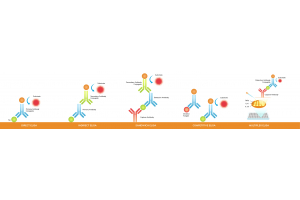
Zebrafish are a powerful model for studying developmental biology, neurobiology, and disease, yet over 90% of their protein-coding genes lack commercial antibodies. This creates a bottleneck for researchers who rely on precise molecular tools. The key to overcoming this challenge lies in the smart design of antigens used to generate antibodies. However, beyond antigen design, the reliability of zebrafish immunoassays also hinges on thoughtful antibody pair selection, particularly in applications such as sandwich ELISA and multiplex assays. Effective antibody pair selection ensures that the capture and detection antibodies bind to separate, non-competing epitopes with minimal cross-reactivity, which is critical for achieving assay specificity and sensitivity in complex biological systems. Antigen design, inspired by advances in vaccine science, can significantly improve the specificity, sensitivity, and utility of antibodies in zebrafish studies.
Designing antigens for zebrafish is not as straightforward as with human or mouse models. Differences in protein homology, immune system architecture, and gene expression patterns can lead to low immunogenicity or high cross-reactivity. These issues demand a more deliberate, tailored approach to antigen engineering.
One of the key biological principles in antigen design is immunodominance—the immune system's natural tendency to target only a few prominent epitopes, even when many are present. This can be problematic if dominant epitopes are shared across species or are not unique to the target protein. To produce highly specific antibodies for zebrafish, it is essential to steer the immune response toward subdominant yet more discriminative epitopes, often identified and validated using epitope mapping peptides during early-stage antigen development.
Before applying specific design strategies, consider these five foundational elements of antigen design for zebrafish:
Target Surface-Exposed and Accessible Epitopes
Antibodies preferentially bind to surface-exposed and flexible regions. Using structural modeling and bioinformatics tools, researchers should prioritize epitopes found in extracellular loops, termini, or unstructured domains to increase accessibility and recognition.
Avoid Sequence Homology with Human/Mouse Orthologs
Zebrafish antigens that closely resemble their human or mouse counterparts pose a risk of cross-reactivity. Comparative sequence alignment helps exclude conserved regions, guiding the design toward truly zebrafish-specific determinants.
Use Recombinant Proteins Instead of Peptides
Full-length or domain-based recombinant proteins preserve conformation and yield more effective antibodies than linear peptides. For expert support with recombinant antibody generation, consider our Recombinant Antibody Production Service
Optimize Hydrophobicity and Solubility
A balanced hydrophobic/hydrophilic profile improves antigen solubility and immune response. Hydrophilic flanks often enhance peptide handling.
Predict and Maximize Immunogenicity
Leverage AI prediction tools to assess epitope antigenicity, surface exposure, and structural contrast.
Epitope Mapping and AI-Aided Prediction
Use immunoinformatics platforms like BepiPred, IEDB, or Discotope to predict immunogenic and structurally distinct regions. These tools assist in refining epitope selection based on structural modeling, solvent exposure, and predicted immune reactivity.
Germline Targeting
Design antigens that bind efficiently to germline B cell receptors, increasing the likelihood of eliciting a robust and diverse antibody response, even from immunologically naive hosts.
Structural Stabilization of Antigen
Stabilize the antigen's conformation to represent its biologically active form. This is particularly crucial for membrane proteins or complex tertiary structures, ensuring the antibody will recognize the target in its native context.
Multimeric Display and Nanoparticle Presentation
Presenting the antigen in a multivalent form, such as on virus-like particles or nanoparticles, enhances B-cell receptor cross-linking and immune activation. This technique increases antibody titers and can help shift the response to less dominant but more specific epitopes.
Epitope Masking and Trimming
To reduce off-target responses, dominant but non-specific regions can be masked with glycans or removed from the antigen entirely. This focuses the immune response on diagnostically or functionally relevant sites.
COBRA and Mosaic Strategies
For antigens with high sequence variability, consensus-based or mosaic constructs incorporating multiple sequence variants can be employed. These broaden immune coverage while maintaining specificity to conserved, zebrafish-specific motifs.
Antigen design is no longer an auxiliary step but a central pillar of successful antibody development—especially in challenging models like zebrafish. By applying cutting-edge strategies adapted from vaccine design, researchers can dramatically increase their success in generating reliable and high-quality antibodies. As zebrafish research expands into new frontiers, thoughtful antigen design will be essential for unlocking its full potential and for strengthening the reliability of antibody production services that depend on well-engineered targets. To enhance downstream applications involving gene delivery or stable expression of zebrafish-targeted constructs, consider leveraging our AAV Packaging Service, which supports precise and efficient vector delivery tailored to diverse model systems including zebrafish.