This website uses cookies to ensure you get the best experience on our website.


- Table of Contents
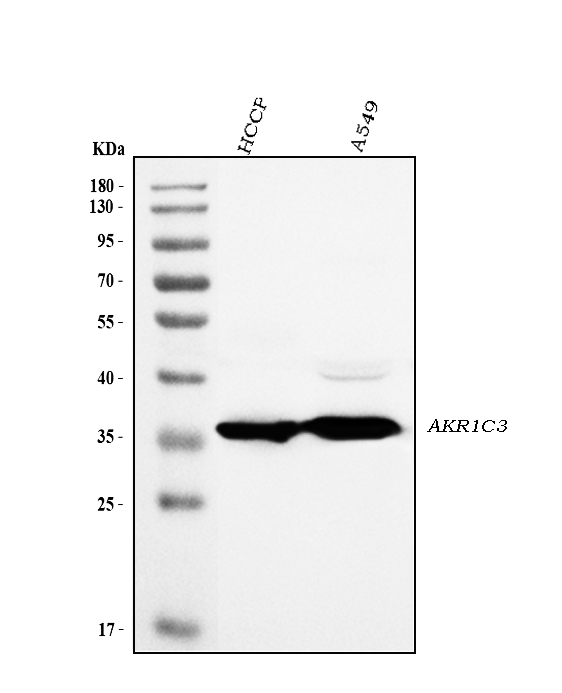
Designing a Western blot for AKR1C3? The guide has the expected band size, antibodies backed by real blot images, the controls to run alongside, and protocols taken from published papers.
Open the AKR1C3 Western Blot Guide

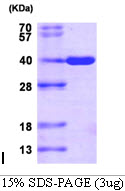
Facts about Aldo-keto reductase family 1 member C3.
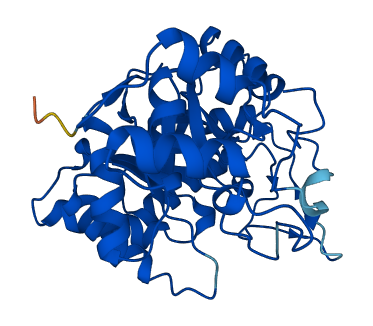
Functions as a bi-directional 3-alpha-, 17-beta- and 20-alpha HSD. Can interconvert active androgens, estrogens and progestins with their cognate inactive metabolites.
| Human | |
|---|---|
| Gene Name: | AKR1C3 |
| Uniprot: | P42330 |
| Entrez: | 8644 |
| Belongs to: |
|---|
| aldo/keto reductase family |

17-beta-hydroxysteroid dehydrogenase type 5; 3-alpha-HSD type 2; 3-alpha-hydroxysteroid dehydrogenase type 2; AKR1C3; Aldo-keto Reductase 1C3; aldo-keto reductase family 1 member C3; aldo-keto reductase family 1, member C3 (3-alpha hydroxysteroid dehydrogenase, type II); AldoketoReductase 1C3; Chlordecone reductase homolog HAKRb; DD3; DD-3; DD317-beta-HSD 5; DDH1; DDX; Dihydrodiol dehydrogenase 3; Dihydrodiol dehydrogenase type I; dihydrodiol dehydrogenase X; EC 1.1.1; EC 1.1.1.112,3-alpha-HSD type II, brain; EC 1.1.1.188; EC 1.1.1.213; EC 1.1.1.63; EC 1.1.1.64; EC 1.3.1.20; HA1753; HAKRB; HAK
Mass (kDA):
36.853 kDA

| Human | |
|---|---|
| Location: | 10p15.1 |
| Sequence: | 10; NC_000010.11 (5048766..5107686) |
Expressed in many tissues including adrenal gland, brain, kidney, liver, lung, mammary gland, placenta, small intestine, colon, spleen, prostate and testis. The dominant HSD in prostate and mammary gland. In the prostate, higher levels in epithelial cells than in stromal cells. In the brain, expressed in medulla, spinal cord, frontotemporal lobes, thalamus, subthalamic nuclei and amygdala. Weaker expression in the hippocampus, substantia nigra and caudate.
Cytoplasm.



PMID: 8274401 by Qin K.-N., et al. Molecular cloning of multiple cDNAs encoding human enzymes structurally related to 3 alpha-hydroxysteroid dehydrogenase.
PMID: 7650035 by Khanna M., et al. Substrate specificity, gene structure, and tissue-specific distribution of multiple human 3 alpha-hydroxysteroid dehydrogenases.