This website uses cookies to ensure you get the best experience on our website.


- Table of Contents
Designing a Western blot for CASR? The guide has the expected band size, antibodies backed by real blot images, the controls to run alongside, and protocols taken from published papers.
Open the CASR Western Blot GuideDesigning an IHC experiment for CASR? The guide has the expected staining pattern, antigen retrieval and fixation, antibodies backed by real IHC images, the tissue controls to run alongside, and protocols taken from published papers.
Open the CASR IHC Guide




Facts about Extracellular calcium-sensing receptor.
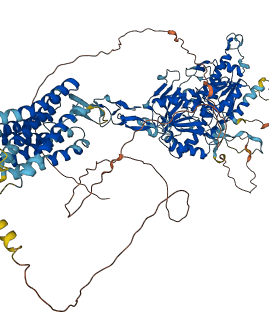
The activity of this receptor is mediated by a G-protein that activates a phosphatidylinositol- calcium second messenger system (PubMed:7759551). The G-protein- coupled receptor activity is activated by a co-agonist mechanism: aromatic amino acids, such as Trp or Phe, act concertedly with divalent cations, such as calcium or magnesium, to attain whole receptor activation (PubMed:27434672, PubMed:27386547).
| Human | |
|---|---|
| Gene Name: | CASR |
| Uniprot: | P41180 |
| Entrez: | 846 |
| Belongs to: |
|---|
| G-protein coupled receptor 3 family |

calcium-sensing receptor; CAR; CaSR; EIG8; extracellular calcium-sensing receptor; FHH; FIH; GPRC2A; GPRC2AHHC; HHC1; hypocalciuric hypercalcemia 1; NSHPT; parathyroid Ca(2+)-sensing receptor 1; Parathyroid cell calcium-sensing receptor; PCaR1; PCAR1MGC138441
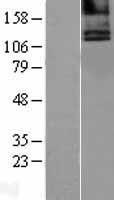
Mass (kDA):
120.675 kDA

| Human | |
|---|---|
| Location: | 3q13.33-q21.1 |
| Sequence: | 3; NC_000003.12 (122183668..122291629) |
Expressed in the temporal lobe, frontal lobe, parietal lobe, hippocampus, and cerebellum. Also found in kidney, lung, liver, heart, skeletal muscle, placenta.
Cell membrane; Multi-pass membrane protein.




PMID: 8813042 by Pearce S.H.S., et al. A familial syndrome of hypocalcemia with hypercalciuria due to mutations in the calcium-sensing receptor.
PMID: 7759551 by Garrett J.E., et al. Molecular cloning and functional expression of human parathyroid calcium receptor cDNAs.
*More publications can be found for each product on its corresponding product page
