This website uses cookies to ensure you get the best experience on our website.


- Table of Contents

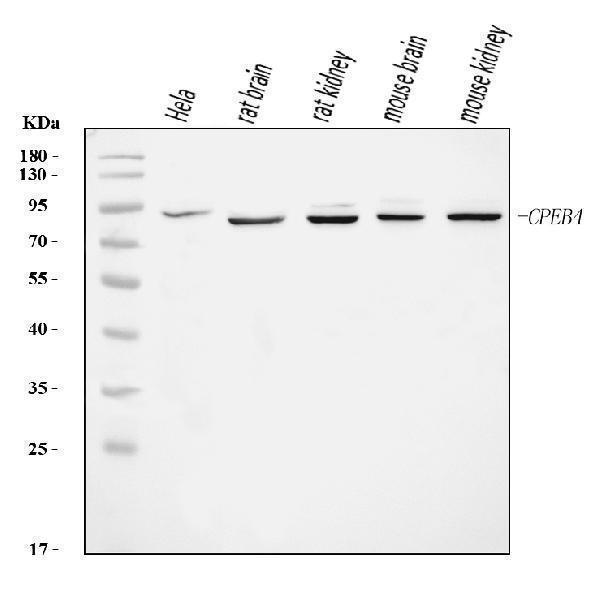
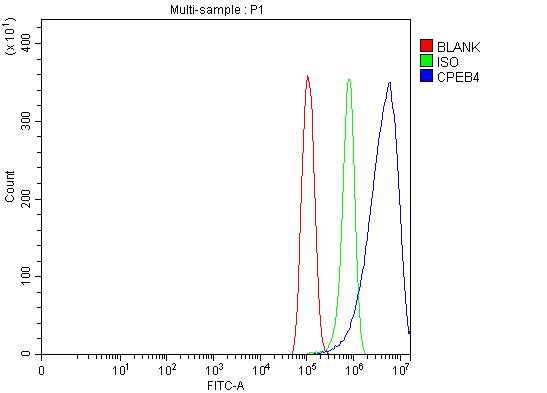
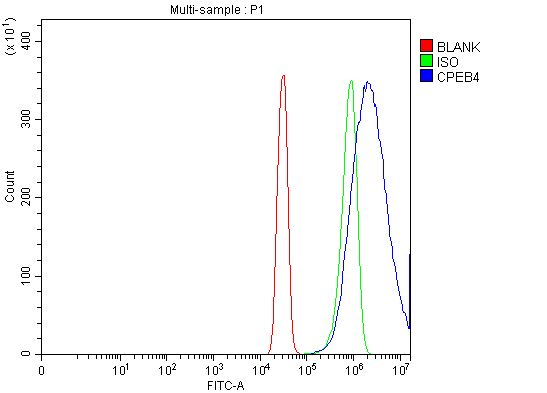
Facts about Cytoplasmic polyadenylation element-binding protein 4.
Regulates activation of unfolded protein response (UPR) in the process of adaptation to ER stress in liver, by keeping translation of CPE-regulated mRNAs in conditions in which global protein synthesis is inhibited (PubMed:28092655). Required for cell cycle progression, especially for cytokinesis and chromosomal segregation (By similarity).
| Mouse | |
|---|---|
| Gene Name: | Cpeb4 |
| Uniprot: | Q7TN98 |
| Entrez: | 67579 |

| Belongs to: |
|---|
| RRM CPEB family |

CPE-binding protein 4; cytoplasmic polyadenylation element binding protein 4; cytoplasmic polyadenylation element-binding protein 4; hCPEB-4; KIAA1673CPE-BP4
Mass (kDA):
80.122 kDA

| Mouse | |
|---|---|
| Location: | 11|11 A4 |
| Sequence: | 11; |
Highly expressed in brain, including hippocampus, amygdala, granule and Purkinje cells of the cerebellum (at protein level) (PubMed:17024188, PubMed:24386439). Expressed in spinal cord (at protein level) (PubMed:27381259). Expressed in kidney, lung and heart (at protein level) (PubMed:12871996, PubMed:27381259, PubMed:24386439). Expressed in liver (at protein level) (PubMed:28092655, PubMed:12871996, PubMed:27381259, PubMed:24386439). Expressed in spleen and testis (at protein level) (PubMed:24386439, PubMed:12871996). Weakly expressed in ovary and in granular cells of dentate gyrus and the pyramidal cells of CA3 and CA1 of the hippocampus (PubMed:12871996).


PMID: 12871996 by Theis M., et al. Two previously undescribed members of the mouse CPEB family of genes and their inducible expression in the principal cell layers of the hippocampus.
PMID: 17024188 by Huang Y.S., et al. CPEB3 and CPEB4 in neurons: analysis of RNA-binding specificity and translational control of AMPA receptor GluR2 mRNA.
