This website uses cookies to ensure you get the best experience on our website.


- Table of Contents
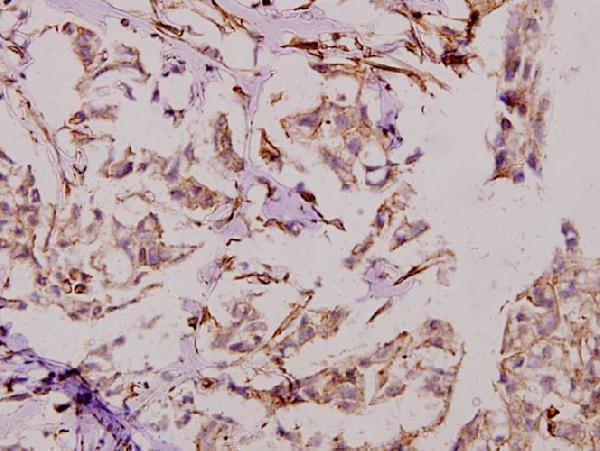
Designing an IHC experiment for DIDO1? The guide has the expected staining pattern, antigen retrieval and fixation, antibodies backed by real IHC images, the tissue controls to run alongside, and protocols taken from published papers.
Open the DIDO1 IHC Guide
Facts about Death-inducer obliterator 1.

Required for early embryonic stem cell development. .
| Human | |
|---|---|
| Gene Name: | DIDO1 |
| Uniprot: | Q9BTC0 |
| Entrez: | 11083 |

| Belongs to: |
|---|
| No superfamily |

BYE1; C20orf158; DATF1; DATF-1; DATF1DIDO3; death associated transcription factor 1; death inducer-obliterator 1; Death-associated transcription factor 1; death-inducer obliterator 1; DIDO1; DIO1; DIO1DIDO2; DIO-1hDido1; dJ885L7.8; DKFZp434P1115; FLJ11265; KIAA0333chromosome 20 open reading frame 158; MGC16140
Mass (kDA):
243.873 kDA

| Human | |
|---|---|
| Location: | 20q13.33 |
| Sequence: | 20; NC_000020.11 (62877738..62937952, complement) |
Ubiquitous.
Cytoplasm. Nucleus. Cytoplasm, cytoskeleton, spindle. Translocates to the nucleus after pro-apoptotic stimuli (By similarity). Translocates to the mitotic spindle upon loss of interaction with H3K4me3 during early mitosis.

PMID: 16127461 by Futterer A., et al. Dido gene expression alterations are implicated in the induction of hematological myeloid neoplasms.
PMID: 23831028 by Gatchalian J., et al. Dido3 PHD modulates cell differentiation and division.