This website uses cookies to ensure you get the best experience on our website.


- Table of Contents
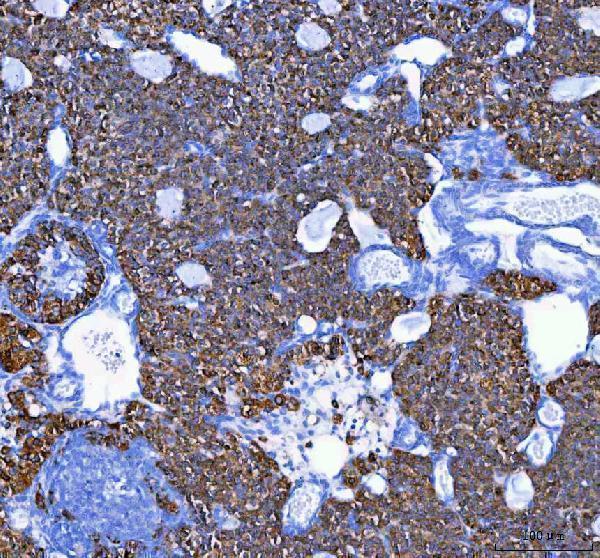
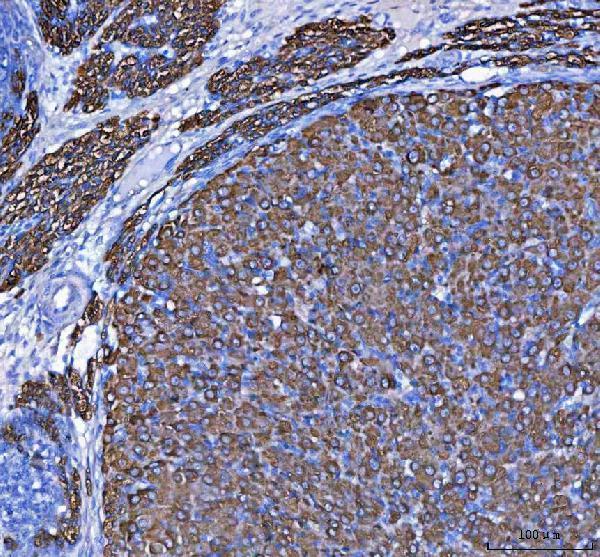
Designing an IHC experiment for MELK? The guide has the expected staining pattern, antigen retrieval and fixation, antibodies backed by real IHC images, the tissue controls to run alongside, and protocols taken from published papers.
Open the MELK IHC Guide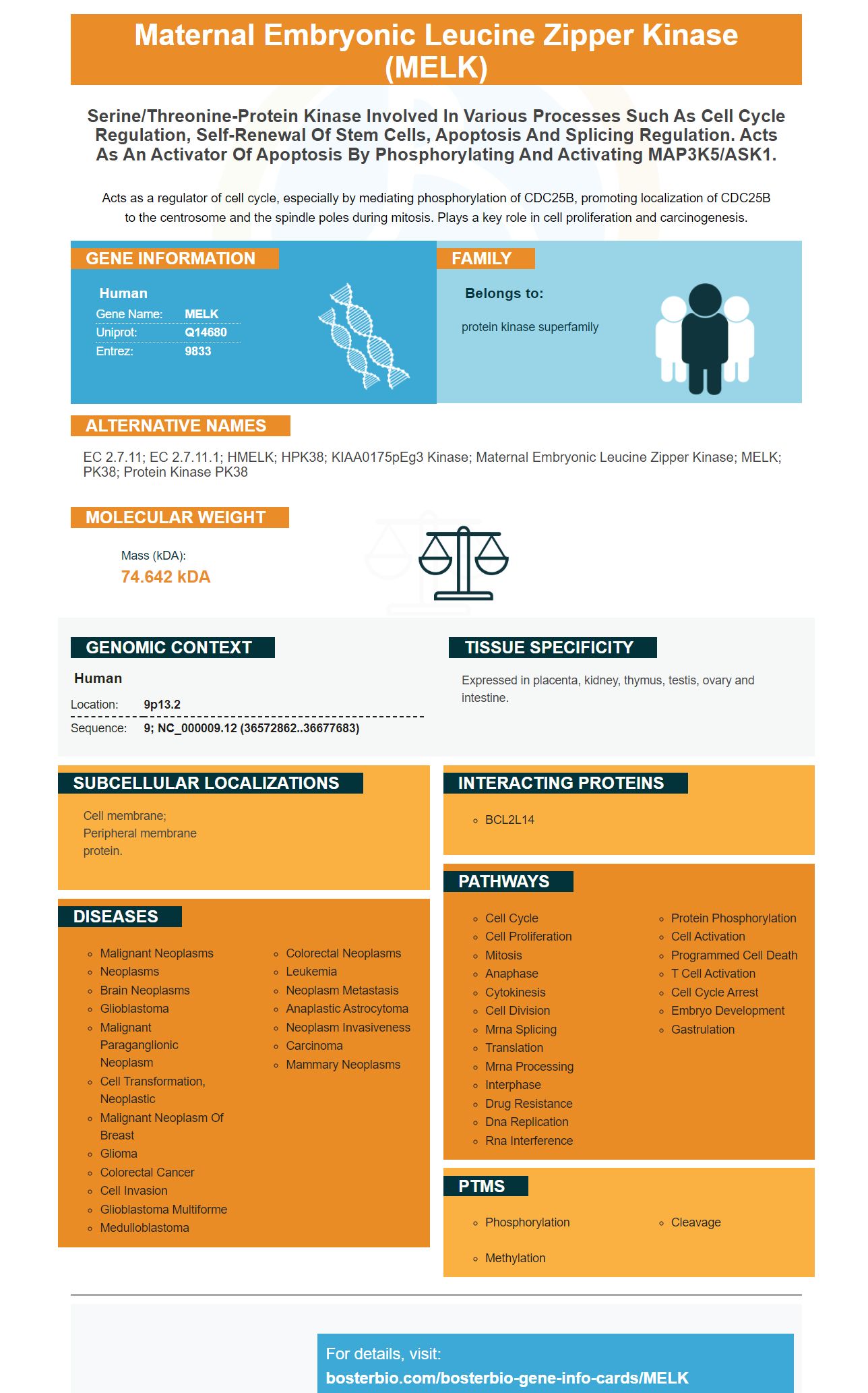


Facts about Maternal embryonic leucine zipper kinase.
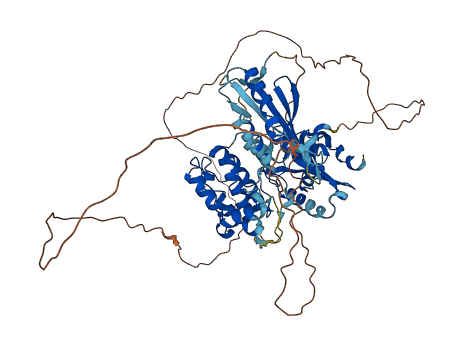
Acts as a regulator of cell cycle, especially by mediating phosphorylation of CDC25B, promoting localization of CDC25B to the centrosome and the spindle poles during mitosis. Plays a key role in cell proliferation and carcinogenesis.
| Human | |
|---|---|
| Gene Name: | MELK |
| Uniprot: | Q14680 |
| Entrez: | 9833 |
| Belongs to: |
|---|
| protein kinase superfamily |

EC 2.7.11; EC 2.7.11.1; hMELK; HPK38; KIAA0175pEg3 kinase; maternal embryonic leucine zipper kinase; MELK; PK38; Protein kinase PK38
Mass (kDA):
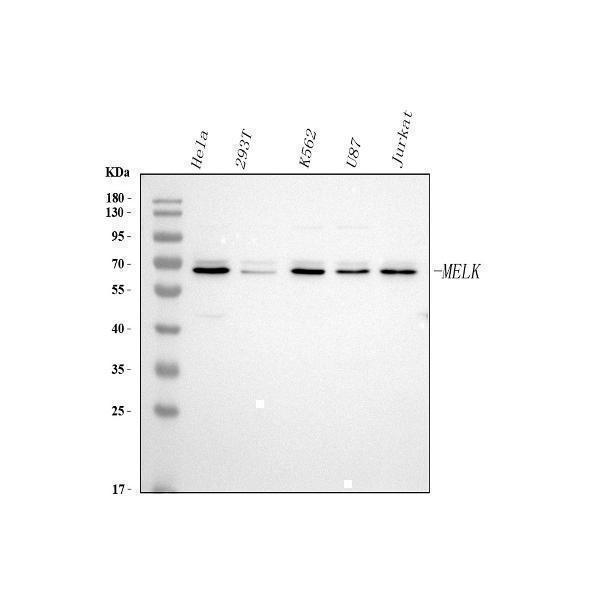
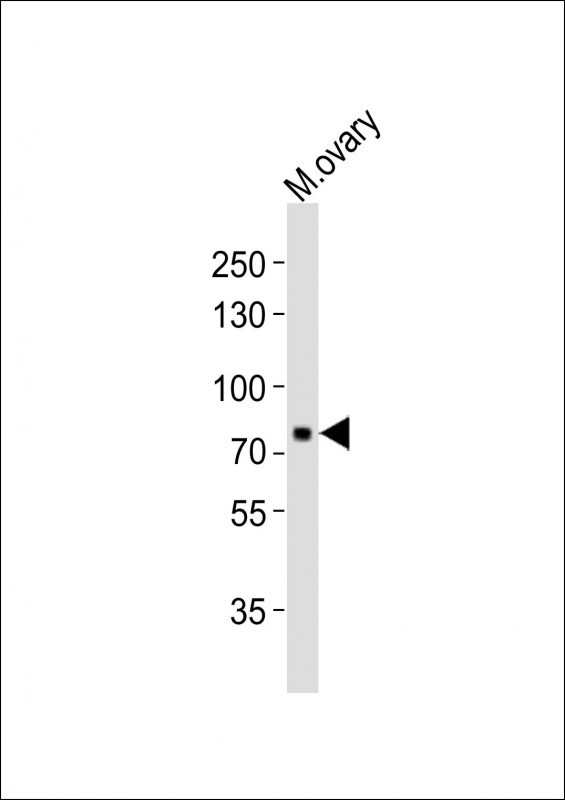
74.642 kDA

| Human | |
|---|---|
| Location: | 9p13.2 |
| Sequence: | 9; NC_000009.12 (36572862..36677683) |
Expressed in placenta, kidney, thymus, testis, ovary and intestine.
Cell membrane; Peripheral membrane protein.




PMID: 11802789 by Seong H.-A., et al. Phosphorylation of a novel zinc-finger-like protein, ZPR9, by murine protein serine/threonine kinase 38 (MPK38).
PMID: 12400006 by Davezac N., et al. Human pEg3 kinase associates with and phosphorylates CDC25B phosphatase: a potential role for pEg3 in cell cycle regulation.