This website uses cookies to ensure you get the best experience on our website.


- Table of Contents
Designing an IHC experiment for Ninjurin-1? The guide has the expected staining pattern, antigen retrieval and fixation, antibodies backed by real IHC images, the tissue controls to run alongside, and protocols taken from published papers.
Open the NINJ1 IHC Guide
Facts about Ninjurin-1.
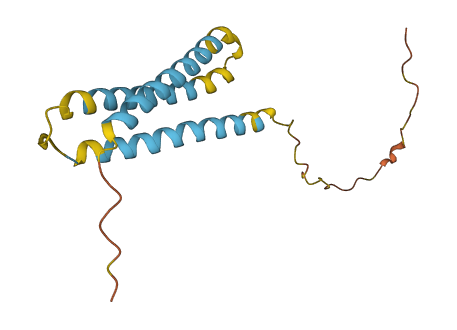
Cell adhesion requires divalent cations. .
| Human | |
|---|---|
| Gene Name: | NINJ1 |
| Uniprot: | Q92982 |
| Entrez: | 4814 |

| Belongs to: |
|---|
| ninjurin family |

Nerve injury-induced protein 1; nerve injury-induced protein-1; NIN1; NINJ1; ninjurin 1; NINJURIN; Ninjurin1; Ninjurin-1
Mass (kDA):
16.345 kDA

| Human | |
|---|---|
| Location: | 9q22.31 |
| Sequence: | 9; NC_000009.12 (93121496..93134304, complement) |
Widely expressed in both adult and embryonic tissues, primarily those of epithelial origin.
Membrane; Multi-pass membrane protein.





PMID: 8780658 by Araki T., et al. Ninjurin, a novel adhesion molecule, is induced by nerve injury and promotes axonal growth.
PMID: 9465296 by Chadwick B.P., et al. The human homologue of the ninjurin gene maps to the candidate region of hereditary sensory neuropathy type I (HSNI).