This website uses cookies to ensure you get the best experience on our website.


- Table of Contents
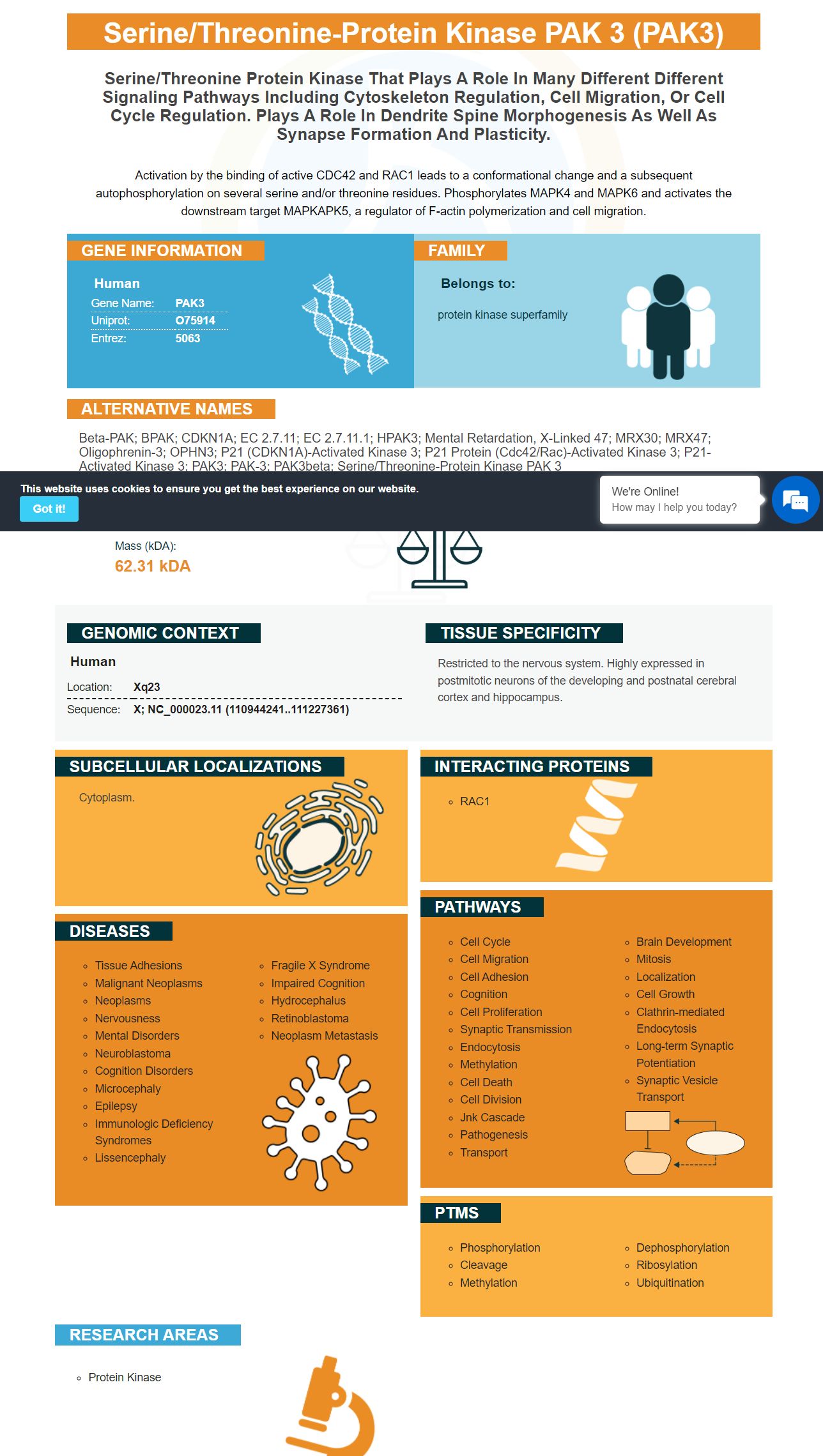


Facts about Serine/threonine-protein kinase PAK 3.
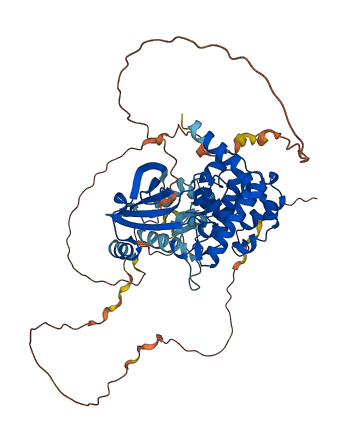
Activation by the binding of active CDC42 and RAC1 leads to a conformational change and a subsequent autophosphorylation on several serine and/or threonine residues. Phosphorylates MAPK4 and MAPK6 and activates the downstream target MAPKAPK5, a regulator of F-actin polymerization and cell migration.
| Human | |
|---|---|
| Gene Name: | PAK3 |
| Uniprot: | O75914 |
| Entrez: | 5063 |
| Belongs to: |
|---|
| protein kinase superfamily |

beta-PAK; bPAK; CDKN1A; EC 2.7.11; EC 2.7.11.1; hPAK3; mental retardation, X-linked 47; MRX30; MRX47; oligophrenin-3; OPHN3; p21 (CDKN1A)-activated kinase 3; p21 protein (Cdc42/Rac)-activated kinase 3; p21-activated kinase 3; PAK3; PAK-3; PAK3beta; serine/threonine-protein kinase PAK 3
Mass (kDA):
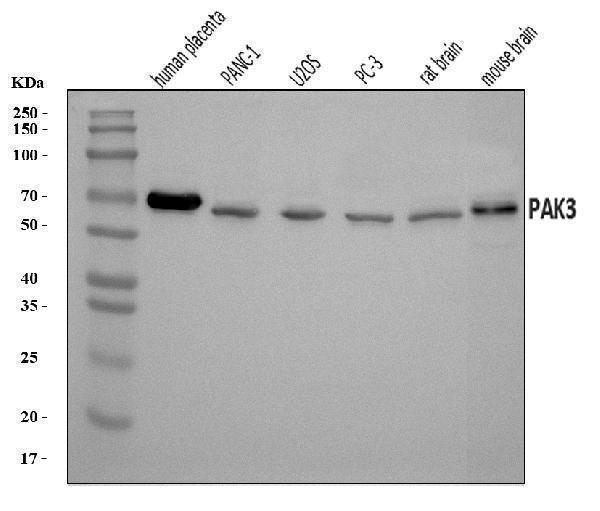
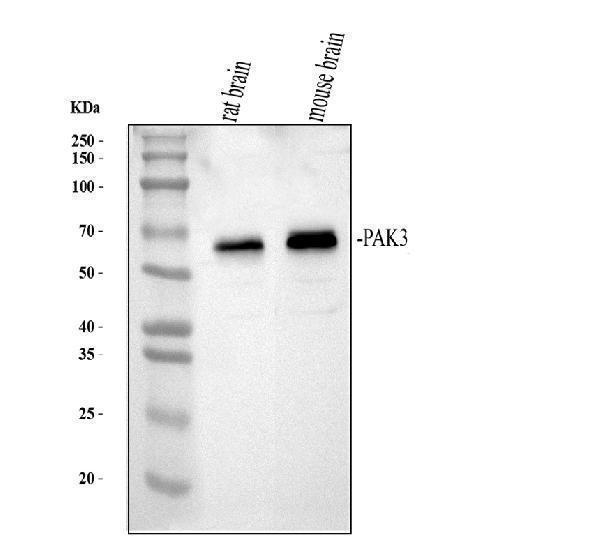
62.31 kDA

| Human | |
|---|---|
| Location: | Xq23 |
| Sequence: | X; NC_000023.11 (110944241..111227361) |
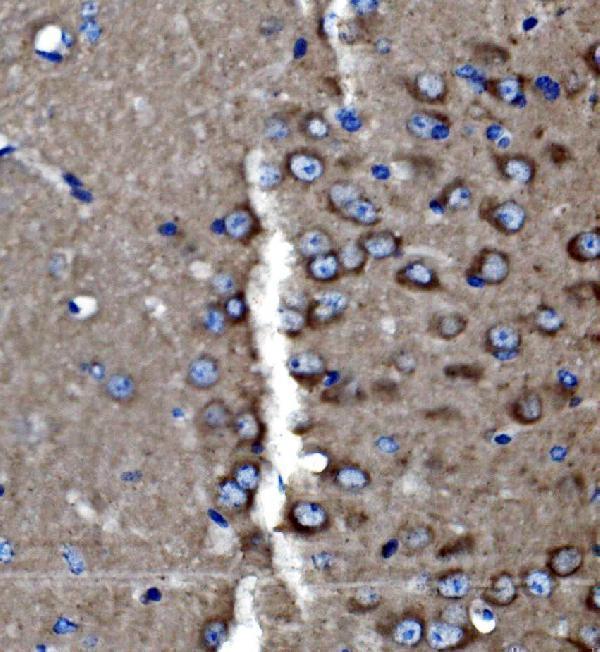
Restricted to the nervous system. Highly expressed in postmitotic neurons of the developing and postnatal cerebral cortex and hippocampus.
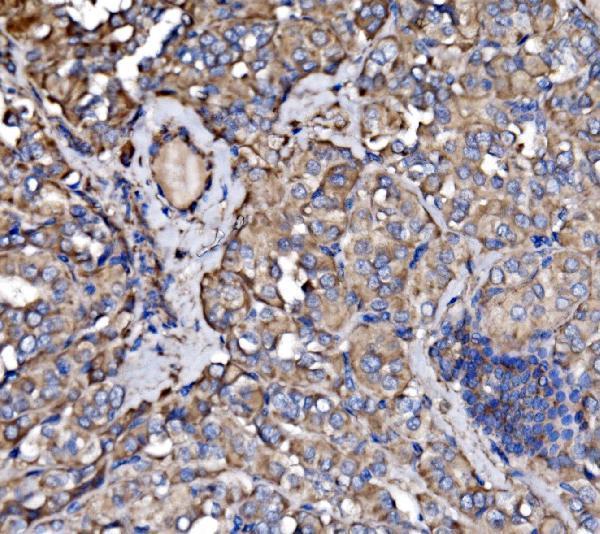
Cytoplasm.





PMID: 9731525 by Allen K.M., et al. PAK3 mutation in nonsyndromic X-linked mental retardation.
PMID: 12777533 by Kitano T., et al. Gene diversity patterns at 10 X-chromosomal loci in humans and chimpanzees.