This website uses cookies to ensure you get the best experience on our website.


- Table of Contents
Designing an IHC experiment for PIP5K1A? The guide has the expected staining pattern, antigen retrieval and fixation, antibodies backed by real IHC images, the tissue controls to run alongside, and protocols taken from published papers.
Open the PIP5K1A IHC Guide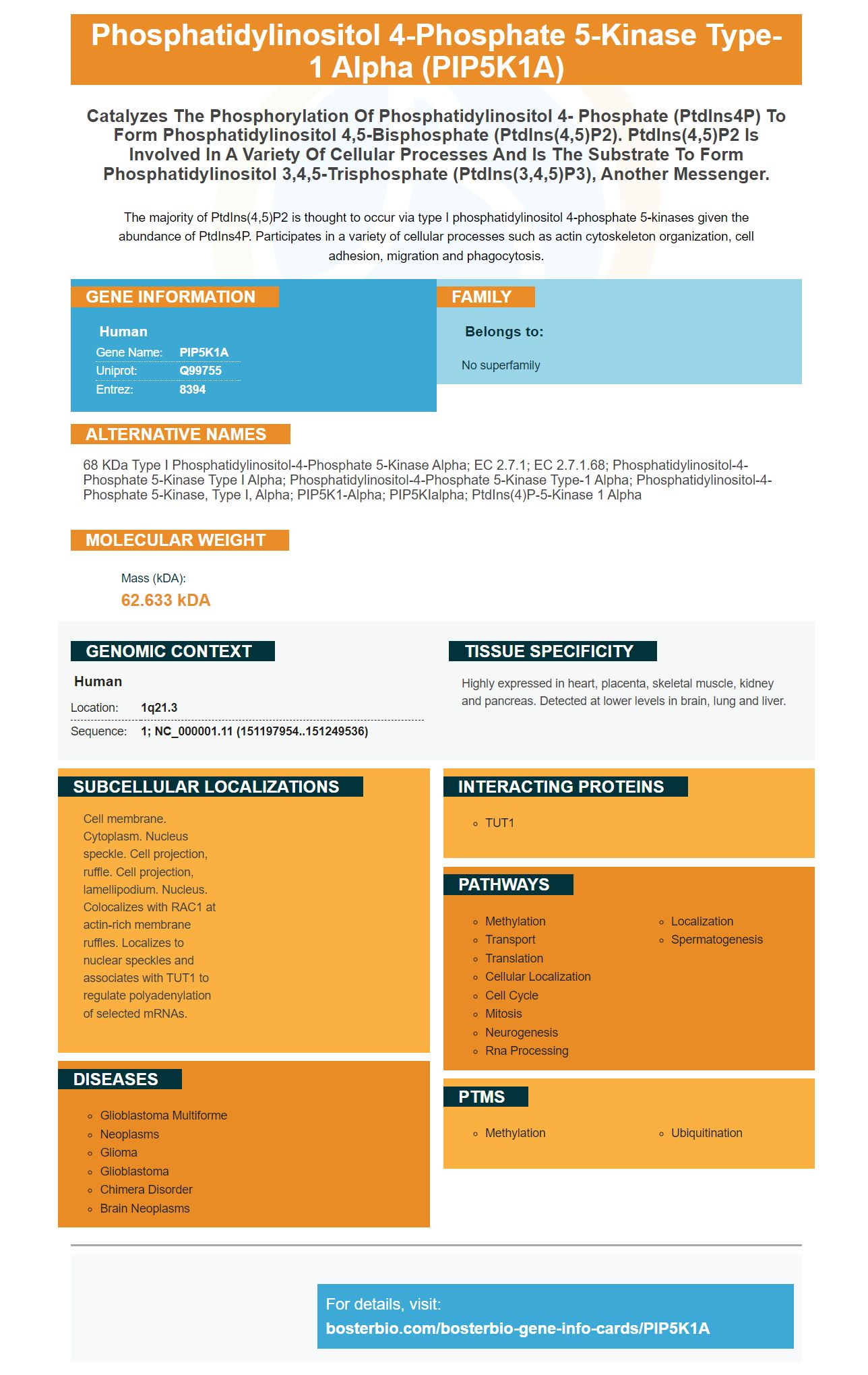
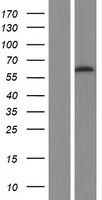
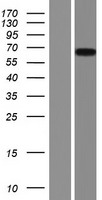
Facts about Phosphatidylinositol 4-phosphate 5-kinase type-1 alpha.
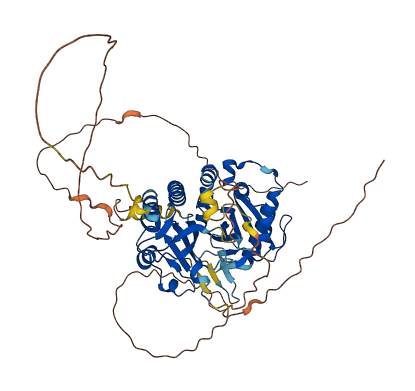
The majority of PtdIns(4,5)P2 is thought to occur via type I phosphatidylinositol 4-phosphate 5-kinases given the abundance of PtdIns4P. Participates in a variety of cellular processes such as actin cytoskeleton organization, cell adhesion, migration and phagocytosis.
| Human | |
|---|---|
| Gene Name: | PIP5K1A |
| Uniprot: | Q99755 |
| Entrez: | 8394 |

| Belongs to: |
|---|
| No superfamily |

68 kDa type I phosphatidylinositol-4-phosphate 5-kinase alpha; EC 2.7.1; EC 2.7.1.68; Phosphatidylinositol-4-phosphate 5-kinase type I alpha; phosphatidylinositol-4-phosphate 5-kinase type-1 alpha; phosphatidylinositol-4-phosphate 5-kinase, type I, alpha; PIP5K1-alpha; PIP5KIalpha; PtdIns(4)P-5-kinase 1 alpha
Mass (kDA):
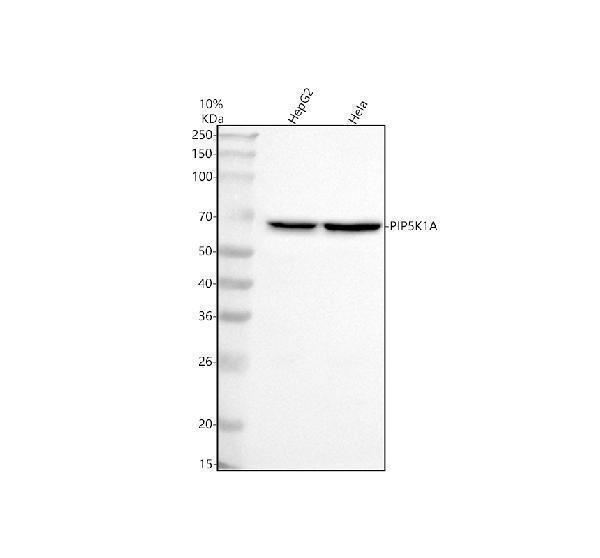
62.633 kDA

| Human | |
|---|---|
| Location: | 1q21.3 |
| Sequence: | 1; NC_000001.11 (151197954..151249536) |
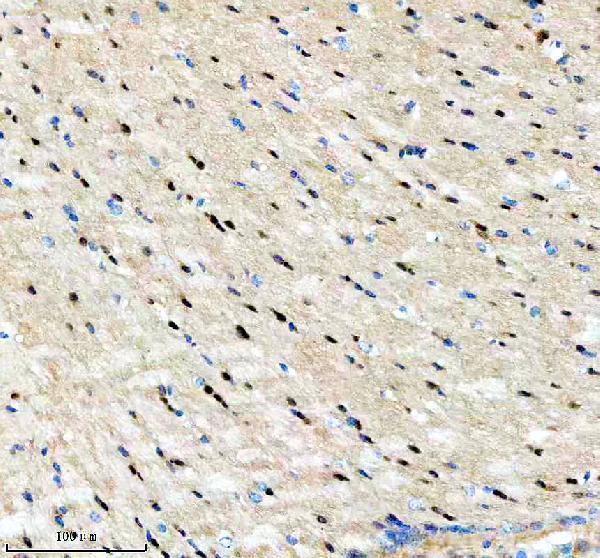
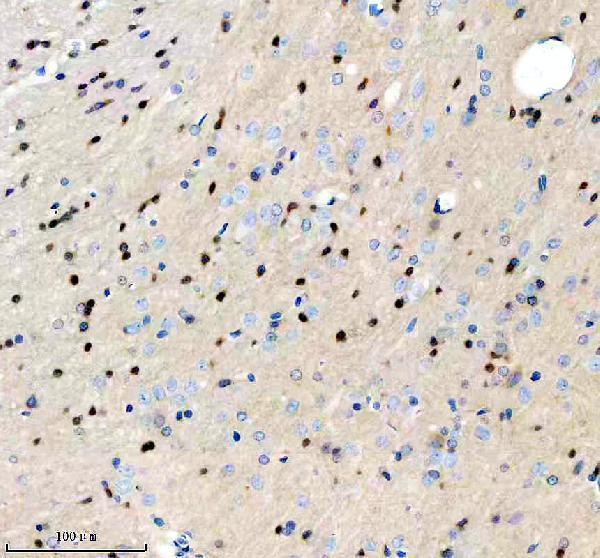
Highly expressed in heart, placenta, skeletal muscle, kidney and pancreas. Detected at lower levels in brain, lung and liver.
Cell membrane. Cytoplasm. Nucleus speckle. Cell projection, ruffle. Cell projection, lamellipodium. Nucleus. Colocalizes with RAC1 at actin-rich membrane ruffles. Localizes to nuclear speckles and associates with TUT1 to regulate polyadenylation of selected mRNAs.





PMID: 8955136 by Loijens J.C., et al. Type I phosphatidylinositol-4-phosphate 5-kinases are distinct members of this novel lipid kinase family.
PMID: 15157668 by Luo B., et al. Diacylglycerol kinase zeta regulates phosphatidylinositol 4-phosphate 5-kinase Ialpha by a novel mechanism.