This website uses cookies to ensure you get the best experience on our website.


- Table of Contents
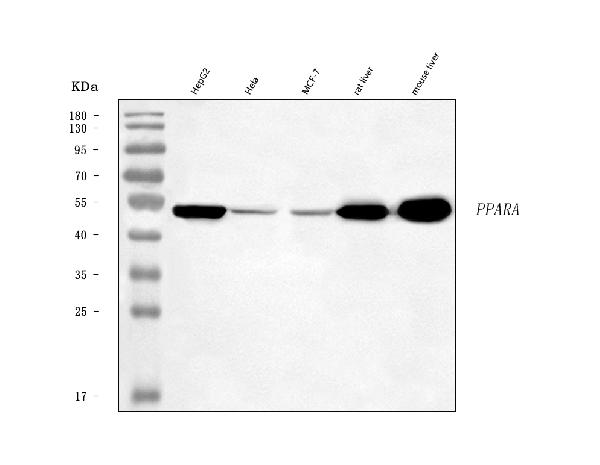
Designing a Western blot for PPARA? The guide has the expected band size, antibodies backed by real blot images, the controls to run alongside, and protocols taken from published papers.
Open the PPARA Western Blot GuideDesigning an IHC experiment for PPARA? The guide has the expected staining pattern, antigen retrieval and fixation, antibodies backed by real IHC images, the tissue controls to run alongside, and protocols taken from published papers.
Open the PPARA IHC Guide
12 Citations


Facts about Peroxisome proliferator-activated receptor alpha.

Activated by the endogenous ligand 1-palmitoyl- 2-oleoyl-sn-glycerol-3-phosphocholine (16:0/18:1-GPC). Activated by oleylethanolamide, a naturally occurring lipid that regulates satiety.
| Human | |
|---|---|
| Gene Name: | PPARA |
| Uniprot: | Q07869 |
| Entrez: | 5465 |

| Belongs to: |
|---|
| nuclear hormone receptor family |

alpha; hPPAR; NR1C1; NR1C1MGC2237; Nuclear receptor subfamily 1 group C member 1; peroxisome proliferator-activated receptor alpha; PPAR alpha; PPARA; PPARalpha; PPAR-alpha; PPARMGC2452
Mass (kDA):
52.225 kDA

| Human | |
|---|---|
| Location: | 22q13.31 |
| Sequence: | 22; NC_000022.11 (46150526..46243756) |
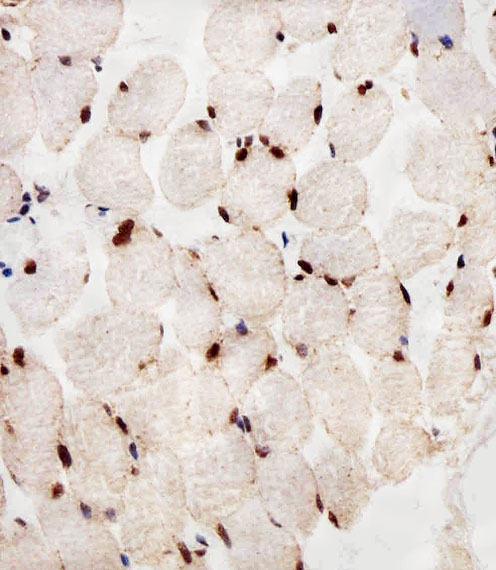
Skeletal muscle, liver, heart and kidney.
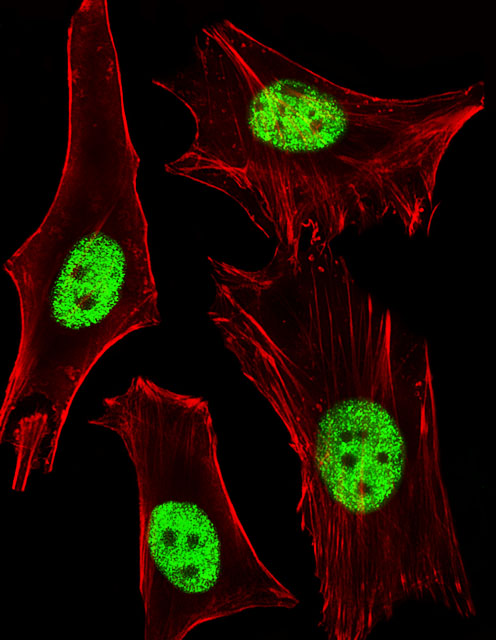
Nucleus.



PMID: 7684926 by Sher T., et al. cDNA cloning, chromosomal mapping, and functional characterization of the human peroxisome proliferator activated receptor.
PMID: 7981125 by Mukherjee R., et al. Human and rat peroxisome proliferator activated receptors (PPARs) demonstrate similar tissue distribution but different responsiveness to PPAR activators.