This website uses cookies to ensure you get the best experience on our website.


- Table of Contents
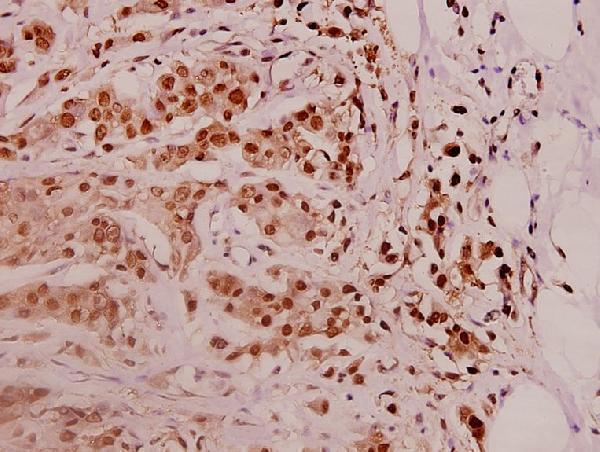
Designing an IHC experiment for PSMD11? The guide has the expected staining pattern, antigen retrieval and fixation, antibodies backed by real IHC images, the tissue controls to run alongside, and protocols taken from published papers.
Open the PSMD11 IHC Guide
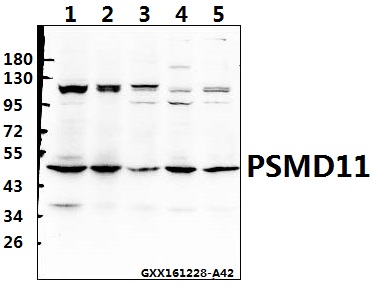
Facts about 26S proteasome non-ATPase regulatory subunit 11.
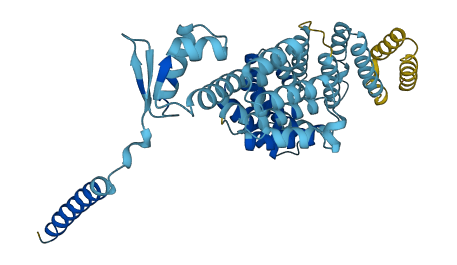
Hence, the proteasome participates in numerous cellular processes, including cell cycle progression, apoptosis, or DNA damage repair. In the complicated, PSMD11 is required for proteasome assembly.
| Human | |
|---|---|
| Gene Name: | PSMD11 |
| Uniprot: | O00231 |
| Entrez: | 5717 |
| Belongs to: |
|---|
| proteasome subunit S9 family |

MGC3844,26S proteasome regulatory subunit RPN6; p44.5,26S proteasome regulatory subunit 9; proteasome (prosome, macropain) 26S subunit, non-ATPase, 11,26S proteasome regulatory subunit p44.5; Rpn6,26S proteasome regulatory subunit S9; S9,26S proteasome non-ATPase regulatory subunit 11
Mass (kDA):
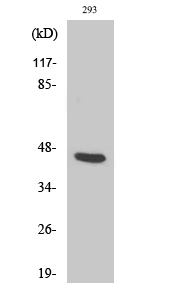
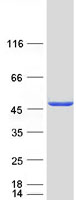
47.464 kDA

| Human | |
|---|---|
| Location: | 17q11.2 |
| Sequence: | 17; NC_000017.11 (32444510..32483319) |
Highly expressed in embryonic stem cells (ESCs). Expression decreases as ESCs differentiate.
Nucleus. Cytoplasm, cytosol.

PMID: 9119060 by Hoffman L., et al. Molecular cloning and expression of subunit 9 of the 26S proteasome.
PMID: 9426256 by Saito A., et al. cDNA cloning and functional analysis of p44.5 and p55, two regulatory subunits of the 26S proteasome.