This website uses cookies to ensure you get the best experience on our website.


- Table of Contents
Designing a Western blot for Placenta growth factor? The guide has the expected band size, antibodies backed by real blot images, the controls to run alongside, and protocols taken from published papers.
Open the PGF Western Blot Guide
3 Citations
3 Citations

4 Citations
1 Citations

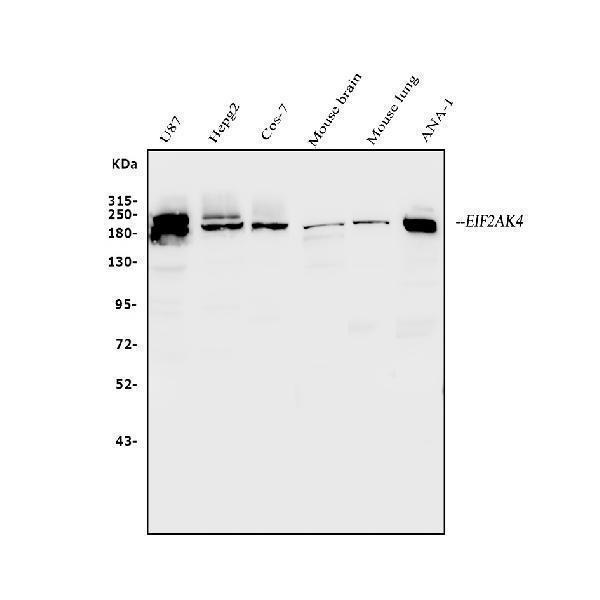
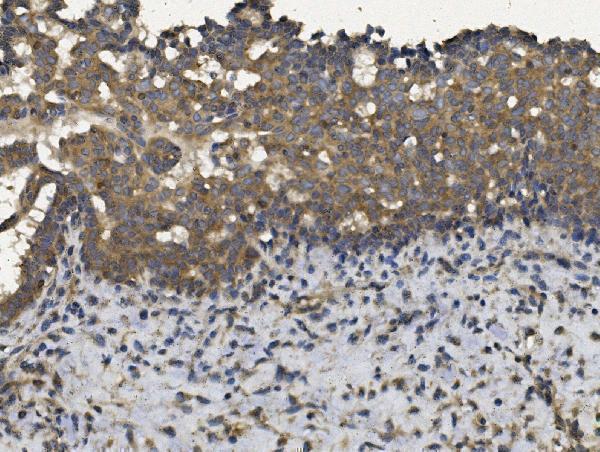
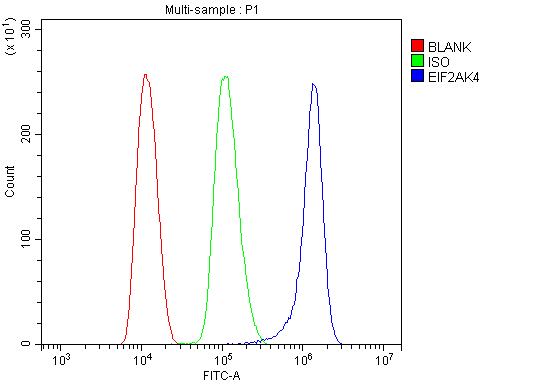
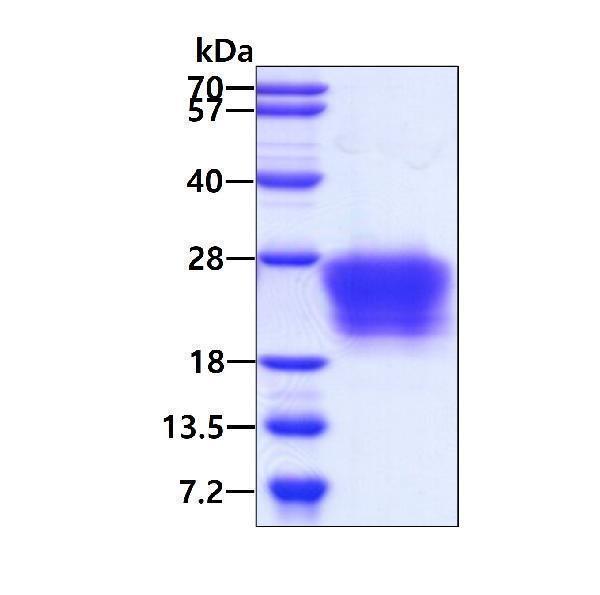
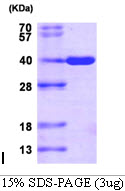
Facts about Placenta growth factor.
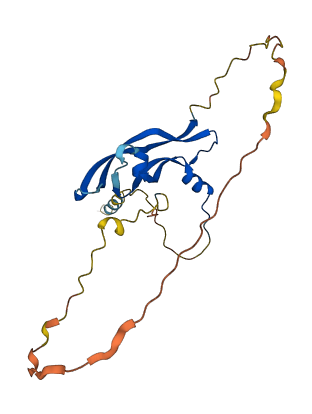
Isoform PlGF-2 binds NRP1/neuropilin-1 and NRP2/neuropilin-2 at a heparin-dependent Method. Also promotes cell tumor development.
| Human | |
|---|---|
| Gene Name: | PGF |
| Uniprot: | P49763 |
| Entrez: | 5228 |

| Belongs to: |
|---|
| PDGF/VEGF growth factor family |

D12S1900; PGF; PGFL; placenta growth factor; placental growth factor; placental growth factor, vascular endothelial growth factor-related protein; PlGF; PlGF-2; PLGFplacental growth factor-like; SHGC-10760
Mass (kDA):
24.789 kDA

| Human | |
|---|---|
| Location: | 14q24.3 |
| Sequence: | 14; NC_000014.9 (74941830..74955764, complement) |
While the three isoforms are present in most placental tissues, PlGF-2 is specific to early (8 week) placenta and only PlGF-1 is found in the colon and mammary carcinomas.
Secreted. The three isoforms are secreted but PlGF-2 appears to remain cell attached unless released by heparin.






PMID: 1924389 by Maglione D., et al. Isolation of a human placenta cDNA coding for a protein related to the vascular permeability factor.
PMID: 8148155 by Hauser S.D., et al. A heparin-binding form of placenta growth factor (PlGF-2) is expressed in human umbilical vein endothelial cells and in placenta.
*More publications can be found for each product on its corresponding product page