This website uses cookies to ensure you get the best experience on our website.


- Table of Contents

Facts about Sphingosine 1-phosphate receptor 5.
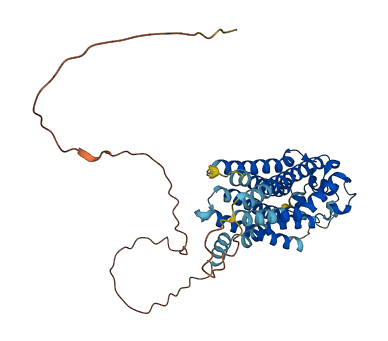
Is coupled to both the G(i/0)alpha and G(12) subclass of heteromeric G-proteins (By similarity). May play a regulatory role in the transformation of radial glial cells into astrocytes and may affect proliferative activity of these cells.
| Human | |
|---|---|
| Gene Name: | S1PR5 |
| Uniprot: | Q9H228 |
| Entrez: | 53637 |
| Belongs to: |
|---|
| G-protein coupled receptor 1 family |

EDG8; Edg-8; EDG8S1P receptor Edg-8; Endothelial differentiation G-protein-coupled receptor 8; endothelial differentiation, sphingolipid G-protein-coupled receptor, 8; LPB4; S1P receptor 5; S1P5; S1PR5; sphingosine 1-phosphate receptor 5; sphingosine 1-phosphate receptor EDG8; Sphingosine 1-phosphate receptor Edg-8; sphingosine-1-phosphate receptor 5; SPPR-1; SPPR-2
Mass (kDA):
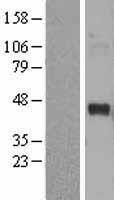
41.775 kDA

| Human | |
|---|---|
| Location: | 19p13.2 |
| Sequence: | 19; NC_000019.10 (10512742..10517965, complement) |
Widely expressed in the brain, most prominently in the corpus callosum, which is predominantly white matter. Detected in spleen, peripheral blood leukocytes, placenta, lung, aorta and fetal spleen. Low-level signal detected in many tissue extracts. Overexpressed in leukemic large granular lymphocytes. Isoform 1 is predominantly expressed in peripheral tissues. Isoform 2 is expressed in brain, spleen and peripheral blood leukocytes.
Cell membrane; Multi-pass membrane protein.




PMID: 12427546 by Kothapalli R., et al. Characterization of a human sphingosine-1-phosphate receptor gene (S1P5) and its differential expression in LGL leukemia.
PMID: 11705398 by Im D.-S., et al. Characterization of the human and mouse sphingosine 1-phosphate receptor, S1P5 (Edg-8): structure-activity relationship of sphingosine1-phosphate receptors.