This website uses cookies to ensure you get the best experience on our website.


- Table of Contents
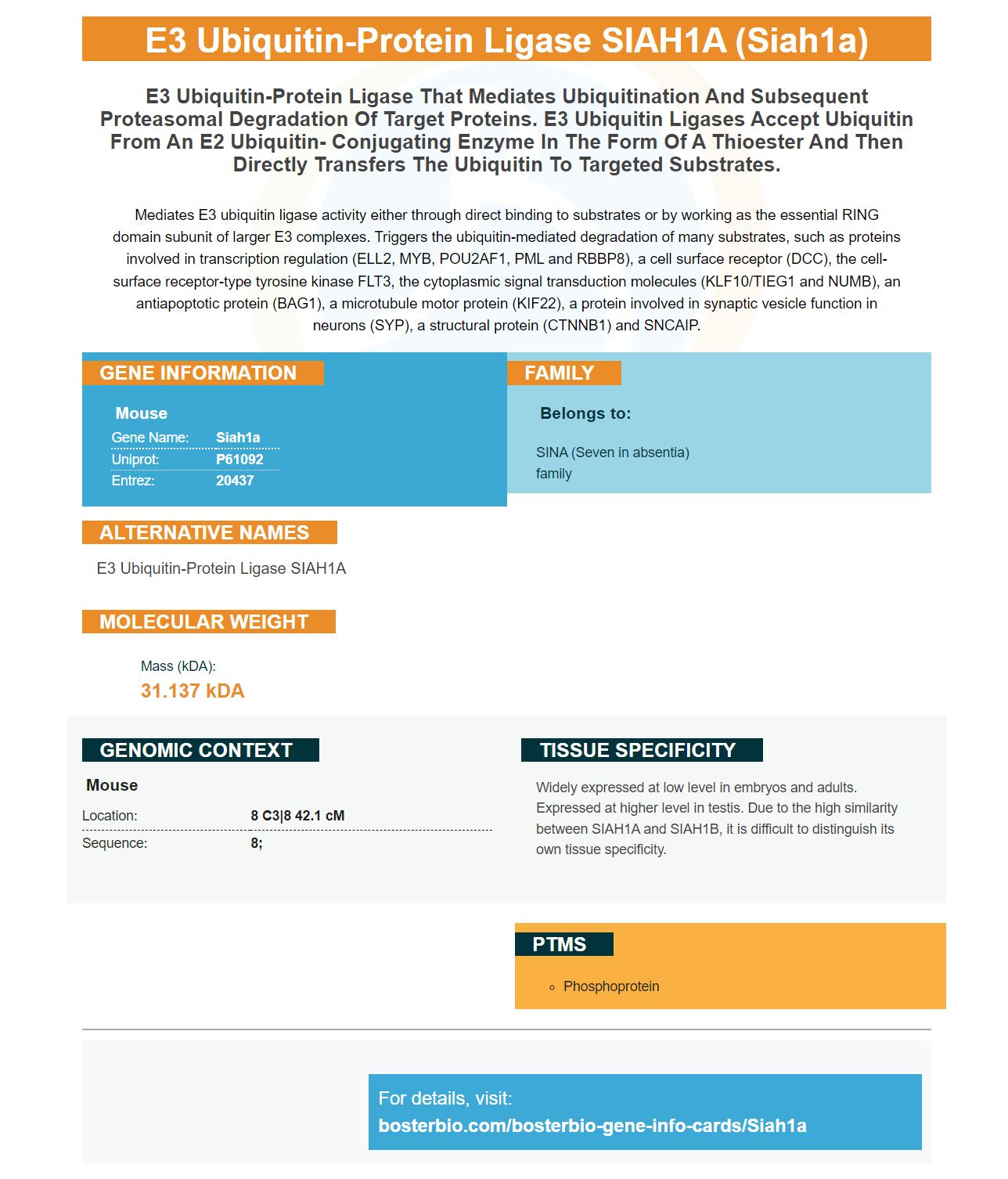
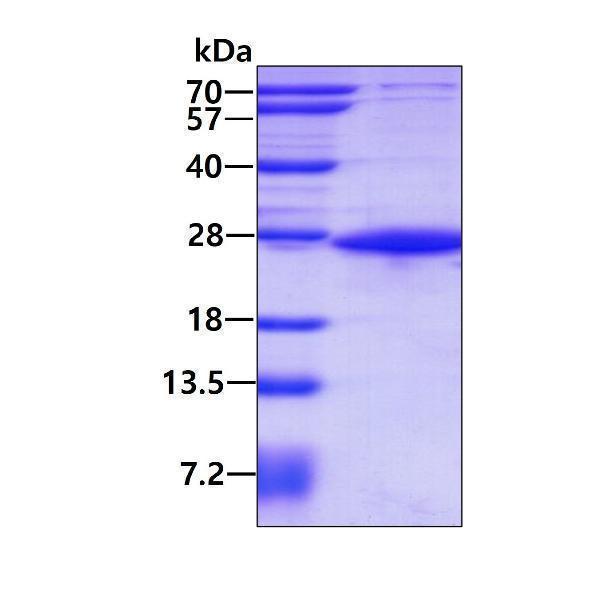
Facts about E3 ubiquitin-protein ligase SIAH1A.
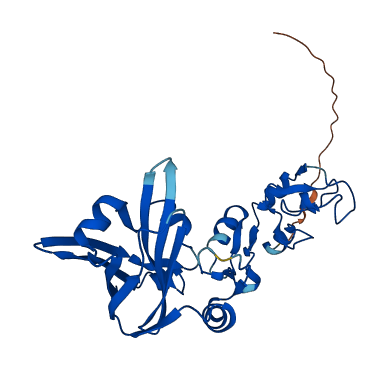
Mediates E3 ubiquitin ligase activity either through direct binding to substrates or by working as the essential RING domain subunit of larger E3 complexes. Triggers the ubiquitin-mediated degradation of many substrates, such as proteins involved in transcription regulation (ELL2, MYB, POU2AF1, PML and RBBP8), a cell surface receptor (DCC), the cell-surface receptor-type tyrosine kinase FLT3, the cytoplasmic signal transduction molecules (KLF10/TIEG1 and NUMB), an antiapoptotic protein (BAG1), a microtubule motor protein (KIF22), a protein involved in synaptic vesicle function in neurons (SYP), a structural protein (CTNNB1) and SNCAIP.
| Mouse | |
|---|---|
| Gene Name: | Siah1a |
| Uniprot: | P61092 |
| Entrez: | 20437 |
| Belongs to: |
|---|
| SINA (Seven in absentia) family |

E3 ubiquitin-protein ligase SIAH1A
Mass (kDA):
31.137 kDA

| Mouse | |
|---|---|
| Location: | 8 C3|8 42.1 cM |
| Sequence: | 8; |
Widely expressed at low level in embryos and adults. Expressed at higher level in testis. Due to the high similarity between SIAH1A and SIAH1B, it is difficult to distinguish its own tissue specificity.

PMID: 8404535 by Della N.G., et al. Isolation and characterisation of murine homologues of the Drosophila seven in absentia gene (sina).
PMID: 10681424 by Relaix F., et al. Pw1/Peg3 is a potential cell death mediator and cooperates with Siah1a in p53-mediated apoptosis.