This website uses cookies to ensure you get the best experience on our website.


- Table of Contents
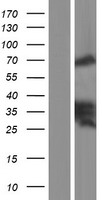
Designing a Western blot for Zyxin? The guide has the expected band size, antibodies backed by real blot images, the controls to run alongside, and protocols taken from published papers.
Open the ZYX Western Blot Guide

Facts about Zyxin.
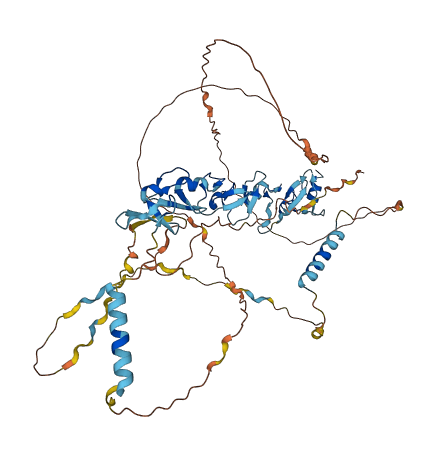
Significant for targeting TES and ENA/VASP family members to focal adhesions and for the formation of actin-rich structures. Might be a component of a signal transduction pathway that mediates adhesion-stimulated changes in gene expression (By similarity).
| Human | |
|---|---|
| Gene Name: | ZYX |
| Uniprot: | Q15942 |
| Entrez: | 7791 |
| Belongs to: |
|---|
| zyxin/ajuba family |

CTCL tumor antigen se14-3; CTCL-associated antigen se14-3; cutaneous T-cell lymphoma associated antigen se14-3; Cutaneous T-cell lymphoma-associated antigen se14-3; KIAA1125; MGC31836; predicted protein of HQ2893; PRKCBP1; PRO2893; protein kinase C-binding protein 1; Rack7; RACK7protein kinase C binding protein 1; zinc finger MYND domain containing protein 8; Zinc finger MYND domain-containing protein 8; zinc finger, MYND-type containing 8; Zyx; Zyxin 2; Zyxin
Mass (kDA):
61.277 kDA

| Human | |
|---|---|
| Location: | 7q34 |
| Sequence: | 7; NC_000007.14 (143381345..143391111) |
Cytoplasm. Cytoplasm, cytoskeleton. Nucleus. Cell junction, focal adhesion. Associates with the actin cytoskeleton near the adhesion plaques. Enters the nucleus in the presence of HESX1.



PMID: 8940160 by Macalma T., et al. Molecular characterization of human zyxin.
PMID: 8917469 by Zumbrunn J., et al. A zyxin-related protein whose synthesis is reduced in virally transformed fibroblasts.