This website uses cookies to ensure you get the best experience on our website.


- Table of Contents
and ELISA kits, proteins related to Autophagy.
Autophagy, often described as the cell's natural recycling system, is a vital biological process that maintains cellular health and homeostasis. By degrading and repurposing damaged organelles, misfolded proteins, and other cellular debris, autophagy ensures that cells function efficiently and adapt to various stressors. This intricate mechanism plays a crucial role in numerous physiological processes, including development, immunity, and aging. Dysregulation of autophagy has been linked to a variety of diseases, such as cancer, neurodegeneration, and infections, making it a significant focus in biomedical research. Our specialized antibodies are designed to precisely target key components of the autophagy pathway, enabling researchers to explore and manipulate this process with greater accuracy. Whether you're investigating the molecular underpinnings of autophagy or developing therapeutic strategies, our high-quality reagents provide the tools you need to advance your studies.
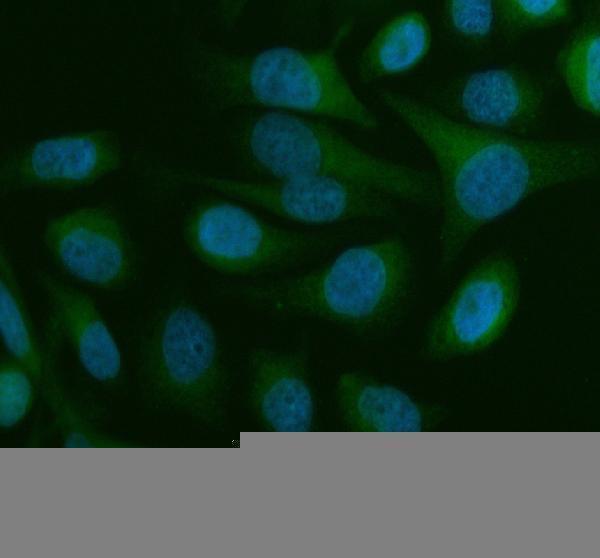
Anti-Beclin 1/BECN1 Antibody Picoband®, Figure 2. IF analysis of Beclin 1 using anti-Beclin 1 antibody (PB9076).
Beclin 1 was detected in an immunocytochemical section ...

Anti-SQSTM1/p62 Antibody Picoband®, Figure 8. IF analysis of SQSTM1/p62 using anti-SQSTM1/p62 antibody (PB9444)
SQSTM1/p62 was detected in paraffin-embedded section of ...

Anti-LC3B MAP1LC3B Rabbit Monoclonal Antibody, Immunofluorescent analysis of Hela cells treated with choroquine, using LC3B Antibody....
| Protein Name | Gene Name | Function |
|---|---|---|
| LC3 | MAP1LC3B | Key marker for autophagosome formation and membrane expansion. |
| Beclin-1 | BECN1 | Central regulator of autophagy initiation and autophagosome nucleation. |
| p62/SQSTM1 | SQSTM1 | Selective autophagy receptor that links ubiquitinated proteins to autophagosomes. |
| ATG5 | ATG5 | Essential for autophagosome elongation and closure. |
| ATG7 | ATG7 | E1-like enzyme involved in the conjugation systems essential for autophagy. |
| ULK1 | ULK1 | Initiates autophagy by phosphorylating key downstream targets. |
| mTOR | MTOR | Negative regulator of autophagy, senses nutrient availability. |
| AMBRA1 | AMBRA1 | Regulates autophagy initiation and interacts with Beclin-1. |
| BNIP3 | BNIP3 | Mediates selective autophagy of mitochondria under hypoxic conditions. |
| NBR1 | NBR1 | Selective autophagy receptor involved in targeting ubiquitinated proteins. |
| LAMP2 | LAMP2 | Lysosomal membrane protein critical for autophagosome-lysosome fusion. |
| TFEB | TFEB | Transcription factor that regulates lysosomal biogenesis and autophagy genes. |
| VPS34 | PIK3C3 | Phosphoinositide 3-kinase involved in autophagosome formation. |
| FIP200 | RB1CC1 | Part of the ULK1 complex, essential for autophagy initiation. |
| OPTN | OPTN | Selective autophagy receptor involved in the clearance of damaged organelles. |
| GABARAP | GABARAP | Involved in autophagosome maturation and trafficking. |
| LC3A | MAP1LC3A | Variant of LC3 involved in autophagosome formation. |
| LAMP1 | LAMP1 | Lysosomal-associated membrane protein involved in autophagosome-lysosome fusion. |
| ATG9A | ATG9A | Membrane protein involved in delivering membranes for autophagosome formation. |
| ATG16L1 | ATG16L1 | Part of the complex essential for LC3 lipidation and autophagosome formation. |
Macroautophagy, commonly referred to simply as autophagy, is a pivotal cellular process responsible for the degradation and recycling of cytoplasmic components. This mechanism involves the formation of double-membrane structures called autophagosomes, which encapsulate damaged organelles, misfolded proteins, and other cellular debris. Once formed, autophagosomes fuse with lysosomes, where their contents are broken down and recycled to maintain cellular homeostasis. Macroautophagy plays a crucial role in responding to various stress conditions, such as nutrient deprivation, hypoxia, and infection, by providing essential building blocks and energy through the recycling of cellular material. Additionally, it is integral in the regulation of cellular quality control, preventing the accumulation of toxic substances that can lead to diseases like neurodegeneration, cancer, and cardiovascular disorders. Understanding the mechanisms and regulation of macroautophagy offers significant insights into potential therapeutic targets for a wide range of pathological conditions.
Selective autophagy refers to the targeted degradation of specific cellular components, ensuring precise quality control within the cell. One of the most studied forms of selective autophagy is mitophagy, which specifically targets damaged or dysfunctional mitochondria for degradation. Mitophagy is essential for maintaining mitochondrial quality and function, preventing the accumulation of reactive oxygen species (ROS) and minimizing cellular stress. The process is tightly regulated by a network of proteins, including PINK1 and Parkin, which identify and label impaired mitochondria for recognition by the autophagic machinery. Mitophagy plays a vital role in various physiological processes, such as development, aging, and immune responses, and its dysregulation is implicated in numerous diseases, including Parkinson's disease, cardiovascular disorders, and cancer. By elucidating the mechanisms governing mitophagy, researchers aim to develop targeted therapies that can mitigate the adverse effects of mitochondrial dysfunction and improve cellular health.