This website uses cookies to ensure you get the best experience on our website.


- Table of Contents
and ELISA kits, proteins related to Cell Biology.
--- **Welcome to the World of Cell Biology** Cell Biology is the cornerstone of understanding life at its most fundamental level. By exploring the intricate structures and complex processes within cells, scientists uncover the mechanisms that drive growth, development, and disease. Central to this field is the study of antibodies—specialized proteins produced by the immune system to identify and neutralize foreign invaders like bacteria and viruses. Antibodies are invaluable tools in research, diagnostics, and therapeutics, enabling breakthroughs in areas such as cancer treatment, vaccine development, and autoimmune disorder management. Our dedicated Cell Biology research harnesses the power of antibodies to reveal cellular secrets, paving the way for innovative solutions and enhancing our capacity to improve human health and disease prevention. ---
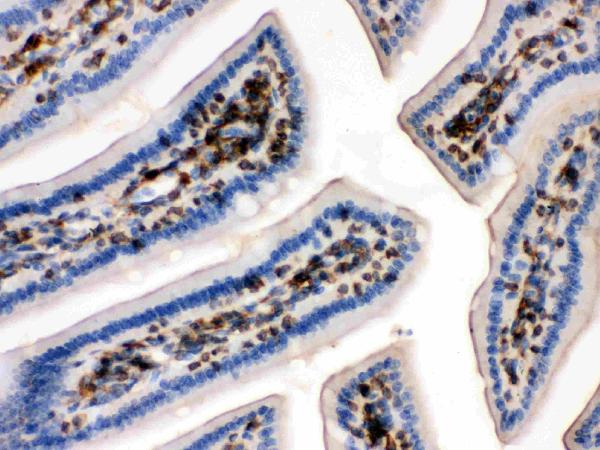
Anti-Beta-Actin Actb Antibody (Monoclonal, AC-15), Anti-beta-Actin antibody (monoclonal), MA1115, IHC(P)
IHC(P): Mouse Intestine Tissue...
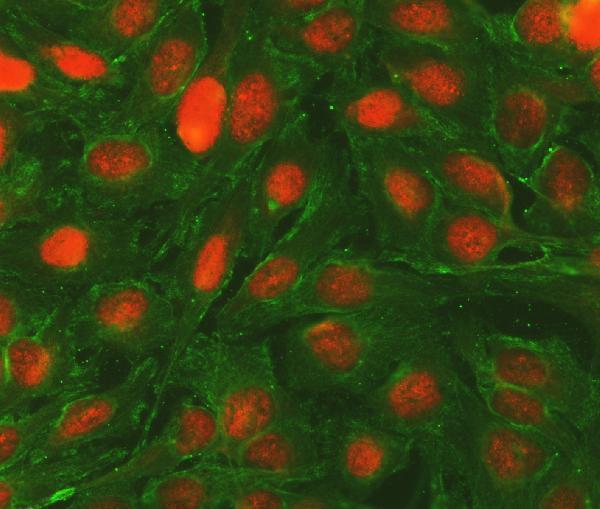
Anti-Bcl-2/BCL2 Antibody Picoband®, Figure 2. IF analysis of BCL2 and Tubulin alpha using anti-BCL2 antibody (A00040-2) and anti-Tubulin alpha antibody (M03989-3).
BCL2 a...
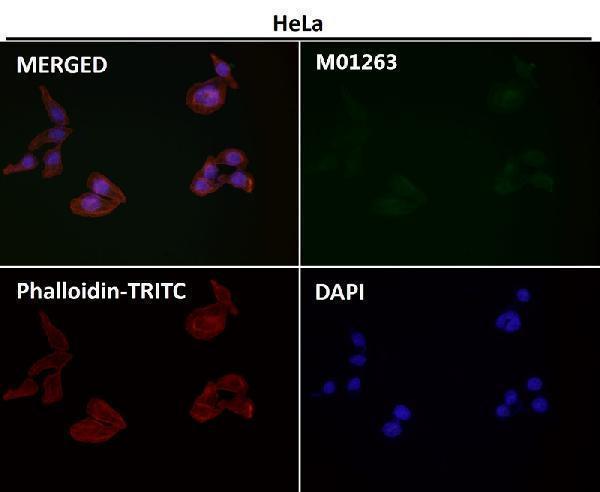
Anti-beta Actin ACTB Rabbit Monoclonal Antibody, Immunofluorescent analysis using the Antibody at 1:50 dilution....
| Protein Name | Gene Name | Function |
|---|---|---|
| p53 | TP53 | Tumor suppressor involved in cell cycle regulation and apoptosis. |
| BRCA1 | BRCA1 | Involved in DNA repair and maintaining genomic stability. |
| EGFR | EGFR | Receptor tyrosine kinase important for cell growth and differentiation. |
| HER2 | ERBB2 | Receptor tyrosine kinase associated with aggressive breast cancer. |
| GAPDH | GAPDH | Enzyme involved in glycolysis, commonly used as a housekeeping gene. |
| Actin | ACTB | Structural protein essential for cell motility and integrity. |
| CD3 | CD3D | Part of the T-cell receptor complex, important for T-cell activation. |
| CD4 | CD4 | Mediates immune response by aiding T-helper cells. |
| CD8 | CD8A | Surface marker for cytotoxic T cells involved in killing infected cells. |
| CD19 | CD19 | B-cell marker important for B-cell development and signaling. |
| MYC | MYC | Transcription factor involved in cell proliferation and growth. |
| VEGF | VEGFA | Promotes angiogenesis and blood vessel formation. |
| BCL2 | BCL2 | Regulates apoptosis by controlling mitochondrial membrane permeability. |
| Ki-67 | MKI67 | Marker for cell proliferation used in cancer diagnostics. |
| NF-κB | NFKB1 | Transcription factor involved in immune and inflammatory responses. |
| Caspase-3 | CASP3 | Key executor of apoptosis through cleavage of cellular proteins. |
| mTOR | MTOR | Central regulator of cell growth, proliferation, and metabolism. |
| PTEN | PTEN | Tumor suppressor that negatively regulates the PI3K/AKT pathway. |
| CD34 | CD34 | Stem cell marker important for hematopoietic progenitor identification. |
| Albumin | ALB | Major plasma protein involved in maintaining oncotic pressure and transport. |
Cell signaling is a fundamental subarea of cell biology that investigates the complex communication pathways through which cells interact with their environment and regulate internal processes. This field explores how cells detect external signals such as hormones, growth factors, and neurotransmitters, and how these signals are transduced into cellular responses. Key components of cell signaling include receptors on the cell surface or within the cell, which bind signaling molecules and initiate a cascade of intracellular events. These cascades often involve the activation of proteins and enzymes that ultimately influence gene expression, metabolism, cell division, and apoptosis. Understanding cell signaling is crucial for comprehending how cells maintain homeostasis, respond to stress, and coordinate with other cells to form tissues and organs. Dysregulation of signaling pathways is implicated in numerous diseases, including cancer, diabetes, and autoimmune disorders. By elucidating the mechanisms of cell signaling, researchers can develop targeted therapies and drugs that modulate specific pathways, offering potential treatments for a variety of pathological conditions. Advances in technologies such as live-cell imaging and high-throughput screening have significantly enhanced our ability to study and manipulate cell signaling processes.
Gene expression and regulation is a pivotal subarea of cell biology focused on understanding how genes are transcribed and translated into functional proteins, and how this process is meticulously controlled within the cell. This field examines the mechanisms that determine when and where specific genes are activated or silenced, ensuring that proteins are produced at appropriate levels and in the right cellular contexts. Key aspects include the study of transcription factors, enhancers, silencers, epigenetic modifications, and RNA processing events such as splicing and editing. Gene regulation is essential for processes like cell differentiation, development, and response to environmental stimuli. Misregulation can lead to various diseases, including cancers, genetic disorders, and metabolic syndromes. Advances in techniques like CRISPR-Cas9 gene editing, RNA sequencing, and chromatin immunoprecipitation have revolutionized our ability to dissect and manipulate gene regulatory networks. Moreover, understanding gene expression and regulation provides insights into evolutionary biology, allowing scientists to trace how gene regulation contributes to the diversity of life forms. This knowledge is also instrumental in biotechnology and medicine, enabling the development of gene therapies, personalized medicine approaches, and novel therapeutic strategies.