This website uses cookies to ensure you get the best experience on our website.


- Table of Contents
and ELISA kits, proteins related to Cellular Markers.
**Introduction to Cellular Markers in Antibody Research** Cellular markers, also known as biomarkers, are essential tools in antibody research, enabling precise identification and characterization of specific cell populations. These markers consist of proteins or molecules expressed on the surface or within cells, serving as unique signatures that distinguish different cell types, states, and functions. In the development of antibody-based therapies, cellular markers facilitate targeted treatments, enhance diagnostic accuracy, and support personalized medicine approaches. By leveraging these markers, researchers can monitor immune responses, track disease progression, and assess the efficacy of therapeutic antibodies. Our dedicated research in cellular markers aims to uncover novel targets and optimize antibody interventions, driving advancements that improve patient outcomes and transform biomedical science.
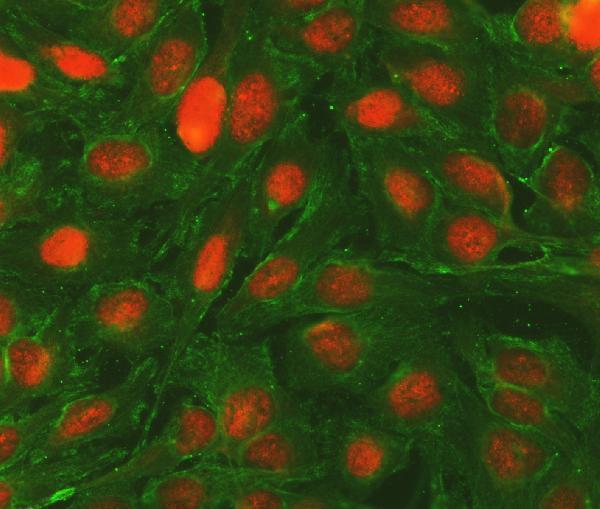
Anti-Bcl-2/BCL2 Antibody Picoband®, Figure 2. IF analysis of BCL2 and Tubulin alpha using anti-BCL2 antibody (A00040-2) and anti-Tubulin alpha antibody (M03989-3).
BCL2 a...
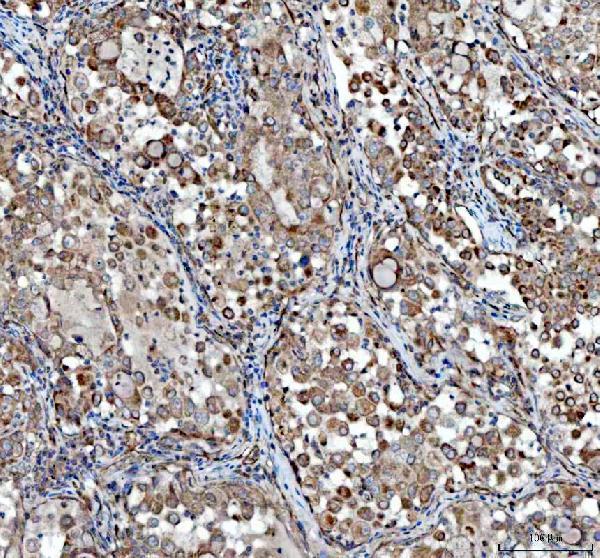
Anti-VEGF/VEGFA Antibody Picoband®, Figure 2. IHC analysis of VEGFA using anti-VEGFA antibody (PA1080).
VEGFA was detected in a paraffin-embedded section of human lung cancer tissue. Heat...
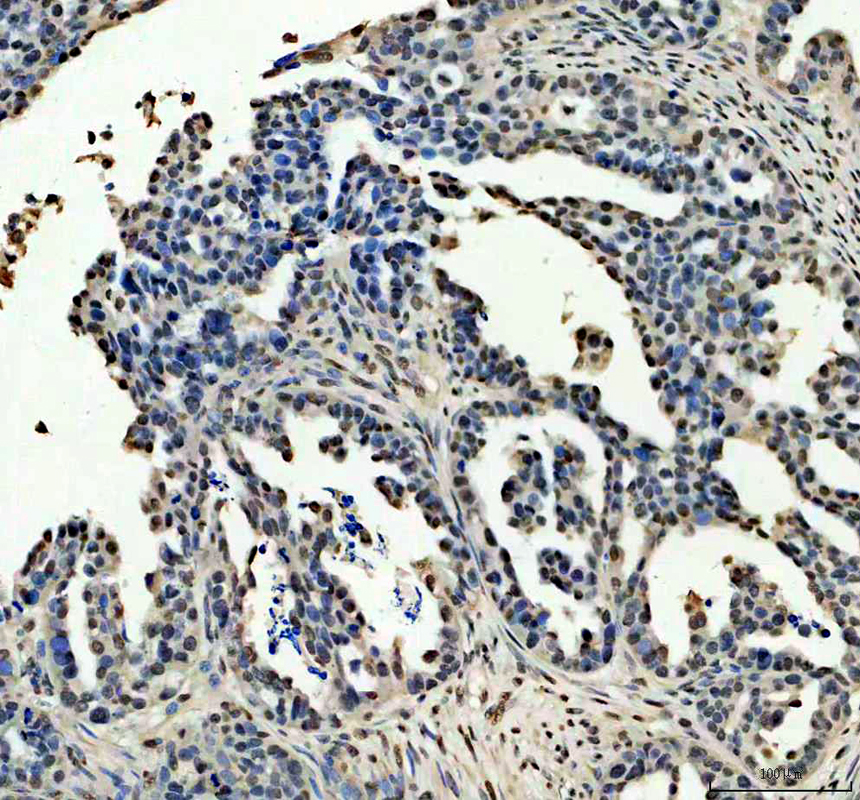
Anti-P53/TP53 Antibody Picoband®, Figure 3. IHC analysis of P53 using anti-P53 antibody (PB9008).
TP53 was detected in a paraffin-embedded section of humn ovarian cancer tissue. Heat mediated antigen retrieval was...
| Protein Name | Gene Name | Function |
|---|---|---|
| CD3E | CD3E | Part of the T-cell receptor complex involved in T-cell activation. |
| CD19 | CD19 | B-cell specific marker involved in B-cell receptor signaling. |
| CD20 | MS4A1 | B-cell surface antigen involved in B-cell activation and proliferation. |
| CD4 | CD4 | Coreceptor for MHC class II molecules on helper T-cells. |
| CD8A | CD8A | Coreceptor for MHC class I molecules on cytotoxic T-cells. |
| CD14 | CD14 | Co-receptor for detecting bacterial lipopolysaccharide (LPS) in innate immunity. |
| CD34 | CD34 | Stem cell marker involved in hematopoiesis and angiogenesis. |
| CD45 | PTPRC | Protein tyrosine phosphatase involved in T and B cell receptor signaling. |
| Cytokeratin 19 | KRT19 | Intermediate filament protein used as an epithelial cell marker. |
| HER2 | ERBB2 | Growth factor receptor involved in cell proliferation and differentiation. |
| PD-L1 | CD274 | Immune checkpoint protein regulating T-cell activation and immune response. |
| Ki-67 | MKI67 | Proliferation marker associated with cell cycle progression. |
| EGFR | EGFR | Receptor tyrosine kinase involved in cell growth and survival. |
| p53 | TP53 | Tumor suppressor protein regulating cell cycle and apoptosis. |
| BCL2 | BCL2 | Anti-apoptotic protein regulating cell death. |
| BRCA1 | BRCA1 | DNA repair protein involved in homologous recombination. |
| VEGF | VEGFA | Vascular endothelial growth factor involved in angiogenesis. |
| ALK | ALK | Receptor tyrosine kinase implicated in cell growth and differentiation. |
| MYC | MYC | Transcription factor regulating cell proliferation and metabolism. |
| MLH1 | MLH1 | Mismatch repair protein maintaining genomic stability. |
Immunophenotyping is a pivotal sub-research area within the study of cellular markers, focusing on the identification and classification of cells based on the specific proteins expressed on their surface. This technique utilizes antibodies tagged with fluorescent dyes to bind to distinct cellular markers, allowing researchers to differentiate and quantify various cell populations through methods like flow cytometry or fluorescence microscopy. Immunophenotyping is essential in diverse fields such as immunology, oncology, and hematology, where it aids in diagnosing diseases, monitoring immune responses, and guiding therapeutic decisions. By enabling the precise analysis of cell types and states, immunophenotyping contributes significantly to our understanding of cellular heterogeneity and the mechanisms underlying complex biological processes. Advances in antibody technologies and analytical tools continue to enhance the accuracy and efficiency of immunophenotyping, making it an indispensable tool in both research and clinical settings.
Biomarker discovery is another critical sub-research area within cellular markers, dedicated to identifying novel molecular indicators that signal specific physiological or pathological states of cells. This field leverages high-throughput technologies such as genomics, proteomics, and metabolomics to uncover unique cellular markers that can serve as diagnostic, prognostic, or predictive tools in medicine. Biomarker discovery plays a vital role in personalized medicine by enabling the development of targeted therapies tailored to individual patient profiles, improving treatment efficacy, and reducing adverse effects. Additionally, biomarkers facilitate early disease detection, monitor disease progression, and assess responses to therapy, thereby enhancing clinical decision-making. The integration of bioinformatics and machine learning in biomarker discovery accelerates the identification and validation processes, fostering advancements in both research and clinical applications. As our understanding of cellular mechanisms deepens, biomarker discovery continues to drive innovation in diagnostics and therapeutics, ultimately contributing to improved patient outcomes.