CASP8 antibody (PA1308) performs well in WB and shows reactivity with Human, Mouse, Rat.
  • Validated for inter-lot consistency, specificity, and reproducibility
  • Committed to quality since 1993
  • Over 6 Publications
Filter:
pa1308 1 WB anti caspase 8 p18 antibody

Anti-Caspase-8 (P18)/CASP8 Antibody Picoband®

CASP8 antibody

Reactive SpeciesHostApplication
Human, Mouse, RatRabbitWB

SKU: PA1308

Size: 100 μg

Bundle to save: I do not want free secondary ab
Price:
$370/100 μg

5 in stock. Ships Next Business Day.

Quantity: 1

1
Get A Quote
Guarantee / Product Promise

Tested Applications

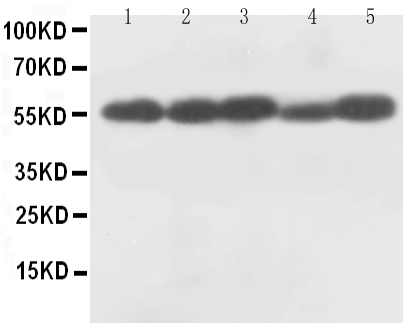
CASP8 antibody was positively detected by WB in:

Rat Thymus Tissue, Rat Liver Tissue, MCF-7 Whole Cell, HELA Whole Cell, SMMC Whole Cell

Suggested blocking solution with 5% non-fat milk or BSA; (*)Recommended protein loading: 20-40 ug per lane

Recommend Dilution

Application
Dilution
Species
Western blot
0.1-0.5μg/ml
Human, Rat, Mouse

* It is recommended to optimize the amount of this reagent in each experimental system to achieve the best results.

Reactive Data

Filter:
Boster Guarantee:What is this?
WB
Rat
Tested
Human
Predicted
Mouse
Predicted
Monkey
Predicted

Product Information

Product Name
Anti-Caspase-8 (P18)/CASP8 Antibody Picoband®
View all CASP8 Antibodies
Form
Lyophilized
Uniprot
Gene ID
Storage & Handling
Store at -20˚C for one year from date of receipt. After reconstitution, at 4˚C for one month. It can also be aliquotted and stored frozen at -20˚C for six months. Avoid repeated freeze-thaw cycles.
Host
Rabbit
Contents
Each vial contains antibody formulated with stabilizing components, 0.9mg NaCl, 0.2mg Na2HPO4, 0.05mg Thimerosal, 0.05mg NaN3.
*This antibody is supplied in a stabilized formulation. Compatibility with conjugation reactions depends on the chemistry of the conjugation method used. For conjugation methods that are not compatible with the stabilizing components present in this formulation, a carrier-free antibody format is required.
Clonality
Polyclonal
Isotype
Rabbit IgG
Immunogen
A synthetic peptide corresponding to a sequence in the middle region of human Caspase-8(P18), different from the related mouse sequence by one amino acid.
Cross-Reactivity
No cross-reactivity with other proteins
Reconstitution
Add 0.2ml of distilled water will yield a concentration of 500ug/ml.
Observed Molecular Weight
55 kDa
Calculated Molecular Weight

55.4 kDa

Background of CASP8
Caspase 8 is a caspase protein. It most likely acts upon caspase 3. This gene encodes a member of the cysteine-aspartic acid protease (caspase) family. The human CASP8 gene, whose product is also known as caspase 8 and FLICE, encodes an interleukin-1beta converting enzyme (ICE)-related cysteine protease that is activated by the engagement of several different death receptors. Caspase 8 is immediately recruited to the Fas receptor once it oligomerizes, and its protease activity is crucial for the apoptotic response generated by the resulting death-inducing signaling complex (DISC). This gene contains at least 11 exons spanning approximately 30kb on human chromosome band 2q33-34. This region of human chromosome 2 was previously reported as the location of the CASP10 gene, whose product is closely related to caspase 8. Caspase-8 deficiency in humans is compatible with normal development and shows that caspase-8 has a postnatal role in immune activation of naive lymphocytes.
Cite This Product
Anti-Caspase-8 (P18)/CASP8 Antibody Picoband® (Boster Biological Technology, Pleasanton CA, USA, Catalog # PA1308)

Protocols

Western Blot protocol for CASP8 antibody

Publications

Application:
Species:
Structural characteristics and anti-tumor effect of low molecular weight Dendrobium officinale polysaccharides by reconstructing tumor microenvironment
Published: 2024-06-20
Journal: Journal of Functional Foods
Application: WB
Impact Factor: 3.80
Species: Mouse
Regulatory role of oxidative stress in retrorsine – Induced apoptosis and autophagy in primary rat hepatocytes
Published: 2024-05-28
Journal: ECOTOXICOLOGY AND ENVIRONMENTAL SAFETY
Application: WB
Impact Factor: 6.20
Species: Rat
PMID: 38810283
Ursodeoxycholic acid alleviates sepsis-induced lung injury by blocking PANoptosis via STING pathway
Published: 2023-11-09
Journal: INTERNATIONAL IMMUNOPHARMACOLOGY
Application: WB
Impact Factor: 5.60
Species: Mouse
PMID: 37948864
Caspase-8 Regulates the Antimyeloma Activity of Bortezomib and Lenalidomide
Published: 2021-12-01
Journal: JOURNAL OF PHARMACOLOGY AND EXPERIMENTAL THERAPEUTICS
Application: WB
Impact Factor: 4.03
Species: Human
PMID: 34588172
Supplementation of Saponins from Leaves of Panax quinquefolius Mitigates Cisplatin-Evoked Cardiotoxicity via Inhibiting Oxidative Stress-Associated Inflammation and Apoptosis in Mice
Published: 2019-09-01
Journal: Antioxidants
Application: WB
Impact Factor: 4.52
Species: Mouse
PMID: 31480577
Intravenous Administration Is an Effective and Safe Route for Cancer Gene Therapy Using the Bifidobacterium-Mediated Recombinant HSV-1 Thymidine Kinase and Ganciclovir
Published: 2016-06-06
Journal: INTERNATIONAL JOURNAL OF MOLECULAR SCIENCES
Application: IHC
Impact Factor: 3.26
Species: Mouse
PMID: 27275821

Review

Have you used Anti-Caspase-8 (P18)/CASP8 Antibody Picoband®?

Submit a review and receive $370 in product credits, a $185 Amazon gift card, or our carefully curated gift bundles.

Product Promise

We promise Anti-Caspase-8 (P18)/CASP8 Antibody Picoband® performs excellently in relevant applications for WB. If it doesn't perform as promised, we will refund the product. Learn more


In stock
Order Product
PA1308
Buy one primary antibody get one 0.5ml HRP or Biotin secondary antibody for free.
*Sample sizes are prepared on demand and will take extra lead time. (cannot be conjugated)
$370.00

Troubleshooting

troubleshooting-box-image

Download troubleshooting handbooks for IHC, Western blot and ELISA for FREE.

Download Free PDFs Now

Boster Guarantee

Guaranteed product quality

Guaranteed product quality

We promise all of our products perform as described in datasheets.

This product is for Research Use Only. Not for use in diagnostic procedures.

Update date: Oct 12, 2026