This website uses cookies to ensure you get the best experience on our website.


- Table of Contents
In order to get the best results from your ELISA assay, the dilution factors of the sample and the detection antibodies must be optimized—this principle also applies broadly across many types of assay services where precision and optimization are key. If your sample or antibodies are too concentrated, you risk saturating the assay. If they are not concentrated enough, your signal will be weak and difficult to detect. For strong, quantifiable signal, use a checkerboard titration to test for the optimal concentration of sample and detection antibodies.
A checkerboard titration can be used to assess two variables at once: in this case, antibody concentration and sample concentration. By running each well with a different ratio of sample to antibody, you can find not only the optimal concentration of each, but the optimal ratio of concentrations as well. Using the information gleaned from the checkerboard assay, you can perform your ELISA experiment with the optimal concentrations for your application and get better results. To validate your ELISA findings at the transcriptional level, consider seeking for dedicated qpcr analysis service for precise quantification of gene expression. This titration strategy is also foundational in many professional elisa testing services, where optimizing signal-to-noise ratios is essential for accurate quantification across variable sample types.
An example of a checkerboard titration is shown below. Each of the columns 1-12 contain the antibody dilution factors, and rows A-H contain sample dilution factors.

Checkerboard titration could be utilized to optimize various conditions for your ELISA assay. A recommended starting concentration of antigen would be in the range of 1-20 ug/mL. Doubling dilutions across the plate starting at 20 ug/mL reaches 0.6 ug/mL by the sixth column, which is likely to be nonsaturating. A different pH could be tested in columns 6-12. Detection antibody could be started in row A at 500 ng/mL and reach 8 ng/mL by row G. Row H would receive no detection antibody and serve as the background control. Once an optimal signal-to-noise ratio has been determined for your direct ELISA, variations in blocking conditions can be optimized in the same fashion. This systematic approach is conceptually similar to western blot optimization, where stepwise adjustments are often needed to refine conditions for reliable results.
*Note to educators: You are permitted to share Boster Bio's resources and PDFs on your class websites and lab websites. Please make sure to cite or link to the origin.
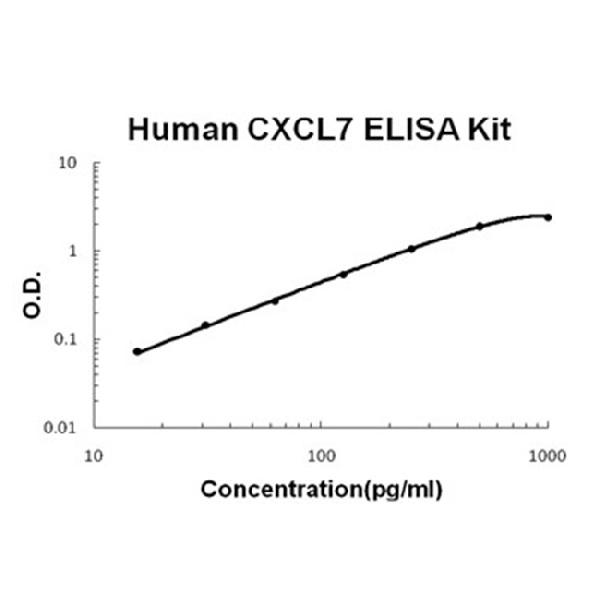
| SKU | EZ0729 |
|---|---|
| Reactivity | Human |
| Applications | ELISA |
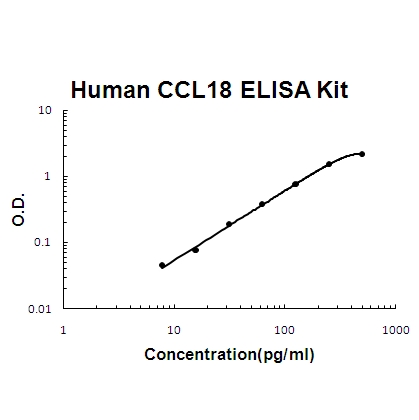
| SKU | EZ0686 |
|---|---|
| Reactivity | Human |
| Applications | ELISA |
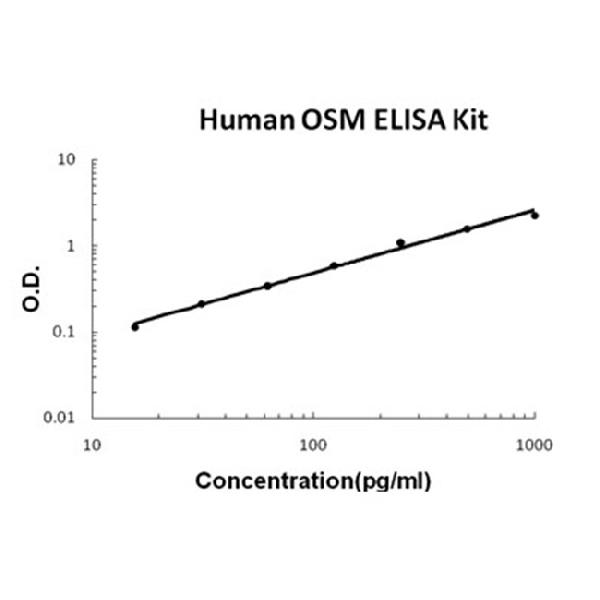
| SKU | EZ0478 |
|---|---|
| Reactivity | Human |
| Applications | ELISA |

| SKU | EK0421 |
|---|---|
| Reactivity | Human |
| Applications | ELISA |

| SKU | EK0373 |
|---|---|
| Reactivity | Human |
| Applications | ELISA |
| SKU | EK0416 |
|---|---|
| Reactivity | Human |
| Applications | ELISA |
Here are some quick facts about bosterbio.com