This website uses cookies to ensure you get the best experience on our website.


- Table of Contents
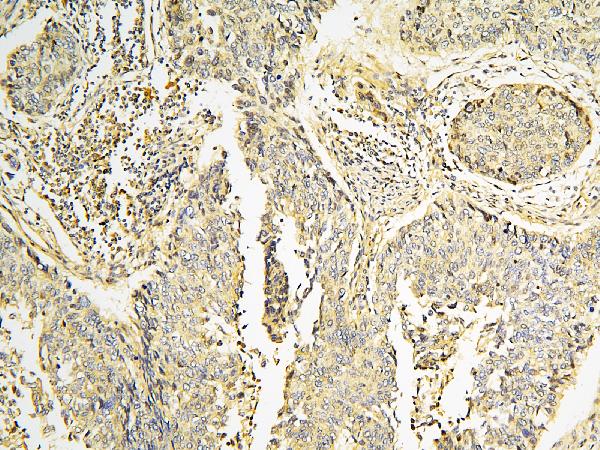
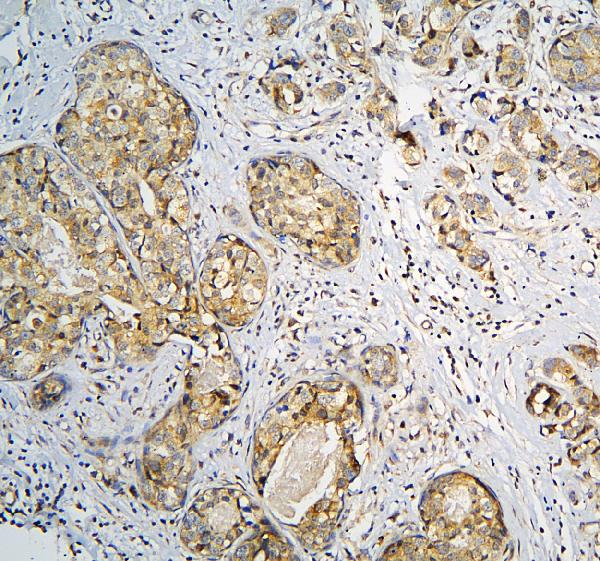
Designing an IHC experiment for CPAMD8? The guide has the expected staining pattern, antigen retrieval and fixation, antibodies backed by real IHC images, the tissue controls to run alongside, and protocols taken from published papers.
Open the CPAMD8 IHC Guide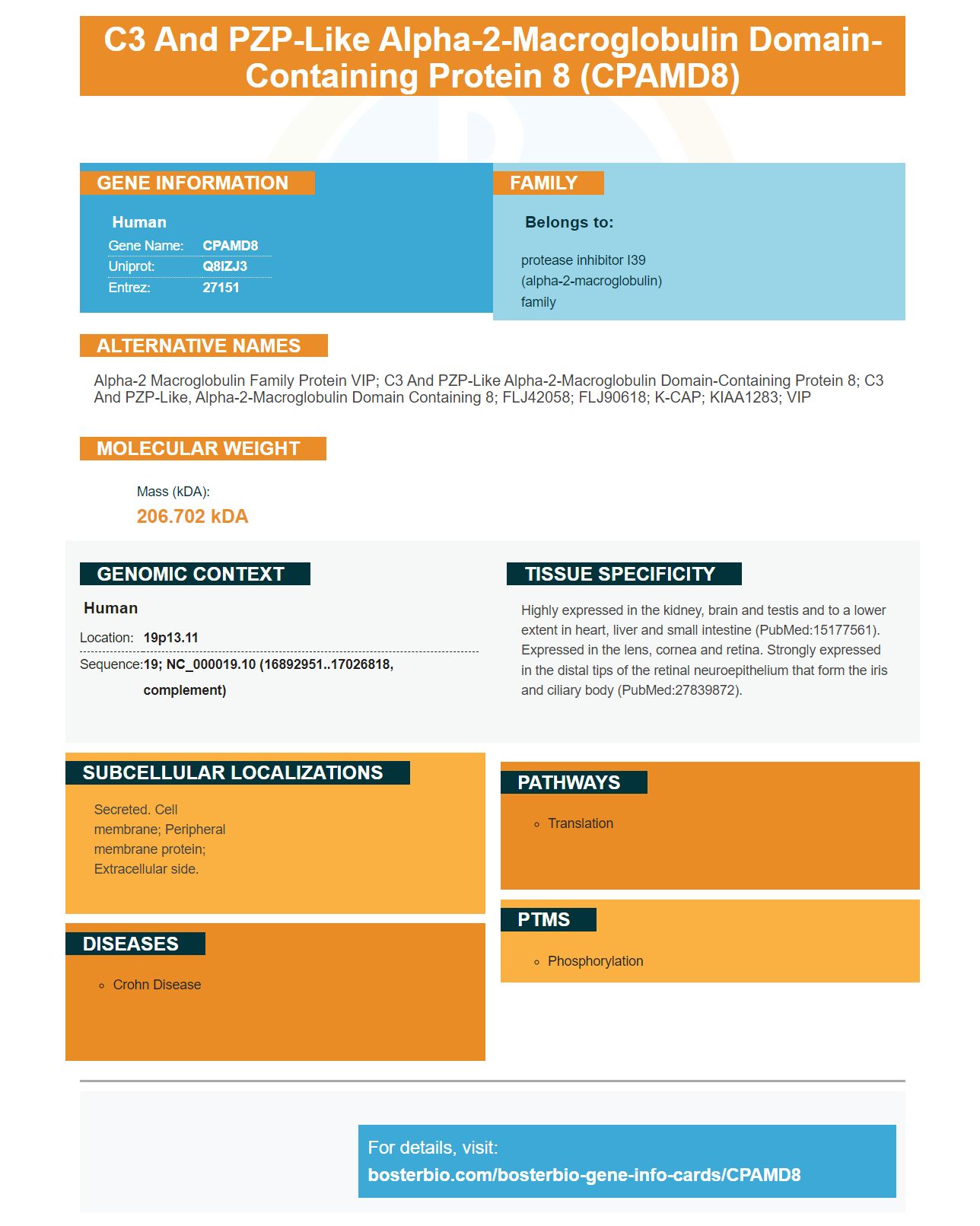


Facts about C3 and PZP-like alpha-2-macroglobulin domain-containing protein 8.
| Human | |
|---|---|
| Gene Name: | CPAMD8 |
| Uniprot: | Q8IZJ3 |
| Entrez: | 27151 |

| Belongs to: |
|---|
| protease inhibitor I39 (alpha-2-macroglobulin) family |

alpha-2 macroglobulin family protein VIP; C3 and PZP-like alpha-2-macroglobulin domain-containing protein 8; C3 and PZP-like, alpha-2-macroglobulin domain containing 8; FLJ42058; FLJ90618; K-CAP; KIAA1283; VIP
Mass (kDA):
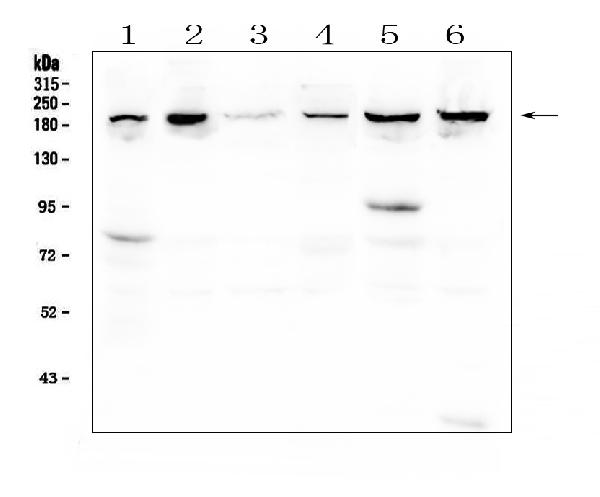
206.702 kDA

| Human | |
|---|---|
| Location: | 19p13.11 |
| Sequence: | 19; NC_000019.10 (16892951..17026818, complement) |
Highly expressed in the kidney, brain and testis and to a lower extent in heart, liver and small intestine (PubMed:15177561). Expressed in the lens, cornea and retina. Strongly expressed in the distal tips of the retinal neuroepithelium that form the iris and ciliary body (PubMed:27839872).
Secreted. Cell membrane; Peripheral membrane protein; Extracellular side.




PMID: 15177561 by Li Z.-F., et al. Identification and characterization of CPAMD8, a novel member of the complement 3/alpha2-macroglobulin family with a C-terminal Kazal domain.
PMID: 27839872 by Cheong S.S., et al. Mutations in CPAMD8 cause a unique form of autosomal-recessive anterior segment dysgenesis.